PostgreSQL JSONB: Operators, GIN Indexes, and Query Examples | DbSchema
Learn PostgreSQL JSONB operators, GIN indexes, path queries, and update patterns. Explore and document JSONB structures visually in DbSchema.
Every post tagged postgresql on the DbSchema blog.
Learn PostgreSQL JSONB operators, GIN indexes, path queries, and update patterns. Explore and document JSONB structures visually in DbSchema.
List PostgreSQL schemas with psql, information_schema, and pg_namespace. Filter system schemas, inspect search_path, and browse them in DbSchema.
Learn PostgreSQL CREATE PROCEDURE from short examples with their results: CALL, IN, OUT and INOUT parameters, COMMIT inside a procedure, and EXCEPTION.
PostgreSQL schema design with ER diagrams: create a schema, add tables and columns, set foreign keys, and generate documentation in DbSchema.
psql commands for PostgreSQL 18: connect and switch databases, list tables and roles, read privileges, export rows, dump and restore, find the session holding a lock.
Add a foreign key to a PostgreSQL table that already holds rows: ADD CONSTRAINT, NOT VALID, VALIDATE CONSTRAINT, ON DELETE CASCADE, RESTRICT, locks and the child-column index.
Describe a PostgreSQL table with psql and SQL metadata queries. See columns, defaults, constraints, indexes, and inspect structure in DbSchema.
DbSchema, pgAdmin, DBeaver, DataGrip, Navicat, DbVisualizer and dbForge compared on engines, free edition and price. Prices checked on the vendors' pages in November 2026.
Drop all tables in PostgreSQL with DROP SCHEMA, generated DROP TABLE statements or a DO block, or empty them with TRUNCATE, and restore the public schema's owner on PostgreSQL 15 and later.
Free PostgreSQL ER diagram tools compared: which ones read a live database, what each free tier includes, and where it stops. Vendor pages checked 2026-11-11.
Show tables in PostgreSQL with \dt, \dt+, and SQL queries against information_schema or pg_catalog. Filter by schema, include sizes, and list all objects.
Learn how to create diagrams, add comments, track changes, and export HTML5 docs to fully document your PostgreSQL schema using DbSchema.
Document a Postgres database with COMMENT ON statements applied by psql in one transaction, list the columns still undescribed, and export the comments with DbSchema.
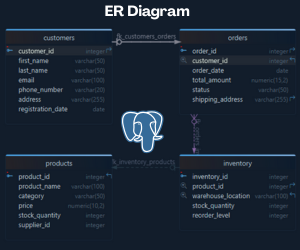
Generate a PostgreSQL ER diagram from a live database or SQL file. Follow a worked example and troubleshoot missing foreign keys.
Learn how to generate realistic random data for PostgreSQL tables using DbSchema Data Generator patterns, seeds, and preview tools.
Create tables in PostgreSQL with practical syntax, data types, keys, defaults, and IF NOT EXISTS examples. Design and sync tables with DbSchema.
BEGIN, COMMIT, ROLLBACK and SAVEPOINT run on PostgreSQL 18: the aborted transaction block, isolation levels, and the commands that cannot run inside a transaction.
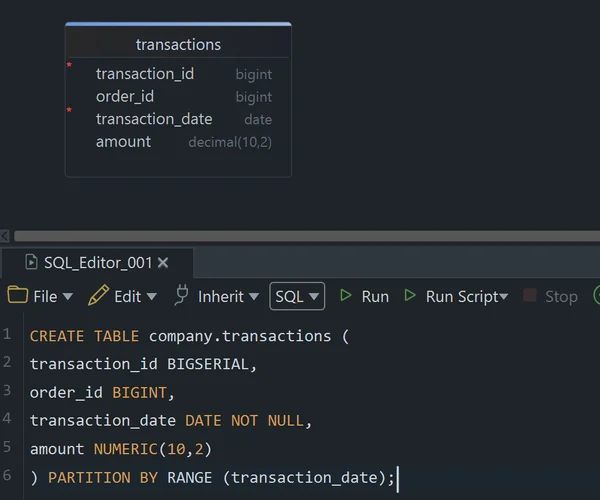
How PostgreSQL range partitioning splits a table by date, how to check that a query reads fewer partitions, and how to add, attach and detach partitions, with every statement run on PostgreSQL 18.
DbSchema, pgModeler, Navicat Data Modeler, pgAdmin, SqlDBM, ChartDB and dbdiagram.io, grouped by where the design lives and whether it compares with PostgreSQL. Checked 29 October 2026.
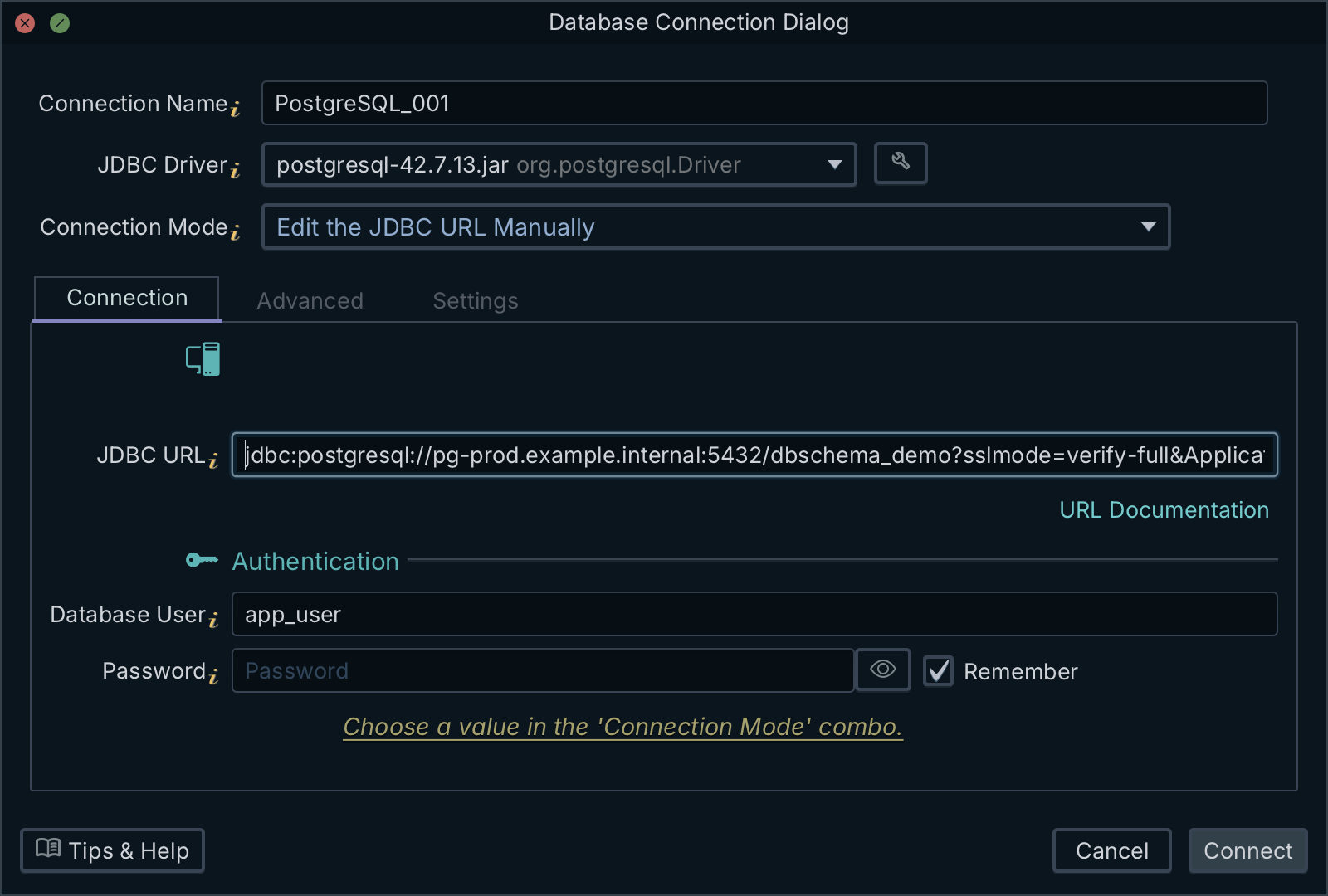
Reverse engineer a PostgreSQL database into an ER diagram: what pg_catalog holds, the psql route, DbSchema over JDBC, virtual foreign keys and a schema check.
PostgreSQL schema version control: keep a model file or schema dump in Git, generate the migration between versions, and run it in one transaction.
How DbSchema's visual query builder writes PostgreSQL joins for you, where it stops at recursive queries, and how to write and guard WITH RECURSIVE.
Learn how to create triggers in PostgreSQL using psql and DbSchema, with trigger types, parameters, examples, and practical guidance.
Learn how to use PostgreSQL aggregate functions like AVG, COUNT, MIN, MAX, and SUM in psql and DbSchema with practical examples.
Use DROP TABLE in PostgreSQL with IF EXISTS, CASCADE, and multi-table examples. Review dependencies first and manage changes visually in DbSchema.
Learn how to document PostgreSQL databases using psql comments and DbSchema visual documentation workflows for teams.
Learn how to create a PostgreSQL database using psql and DbSchema, with setup steps, command examples, and verification tips.
Document a PostgreSQL database with COMMENT ON, read the text back from pg_description and psql, and export the diagram and data dictionary as one HTML5 file.
Learn how to use PostgreSQL JOIN types with practical examples in psql and DbSchema, including INNER, LEFT, RIGHT, FULL, CROSS, NATURAL, and SELF JOIN.
Connect DbSchema to PostgreSQL, reverse-engineer the schema into diagrams, build queries, edit related rows, and export HTML5 documentation.
Learn how to copy a PostgreSQL database using SQL and command-line tools, including connection cleanup and template-based cloning.
Design PostgreSQL schemas visually with DbSchema. Build ER diagrams, edit tables, sync changes, version schema files with Git, and publish docs.
Learn how to create indexes in PostgreSQL using psql and DbSchema, including index options, limitations, and practical examples.
Learn how to manage large PostgreSQL schemas with a visual database tool: split diagrams, compare changes, document tables, and handle 10,000+ tables.
Deploy PostgreSQL schema changes without blocking traffic: lock_timeout, constant defaults, NOT VALID constraints and CREATE INDEX CONCURRENTLY.
One row per group in PostgreSQL with DISTINCT ON: the ORDER BY it requires, the tie that picks a random row, and when ROW_NUMBER or LEFT JOIN LATERAL is the better tool.