Best ER Diagram Tools in 2026: Free and Paid Comparison
For a developer or architect choosing an ER diagram tool for a real database, one that already runs or one that will be deployed from the design.
On this page
Most lists of ER diagram tools mix two kinds of software: drawing tools, where you type or drag the tables in, and database tools, which read the tables from the server. If your diagram has to match a real database, you need the second kind, and DbSchema is the one to pick: it reverse-engineers the database into a diagram, lets you change the design on it, and deploys the change back.
| Tool | Reads a live database | Databases | Edit the design on the diagram | Free option | Runs |
|---|---|---|---|---|---|
| DbSchema | yes | 100+ | yes | Community Edition | Windows, macOS, Linux |
| DBeaver | yes | 100+ | Enterprise and Ultimate | Community | desktop |
| MySQL Workbench | yes | MySQL | yes | Community Edition | desktop |
| pgModeler | in the paid Plus edition | PostgreSQL | yes | source code to compile | desktop |
| dbdiagram.io | through a separate CLI | imports SQL | yes, as DBML text | 10 projects | browser |
| Lucidchart | no, you upload a query result | imports SQL | yes | free plan | browser |
| draw.io | no, you paste SQL | none | yes, as shapes | free | browser, desktop |
The vendor pages these rows come from were checked on 2026-10-17.
Drawing tools and database tools
A drawing tool gives you a picture of the schema as you entered it. That picture is right on the day you draw it and drifts from the database with every migration that nobody copies across by hand. A database tool reads the schema from the server, so the diagram starts out correct, and you refresh it instead of redrawing it.
Three questions sort the tools in the table:
- Does it connect to your database, or do you import a SQL script?
- When you change a table on the diagram, can it write that change to the database?
- Does it cover every engine you run, or only one?
A team that runs PostgreSQL next to MongoDB or SQL Server needs one tool for all of them, or it keeps a separate diagram, and a separate license, per engine.
DbSchema
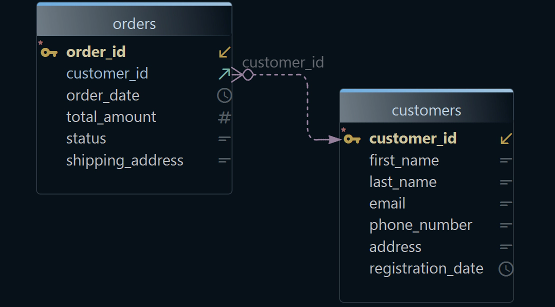
DbSchema connects to the database, reads its schema and draws it with the foreign key lines in place. Connecting, reverse-engineering and the diagrams are in the free Community Edition.
A large schema becomes readable in two steps. Diagram → New Diagram adds a diagram with only the tables you pick, so one model can hold a diagram per subject area, and Diagram → Auto Arrange Tables lays the tables out by their foreign keys (diagram documentation).
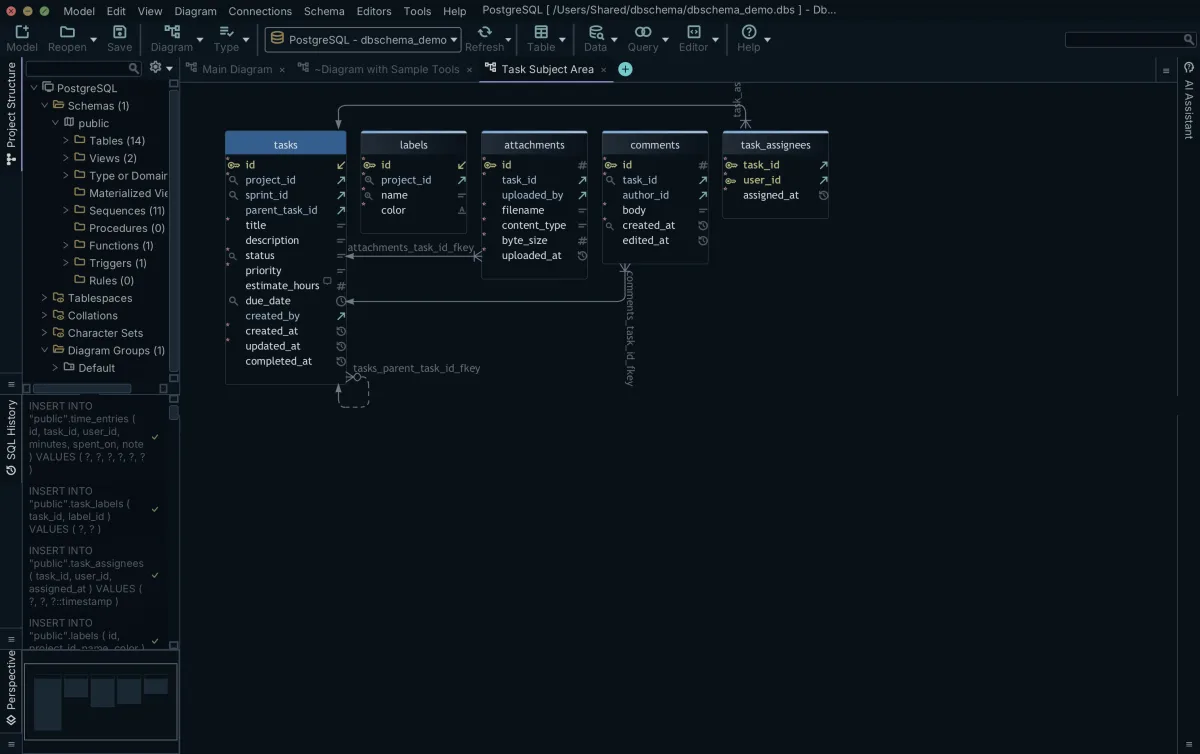
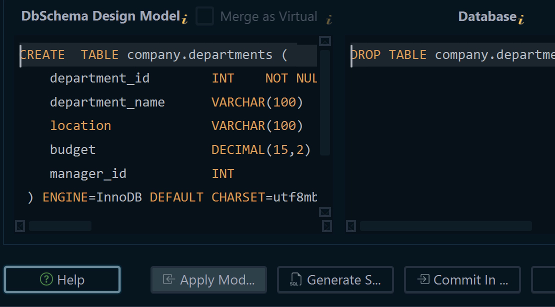
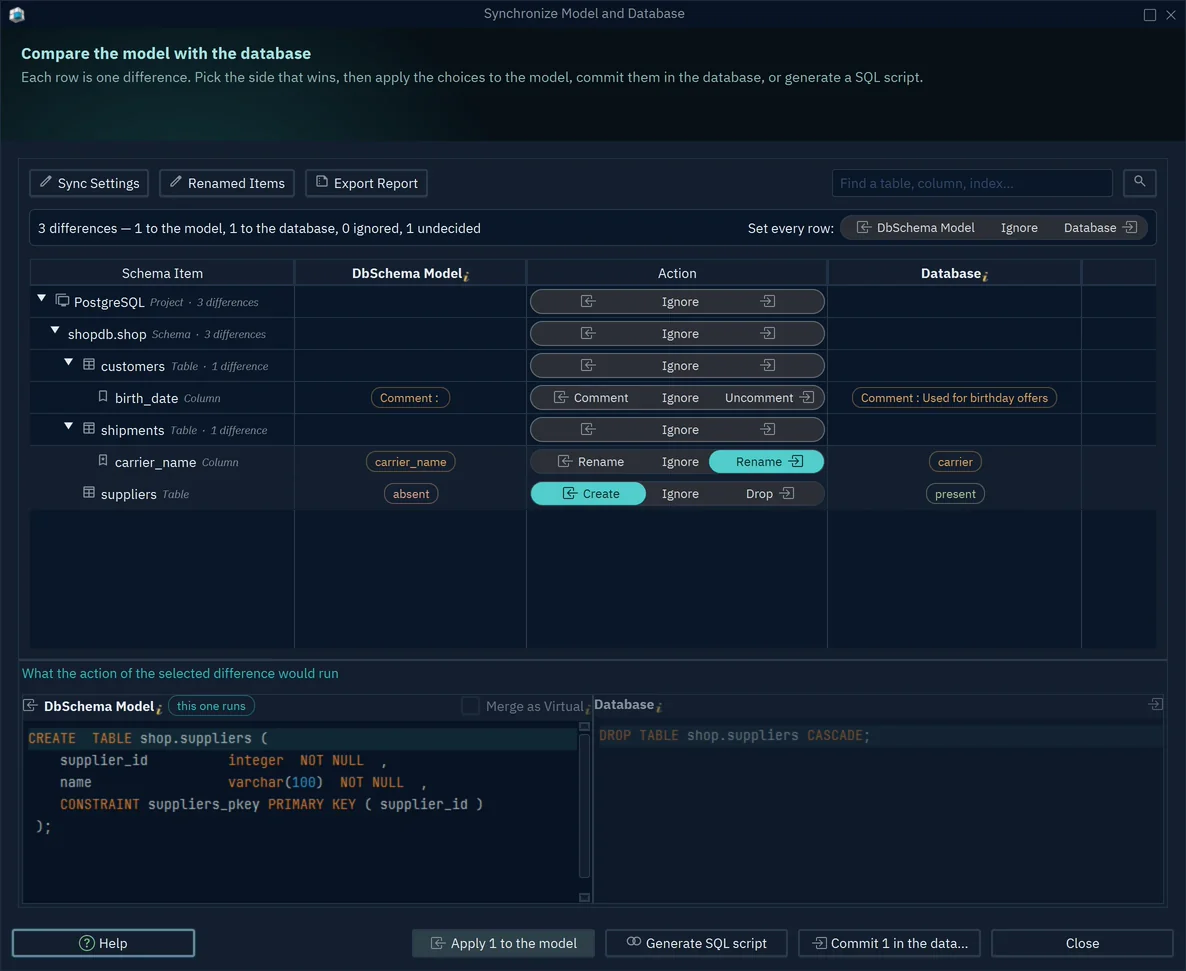
Editing the diagram changes the DbSchema model, not the database. To deploy, work offline and then connect: DbSchema compares the model with the database, lists every difference, and generates the CREATE and ALTER statements for the ones you choose (schema synchronization).
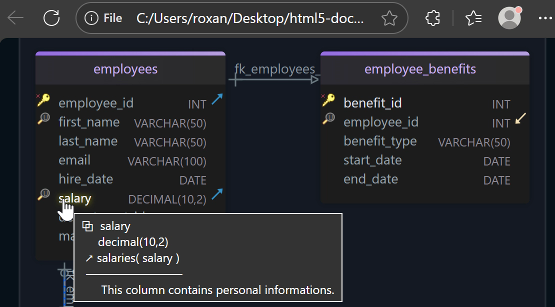
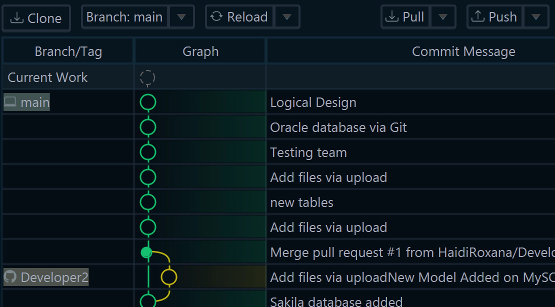
The model is one .dbs file, which you can commit to Git from inside DbSchema (Git collaboration). File → Export As... → HTML5/PDF Documentation writes the schema as an HTML5 page, a PDF or Markdown, with the table and column comments as tooltips on the diagram (schema documentation). Saving the model file, the documentation and schema synchronization are in DbSchema Pro. Logical and conceptual design are in DbSchema Architect.
Other database tools
DBeaver
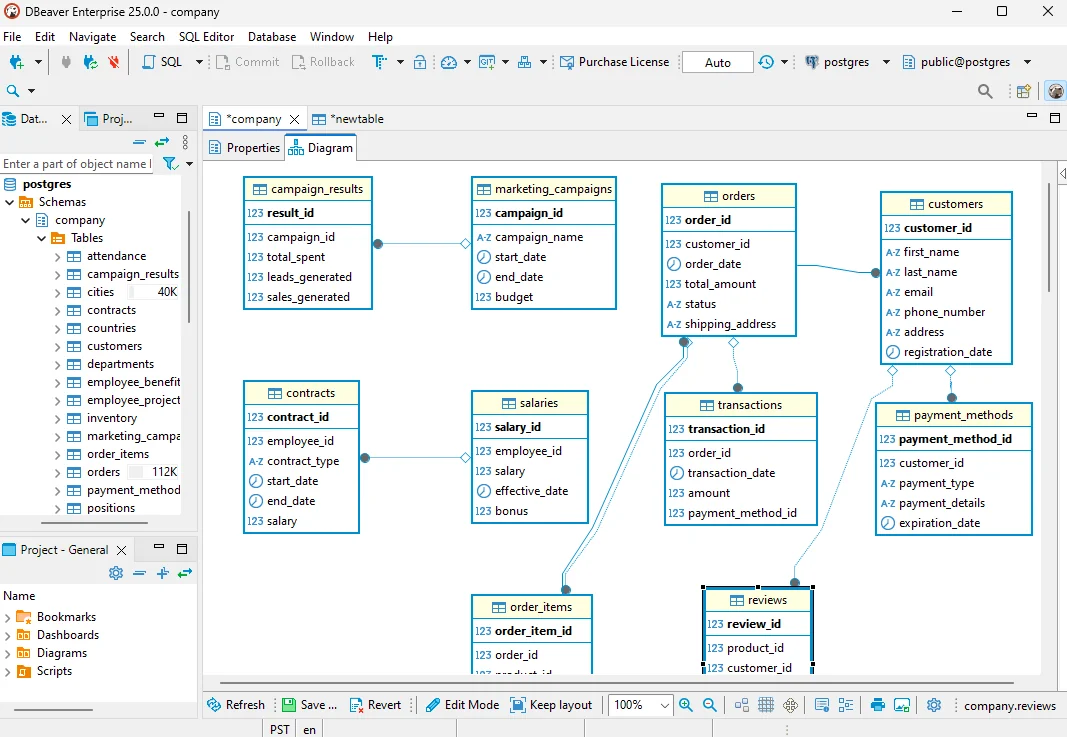
DBeaver is a database client that shows an ER diagram for the schema or table you open, and it connects to 100+ databases. The diagram is read-only until you switch to edit mode, which the DBeaver documentation lists for the Enterprise and Ultimate editions. Git sync of projects is in Enterprise, Ultimate and Team (DBeaver editions). Read DBeaver Alternative for the two side by side.
MySQL Workbench
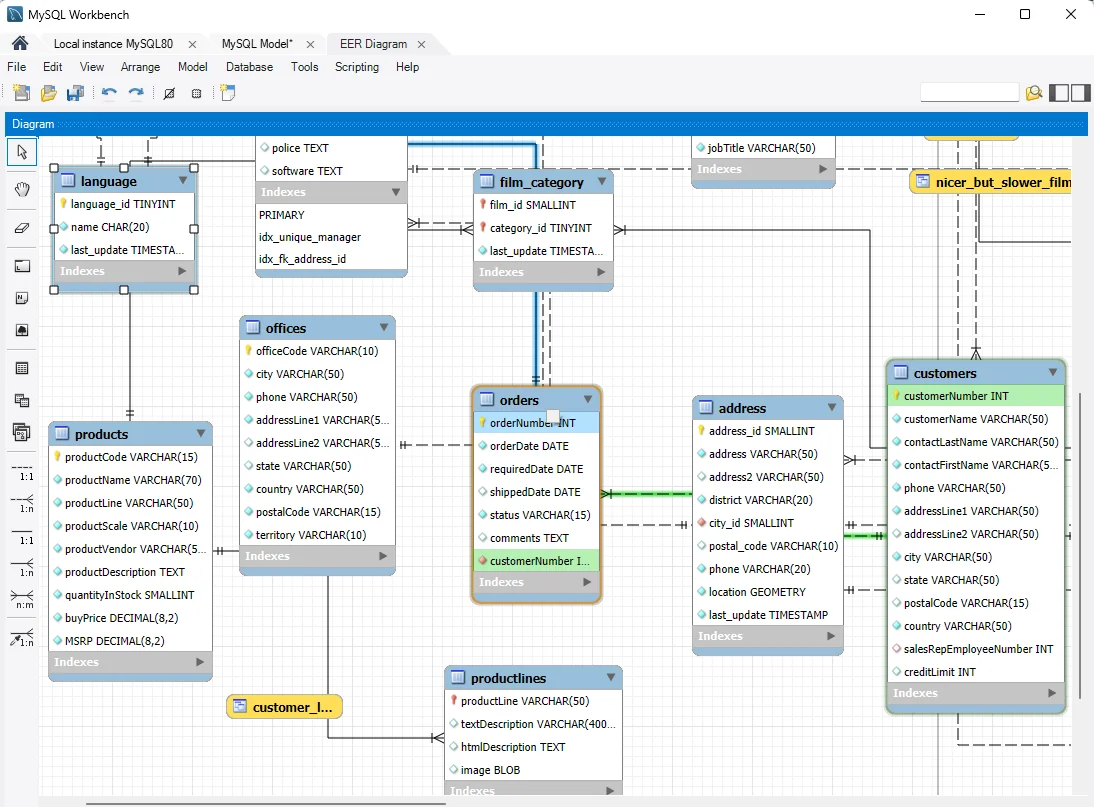
MySQL Workbench models MySQL databases. Its free Community Edition reverse-engineers a MySQL database into an EER diagram and forward-engineers a diagram into a live database (MySQL Workbench manual). A second engine means a second tool.
pgModeler
pgModeler models PostgreSQL only, including PostgreSQL-specific objects. Its Community tier is source code you build yourself, and the pre-built binaries and the import of an existing database are in the paid Plus tier (pgModeler).
Drawing tools
dbdiagram.io
dbdiagram.io draws the schema from DBML, a text format you type in the browser, or from an imported SQL file. The web app does not connect to a database; the separate DBML CLI can read one and write DBML (DBML CLI). The free plan holds 10 projects (dbdiagram.io pricing).
Lucidchart
Lucidchart builds an ERD from data you bring to it: it gives you a query, you run the query on your database, and you upload the result (Lucidchart help). After that the diagram is a drawing, and later changes to the database do not reach it.
draw.io
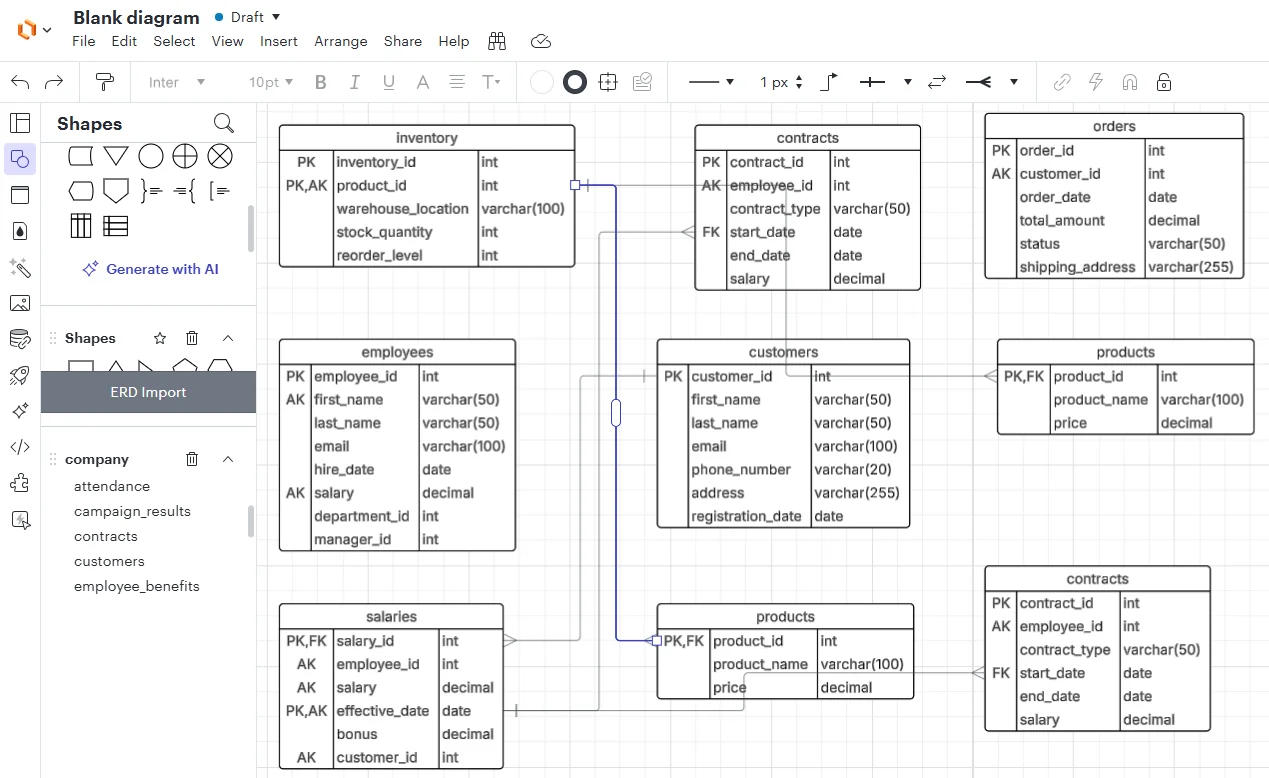
draw.io is a general diagram editor. It turns SQL CREATE TABLE statements that you paste in into table shapes (draw.io), and from then on the shapes are edited like any other drawing.
Reverse engineering an existing database
An undocumented database is the most common reason to look for an ER diagram tool, and it is where reading the database pays off. On SQLite, DbSchema opens the database file and draws its tables, views and declared foreign keys in one diagram:
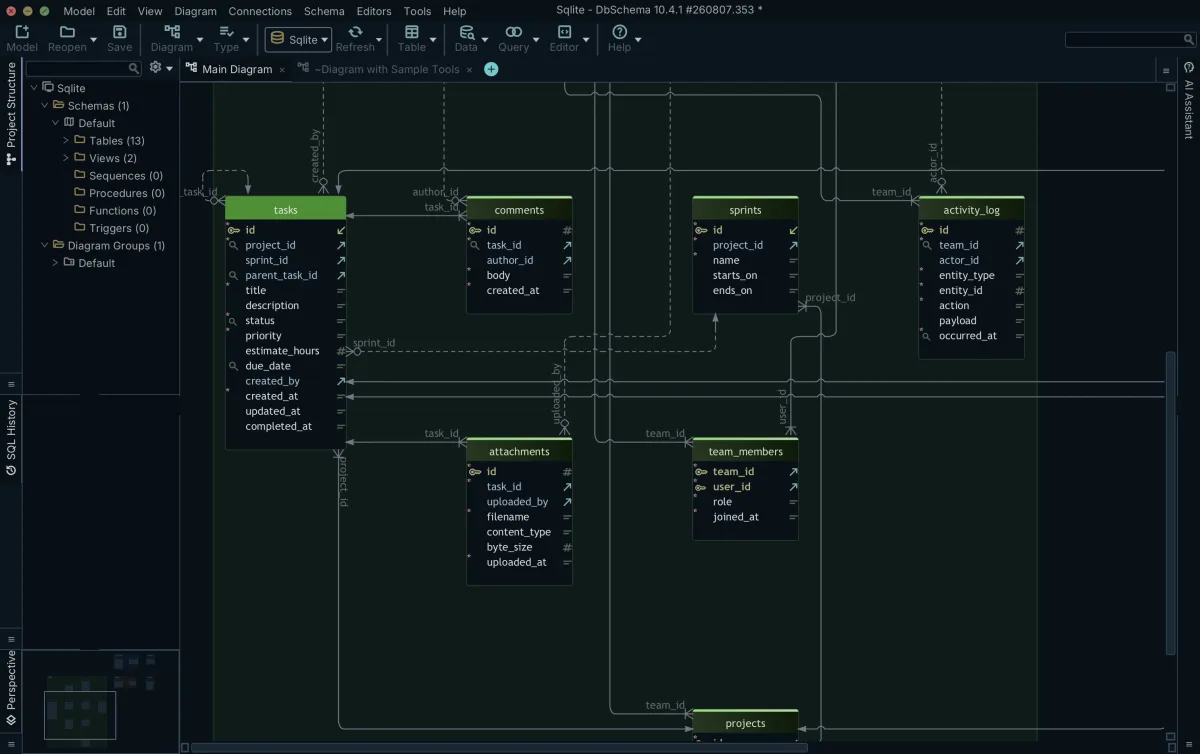
Legacy schemas often declare no foreign keys at all, so the diagram shows tables with no lines between them. Drag a column onto the column it references, and DbSchema can create a virtual foreign key: it exists only in the DbSchema model, is drawn like any other relation, and the Query Builder and the Relational Data Explorer follow it when they join tables.
The same steps against other engines:
For the free tools only, see Top free ER diagram tools, and for design tools beyond ER diagrams, Best Database Schema Design Tools.
Download DbSchema at https://dbschema.com/download.html, connect it to the database nobody has drawn yet, and split the result into one diagram per subject area. The diagrams are free in the Community Edition. Saving the model file, the HTML5 and PDF documentation and schema synchronization are in DbSchema Pro.
Create ER diagrams in minutes
DbSchema reverse-engineers your database into an editable diagram, splits a large schema across several diagrams, and exports interactive HTML5 documentation. The diagrams are in the free Community Edition; documentation export and schema synchronization are Pro.