Navicat Alternatives for Editing Relational Data
For the backend developer who edits rows across related tables all day and is deciding what to run instead of Navicat.
On this page
You keep Navicat open on the second monitor because a support ticket needs one order row, its customer, and the three payment rows hanging off it, and each of those grids costs you a join typed by hand. DbSchema removes the typing: its Relational Data Editor opens the parent table and its children in one view, and clicking the order refilters every child pane to the rows that belong to it.
TablePlus and Beekeeper Studio are the other two clients that come up when developers look past Navicat, and they answer a narrower version of the same question.
What are some software similar to Navicat?
DbSchema, TablePlus and Beekeeper Studio cover between them what most backend work asks of a client: reading related rows, changing a few of them, and keeping the schema itself under control.
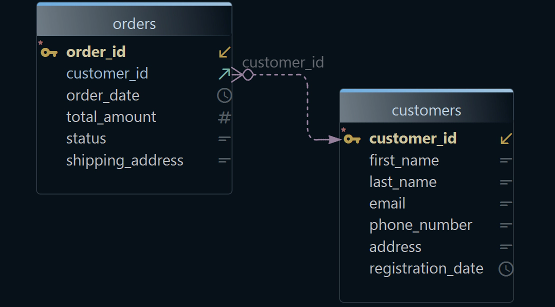
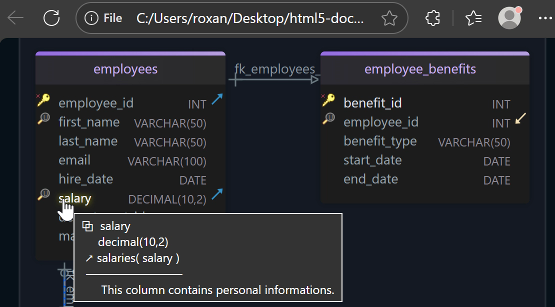
DbSchema is the one built around the schema. It reverse-engineers the database into an interactive diagram, keeps that design in a .dbs model file you commit next to the application code, and browses data along the foreign keys drawn on the diagram. TablePlus is a native desktop client sold as a one-time licence per device[1]. Beekeeper Studio ships a free Community edition that browses and queries PostgreSQL, MySQL, SQLite, SQL Server and a long list of other engines, with paid tiers above it[2].
Where Navicat's work sits and where DbSchema's does
Navicat Premium connects to several engines from one application, and Navicat also sells single-engine products: Navicat for MySQL, for PostgreSQL, for SQL Server, for Oracle, for MongoDB, for SQLite, for Redis and for Snowflake[3]. That catalogue is aimed at administering servers and moving data between them.
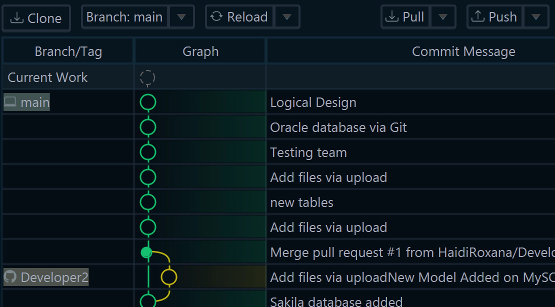
The half of the day that goes on the design is a different job: a diagram whose layout survives being closed, a model file that can go through a pull request, and a migration script generated from the difference between that file and the database. DbSchema does that half, and the row editing described below comes out of the same diagram. Evaluating DBeaver alternatives puts the same split in front of you.
What are the top 3 relational databases?
Rankings move around, but the shape of a backend stack rarely does: new services on PostgreSQL, an application nobody wants to touch still on MySQL, and a reporting database on SQL Server that finance depends on. Three engines, one developer, and a ticket that crosses all three in a week.
One licence across the engines
A client that covers one engine has to be bought again for the next one. DbSchema connects to 70+ SQL and NoSQL databases over JDBC under a single licence, and downloads the driver for a new connection itself, so adding SQL Server to a PostgreSQL and MySQL stack adds a connection rather than a purchase. It installs on Windows, macOS and Linux from the same download page, which matters when the team is split across all three.
The diagrams behave the same on every engine, so the foreign keys you follow in a MySQL schema are followed the same way in SQL Server. Connecting, reverse-engineering, the diagrams and the SQL editor are in the free Community Edition.
Does anyone use MySQL anymore?
Enough that the awkward MySQL schemas are still the ones filling your ticket queue. The awkward part is usually the constraints: a table that predates InnoDB carries none. MyISAM has no foreign key support at all, along with table-level locking and no transactions[4], so a schema built on it holds its relationships only in the application code.
Editing related rows the database never linked
A client that reads foreign keys finds nothing to read in that schema, and you are back to writing the join by hand for every ticket. DbSchema handles it from the diagram: drag the column from one table onto the matching column of the other, and DbSchema saves a virtual foreign key. It lives in the model file only, so the live MySQL schema is untouched and no ALTER TABLE runs.
The Relational Data Editor then treats that virtual key like a declared one. Right-click a table header in the diagram, choose Open in Relational Data Editor, and click the foreign key button on the table header panel to bring the child table in as a second pane. Click a row in the parent and the child panes reload to the matching rows, as many levels deep as the schema goes. Insert, Edit and Delete work inline in each pane, and nothing reaches the database until you click Commit; Rollback throws the pending changes away. Relational data browse is a Pro feature.
Does Navicat have a free version?
Navicat publishes Navicat Premium Lite as a free product, alongside Navicat Data Modeler Lite and Navicat BI Viewer[3]. The Lite editions are the entry-level members of the family rather than the full products.
What the free editions on this list cover
The DbSchema Community Edition has no time limit and no engine restriction. It connects to every supported database, reverse-engineers the schema into interactive diagrams, creates tables and columns, and runs queries in the SQL editor with autocompletion[5]. It is a free SQL client that also draws the schema, which is where most evaluations of a free database design tool start.
Beekeeper Studio's free Community edition covers browsing and querying on its supported engines, and its paid tiers start at 9 USD per user per month billed yearly on the Pay Yearly toggle of its pricing page, which also offers a discount by visitor country[6]. What no free tier on this list covers is the part this article is about, and in DbSchema that part is Pro: browsing data across several tables at once, saving the design to a file, schema synchronization and the documentation export.
What is the best IDE for SQL?
The one that writes the join for you when the join is the tedious part. That is what the DbSchema Query Builder is for, and it starts from the same diagram: click a table header, click the arrow icon beside a column to follow a foreign key and pull in the related table, then click the join type label on the connecting line to switch between INNER JOIN, LEFT JOIN and EXISTS.
Tick the columns you want in the SELECT list. Right-click a column and choose Filter for a WHERE condition, or switch on Group By mode to group the ticked columns and apply MIN, MAX, SUM, AVG or COUNT. The SQL is written at the bottom of the builder as you click, so you can read it, run it, and paste it into application code. Save in the result pane writes the whole result set to a file, re-running the query so the rows that do not fit on screen are in the export too. The Query Builder is saved into the model file and reopens from the Editors menu; it is a Pro feature.
Is SQLite or MySQL faster?
The comparison is not one the SQLite project makes. Its documentation puts it plainly: SQLite is not directly comparable to client/server engines such as MySQL, Oracle, PostgreSQL or SQL Server, because it solves a different problem, local storage for one application or device rather than a shared repository. It allows an unlimited number of simultaneous readers but only one writer at any instant, and it says outright that many client programs sending SQL over a network is the case for a client/server engine instead[7].
Why the same argument applies to the model file
The same arithmetic applies to the design work. Every layout change, table edit and diagram redraw that has to travel to a remote database costs a round trip. DbSchema keeps the whole design in a local .dbs file, so the editing stays on your machine whatever the database is doing.
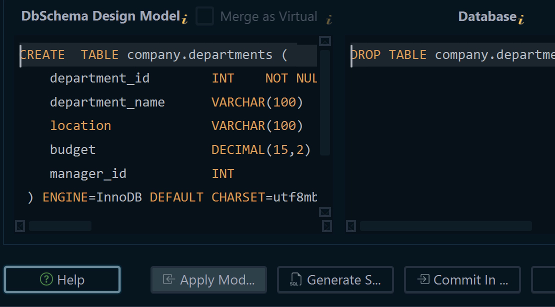
That file is also the safety rail. In offline mode DbSchema sends no statements to the database and writes your changes only to the model; reconnect, and the Synchronization Dialog shows every difference so you decide, one by one, whether to update the model or push the change and execute the generated SQL. Connected rather than offline, a schema edit goes to the model and to the database at once, which is why offline mode is the one that gives you a review step. Offline design and schema synchronization are Pro features.
The shortlist and why each is on it
| Tool | Built around | Related rows in one view | Design file | Licence |
|---|---|---|---|---|
| DbSchema Pro | Visual schema design and data browse | Relational Data Editor over real or virtual foreign keys | Local XML .dbs file | Perpetual or monthly, per developer |
| TablePlus | Native desktop data editing | Single grid | None | One-time, 99 USD for one device |
| Beekeeper Studio | Browsing and querying | Single grid | None | Free Community edition, paid tiers from 9 USD a month |
| Navicat Premium | Multi-engine administration and data transfer | Single grid | Data Modeler sold separately | Monthly, yearly or perpetual |
DbSchema Pro is bought once plus taxes, with the first year of updates and support included and an optional yearly renewal afterwards if you want to keep receiving them, and a monthly subscription is sold alongside it. The amount for each is on the DbSchema pricing page[5], which prices in your own currency and carries separate Business, Personal and Universities and Students tabs. TablePlus is a one-time purchase with no auto-renewal: 99 USD for a one-device licence, 129 USD for two devices, and 79 USD a seat from three seats, in USD before VAT[1].
TablePlus and Beekeeper Studio are for the day that is all rows and queries and no schema work. DbSchema is for the day the ticket turns into a column, because the diagram, the row editing, the generated migration and the documentation come out of one model file.
Download DbSchema at https://dbschema.com/download.html, point it at the database Navicat is connected to now, and open the busiest parent table in the Relational Data Editor. Connecting, reverse-engineering, the diagrams and the SQL editor are free in Community; the Relational Data Editor, the Query Builder, saving the model to a file and schema synchronization are Pro.
Frequently asked questions
How much does Navicat Premium cost?
On the Enterprise tab of its price plan, Navicat lists Navicat Premium at USD 79.99 a month, USD 799.99 a year, or USD 1,599.00 for a perpetual licence, with a separate tab for non-commercial use[8].
Can DbSchema edit related rows without writing joins?
Click a column header in any pane of the DbSchema Relational Data Editor and a filter dialog opens for that column, on as many columns at once as you need, while the selected parent row still decides which child rows each pane lists. A cell holding an image or a BLOB opens in the application your system registers for the extension you give it, from View Data on the cell's right-click menu.
Is a free client enough for editing relational data?
For one table at a time the free DbSchema Community Edition covers it, and the section above on free editions says what each free tier on this list reaches. Following the foreign keys across several tables in one cascading view is the Relational Data Editor, which is in DbSchema Pro.
Sources
Edit relational data without writing joins
DbSchema follows foreign keys across tables so you can browse and edit related records together, and keeps the schema in a versionable model file. Interactive diagrams and the SQL editor are in the free Community edition.