Buying a Data Modeling Tool for Your Team: What It Costs per Seat
What one data modeling seat costs, which edition each person needs, and when a shared floating seat is cheaper than a seat per person.
On this page
DbSchema gives your team data modeling at a fixed price per seat, paid once. Purchasing will ask what a seat costs. With DbSchema, one seat for physical modeling is DbSchema Pro at 294 USD once, and a seat that adds logical and conceptual design is DbSchema Architect at 470.40 USD once. People who model now and then can share a floating license instead of each getting a seat. Over three years, a Pro seat costs 444 USD with every update.
Short answer
A DbSchema seat is one developer on up to two computers. Pro covers the physical model, Git, schema compare and documentation; Architect adds logical and conceptual design. Both are one-time purchases with a year of updates, and renewing the updates is optional.
- Physical modeling: DbSchema Pro, 294 USD once per seat, or 29.40 USD a month.
- Logical and conceptual design: DbSchema Architect, 470.40 USD once per seat.
- Occasional users share a floating license instead of a seat each.
Decide which modeling level each person needs
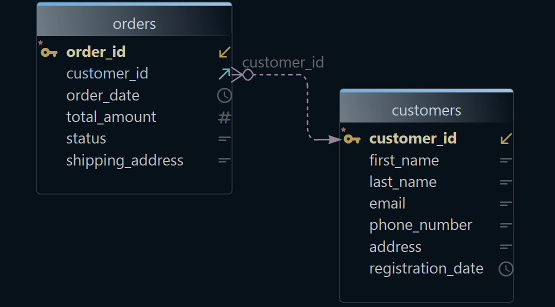
The edition, not the seat count, decides most of the price, so sort your team by the kind of model each person works on. A physical model holds real tables, columns and data types for one database. A logical model holds entities, attributes and relations, with no database chosen yet. A conceptual model names the main entities and how they connect.
DbSchema splits the editions along that line, as the licensing documentation shows. The free Community Edition connects to a database and draws its diagram. DbSchema Pro adds saving the model to a file, comparing it with a database, and HTML documentation. DbSchema Architect adds logical and conceptual design on top of Pro.
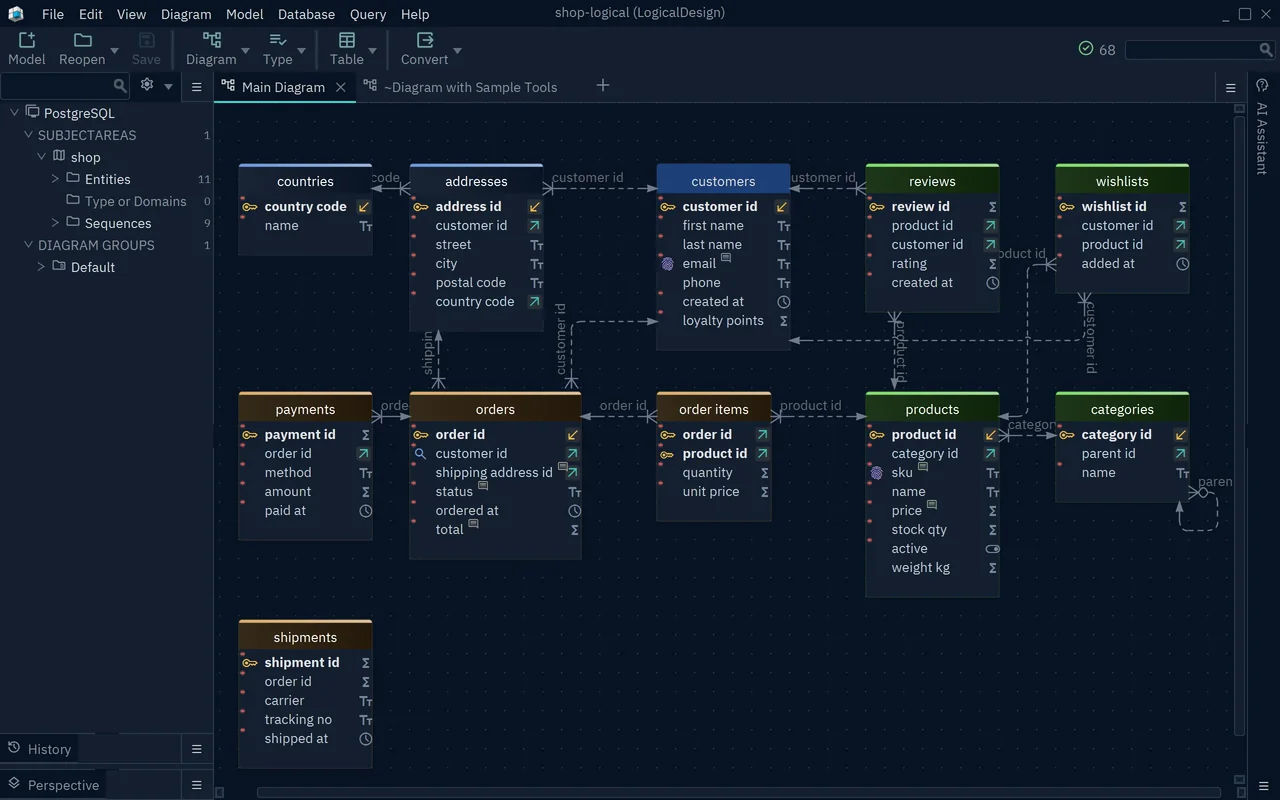
So the people who design and change the schema of a running database need Pro. The one or two people who model the business domain before anyone picks PostgreSQL or SQL Server need Architect. A developer who only connects, reads the diagram and runs SQL needs no paid seat at all. Which edition a team actually needs goes through the edition choice feature by feature.
What one seat costs over three years
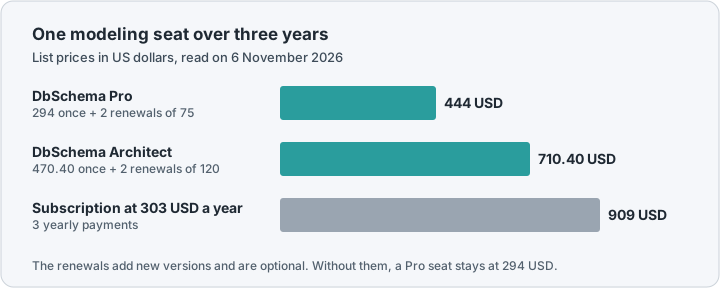
Compare tools on what a seat costs over the time you will use it, not on the first invoice. A one-time license looks expensive next to a yearly subscription in year one and costs less from year two. These are the list prices for one seat, read on each vendor's own page on 6 November 2026:
| Tool and edition | How you pay | One seat, list price | One seat over three years |
|---|---|---|---|
| DbSchema Pro | One-time, then optional updates | 294 USD + 75 USD a year | 444 USD |
| DbSchema Architect | One-time, then optional updates | 470.40 USD + 120 USD a year | 710.40 USD |
| Redgate Data Modeler Pro | Subscription | 303 USD a year | 909 USD |
| Hackolade Workgroup | Subscription | 1,750 EUR a year | 5,250 EUR |
What to see: both DbSchema editions cost less over three years than the cheapest subscription in the table.
The DbSchema three-year figures assume you renew the updates twice. You don't have to: a perpetual license keeps running every version released in its first year, so a Pro seat that skips the renewals stays at 294 USD. Redgate Data Modeler Pro is the edition with logical design, and its Standard edition caps a model at 100 tables. Hackolade sells its Git edition, Workgroup, per dedicated seat. ER/Studio Data Architect lists 2,687 USD as a total subscription price per user, without naming the term, so it has no three-year figure here.
Some vendors publish no price at all. SqlDBM, a browser-based modeler, asks you to request a quote, and prices per user. Budget a sales call for those before you can compare them.
Give occasional users a floating seat
A regular DbSchema seat belongs to one person, who can install it on two computers and use one at a time. Commercial seats can be reassigned to someone else in the Customer Area, which helps when a person leaves the team.
A floating license works differently. You buy a number of seats, and any user on the license's list can take one while DbSchema runs, as the purchase page describes. DbSchema frees the seat when the person closes it. The list of users can be longer than the number of seats, so five people who each model a few hours a week can share one seat.
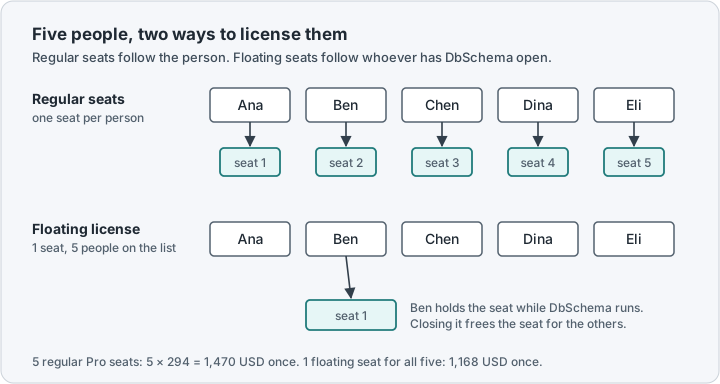
A floating seat costs 1,168 USD once, with a year of updates, and then 280 USD a year to renew, which is optional. That is about four Pro seats, so it pays off when more than four people share each floating seat over the day. Daily designers, and the person who needs logical design, are better off with a regular seat each. How floating licences work for a database team works through when a pool pays off.
Pay once or pay monthly
Each DbSchema edition is also sold as a monthly subscription: 29.40 USD a month for Pro and 47.04 USD for Architect. The one-time price equals 10 monthly payments, so the one-time license is cheaper for any seat you keep longer than 10 months. A monthly seat fits a contractor who joins for one project. Perpetual or subscription for database tooling has the break-even table.
Try it with the people who will get the seats
Every DbSchema download starts with a 15-day trial of all Pro and Architect features. Run the trial with the people who will get the first seats, on your own schema, so you know who needs Architect before you order. The rollout guide covers assigning seats by email once you've bought them, and the logical design documentation shows what Architect adds.
Download DbSchema and start the trial with your team. Physical modeling, Git and schema compare need DbSchema Pro, and logical and conceptual design need DbSchema Architect.
Sources
Try DbSchema with the people who will get the seats
Every DbSchema download starts with a 15-day trial of all features. Physical modeling, Git and schema compare are in DbSchema Pro; logical and conceptual design is in DbSchema Architect.