Learn SQL in your browser
A free SQL tutorial in short lessons on one shop database. Every example runs on real PostgreSQL in your browser, and the page checks your answers.
Database design, migrations, SQL and everyday database work — explained with practical examples.
A free SQL tutorial in short lessons on one shop database. Every example runs on real PostgreSQL in your browser, and the page checks your answers.
Design a SQLite schema on a diagram in DbSchema: create tables, add CHECK constraints and foreign keys, and see how DbSchema changes a table that SQLite's ALTER TABLE can't.
Learn SQL Server ROW, PAGE, COLUMNSTORE and COLUMNSTORE_ARCHIVE compression on one small table: estimate the savings, rebuild, check the setting, and choose.
Learn SQL Server database sharding with shard keys, routing, cross-shard design, and trade-offs. Plan scalable SQL Server architectures in DbSchema.
Learn SQL Server MERGE for UPSERT and sync jobs, compare WHEN MATCHED options, OUTPUT logging, and safer alternatives. Test the logic in DbSchema.
DbSchema, SqlDBM, erwin, ER/Studio and Hackolade on Snowflake: how each reads the account, where the model lives, and what unenforced keys mean. Checked 12 Nov 2026.
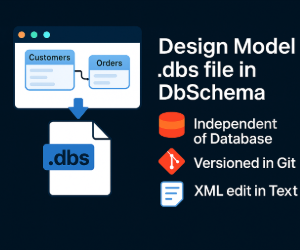
A .dbs file is DbSchema's XML design model. What it stores, an excerpt from a real model, and how a schema change reads in a diff.
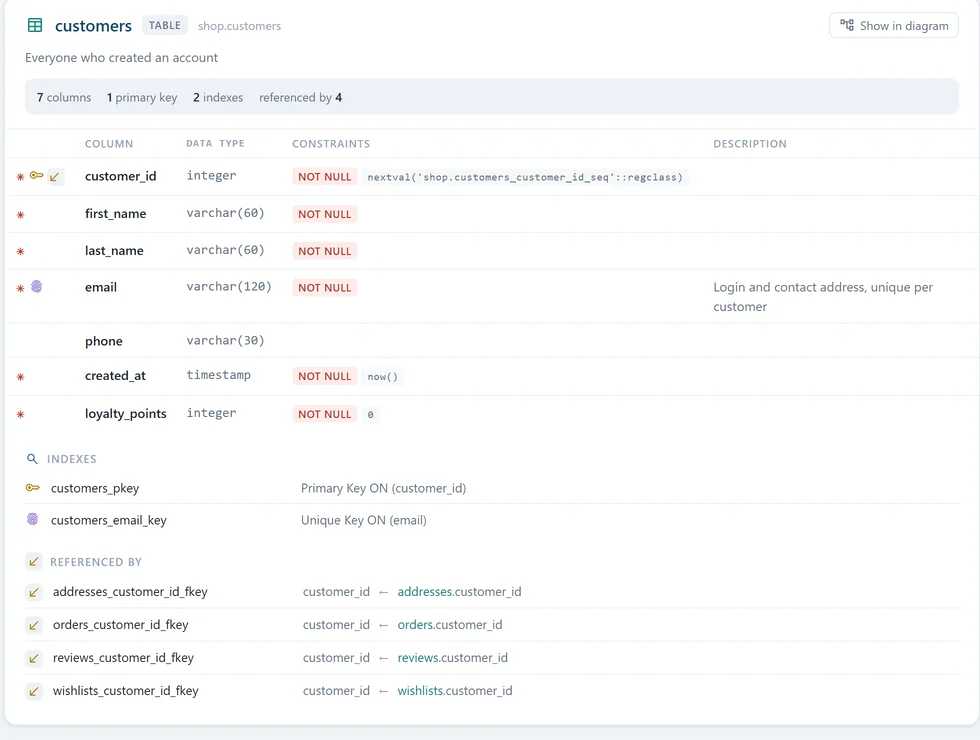
Generate database documentation as HTML5, PDF or Markdown with DbSchema: the steps, where the table and column descriptions come from, and how to regenerate it from a script.
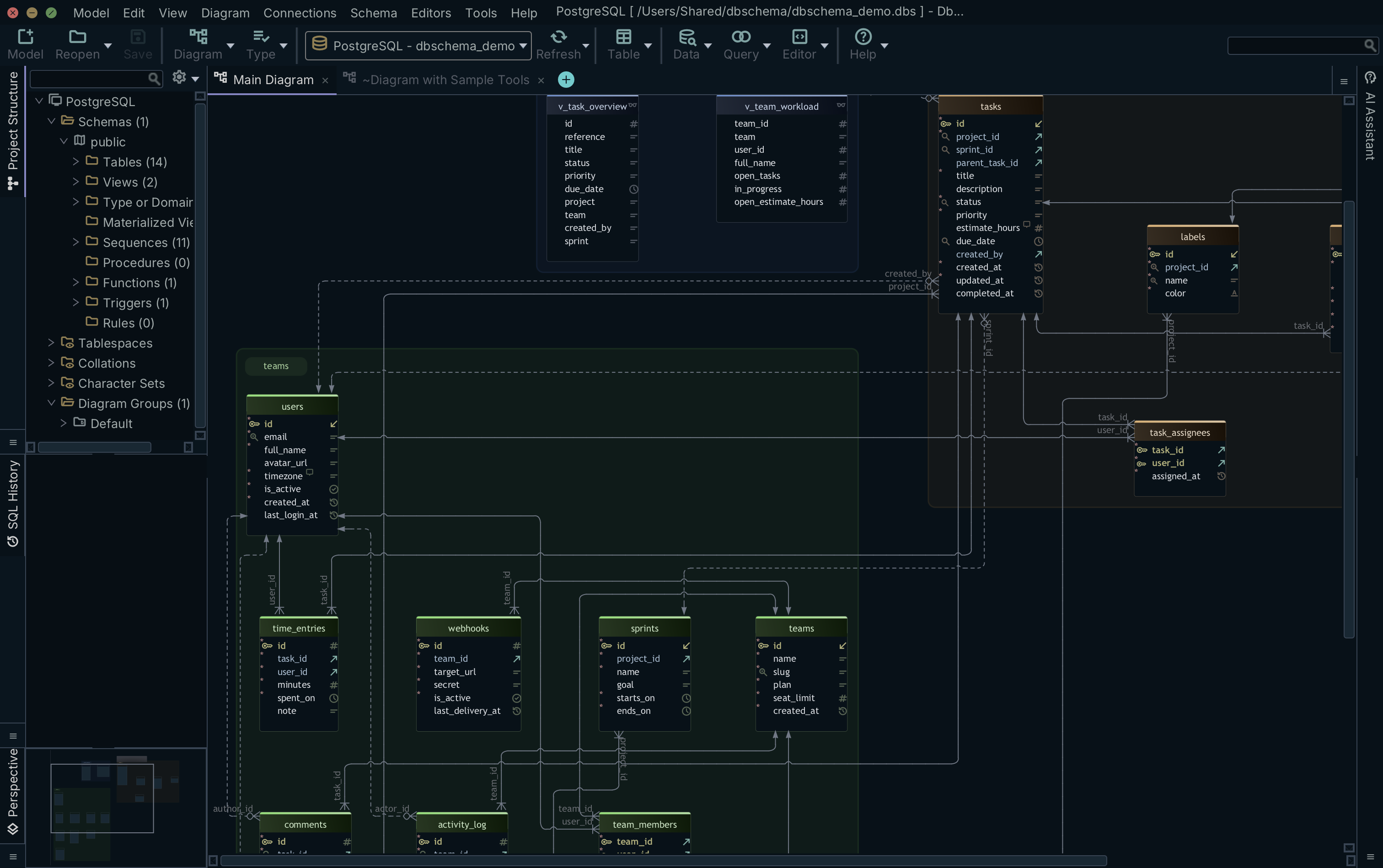
Eight database diagram tools compared by where the diagram comes from: a connection to your database, the output of a query, or code you paste. DbSchema's free Community Edition reads the live database.
Learn the SQL DELETE statement from short examples with their results: WHERE, SELECT before DELETE, subqueries and joins, ROLLBACK, RETURNING, and DELETE vs TRUNCATE vs DROP.
Learn the SQL UPDATE statement from short examples with their results: WHERE, several columns, expressions, transactions, subqueries and UPDATE with JOIN in PostgreSQL, MySQL, SQLite and SQL Server.