NoSQL Data Modeling Tools: Hackolade Alternatives for MongoDB | DbSchema
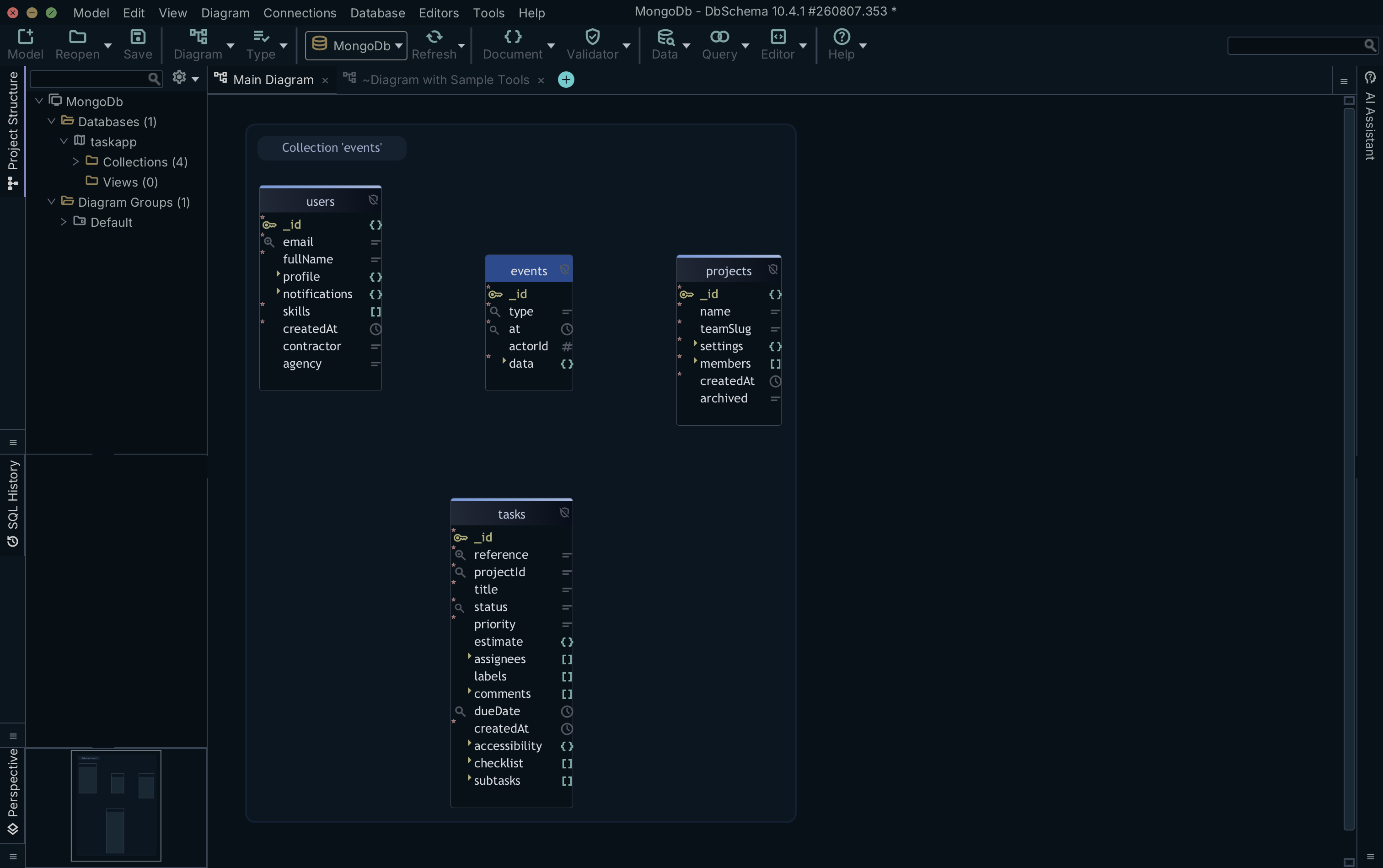
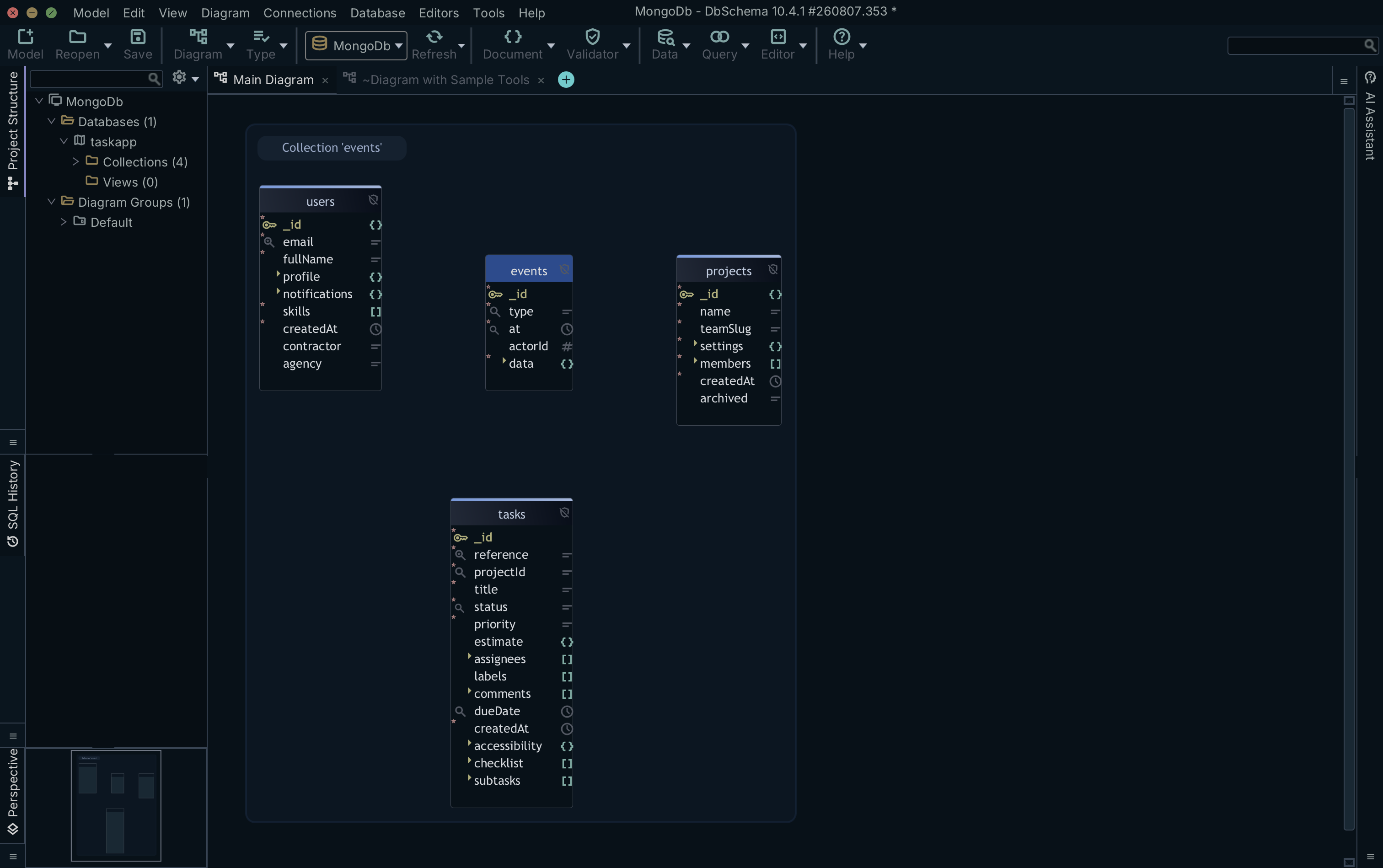
Hackolade alternatives for MongoDB compared on what they read from your collections, what they write back, and what one seat costs over three years.
Every post tagged mongodb on the DbSchema blog.
Hackolade alternatives for MongoDB compared on what they read from your collections, what they write back, and what one seat costs over three years.
Learn MongoDB CRUD operations in mongosh from short examples with their results: insertOne, find, filters, projection, sort, updateOne, updateMany, replaceOne, upsert, deleteOne and deleteMany.
Create a MongoDB database with use and a first insert in mongosh, or through Atlas, Compass, Docker and DbSchema. Why an empty database does not persist.
Learn MongoDB $lookup with simple joins, pipeline lookups, $unwind, indexing, and performance tips. Build and inspect joins visually in DbSchema.
Draw a MongoDB database as a diagram in DbSchema: connect, read the collections, check the fields it found, add relations and export HTML5 documentation.
Eight MongoDB GUI tools compared on price, free tier and platforms, with a test on MongoDB 8.2 that shows how one mistyped field breaks a join.
MongoDB schema design best practices on one shop database: when to embed and when to reference, ESR indexes, a $jsonSchema validation rule, and the anti-patterns to avoid.
Learn MongoDB embedded documents and arrays from short examples with their output: dot notation, array queries, $elemMatch, $push, the positional $ operator and multikey indexes.
How MongoDB validation rules work: a $jsonSchema validator in mongosh, the validationLevel and validationAction settings, and the same rule designed in DbSchema.
Learn how to visualize MongoDB relationships with embedding, references, one-to-many patterns, and DbSchema diagrams. Decide when to embed vs reference.
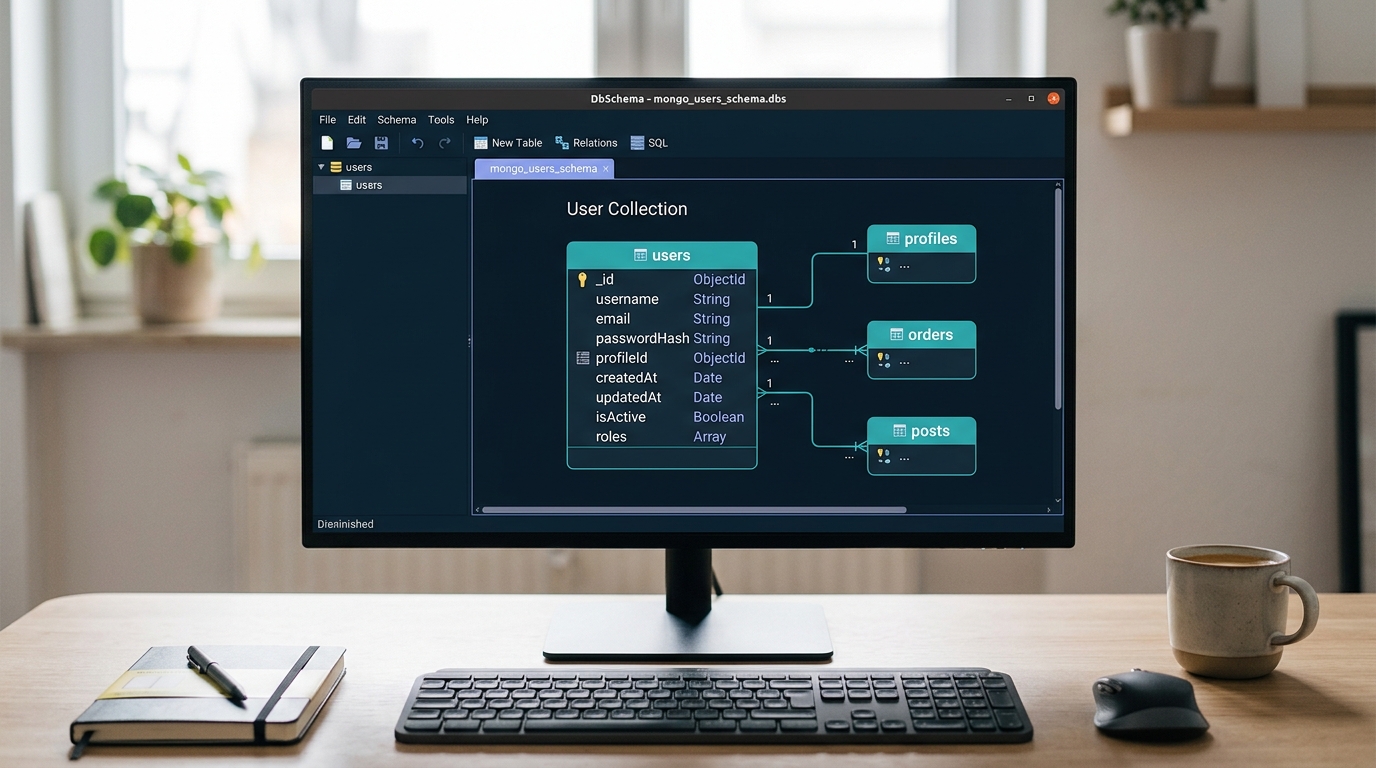
Learn how to design an efficient MongoDB user collection. Explore embedding versus referencing, schema validation, and visual data modeling for developers.
Move a MySQL or PostgreSQL schema to MongoDB: map tables to collections, embed or reference each relationship, and turn constraints into validation rules.
Learn how to create virtual foreign keys in MongoDB using DbSchema to visualize relationships and browse related collection data.
MongoDB for beginners: the NoSQL document model, collections and BSON, replica sets and sharding, the SQL to MongoDB mapping, and where the document model fits.
Link MongoDB collections with virtual relations in DbSchema and browse related documents side by side, without writing an aggregation pipeline.
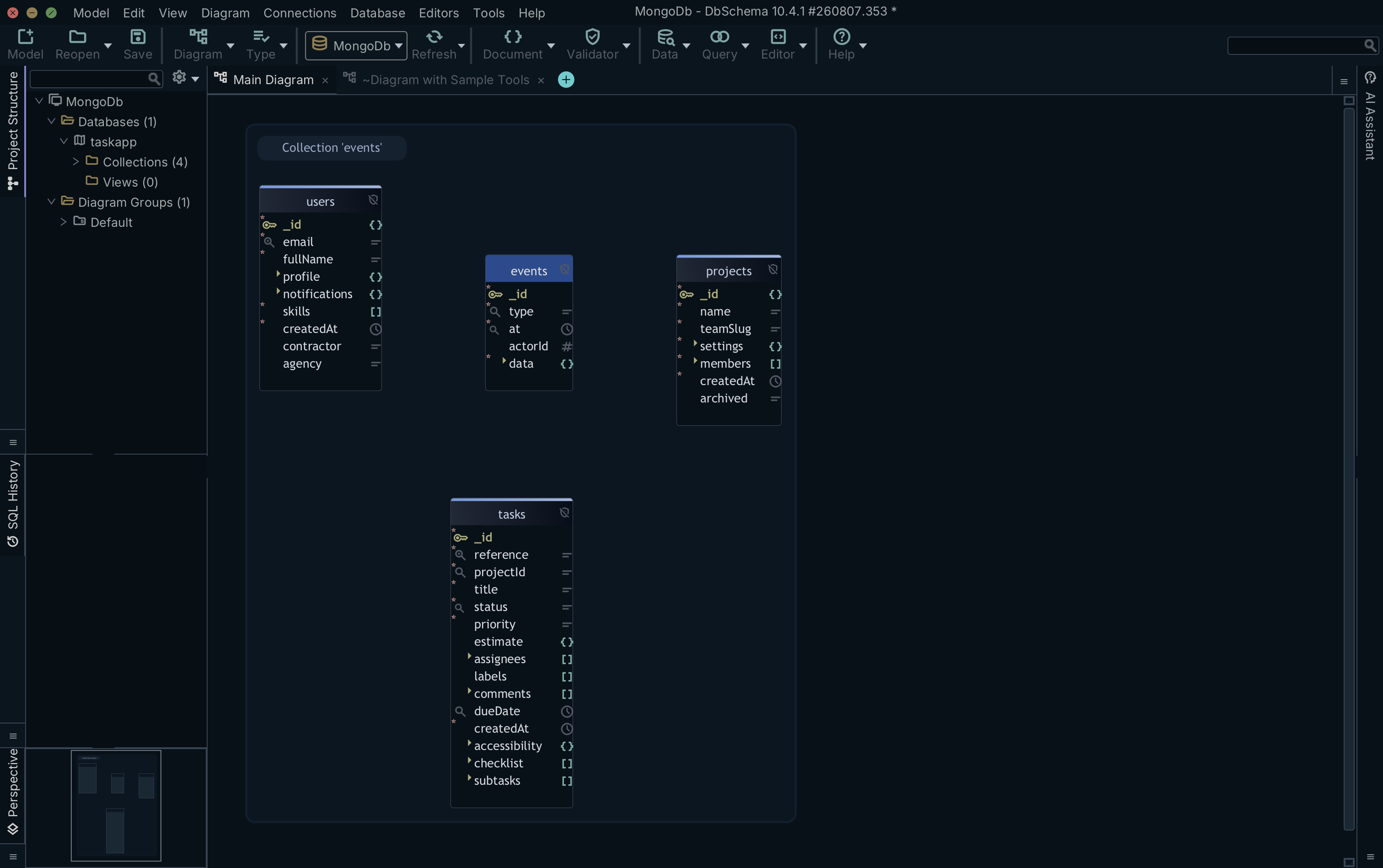
Connect DbSchema to an undocumented MongoDB database and reverse-engineer a diagram of what the documents contain, sampled and inferred, not enforced.
Learn what an index is in MongoDB, why it matters, and how to use it. This beginner tutorial explains single-field, compound, and text indexes with examples in MongoDB shell and DbSchema.
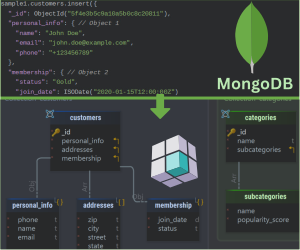
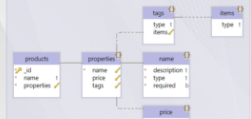
Learn how to create diagrams for MongoDB, implement validation rules and visually manage MongoDB databases.
Understand MongoDB aggregation pipelines with clear examples. Learn how to filter, group, sort, and transform data step by step in this beginner-friendly guide.
Learn how to connect MongoDB Atlas to DbSchema and visualize collections as diagrams with practical setup steps.
Learn how to model collections, explore virtual relations, and generate MongoDB validation rules from a visual design to enforce data structure.