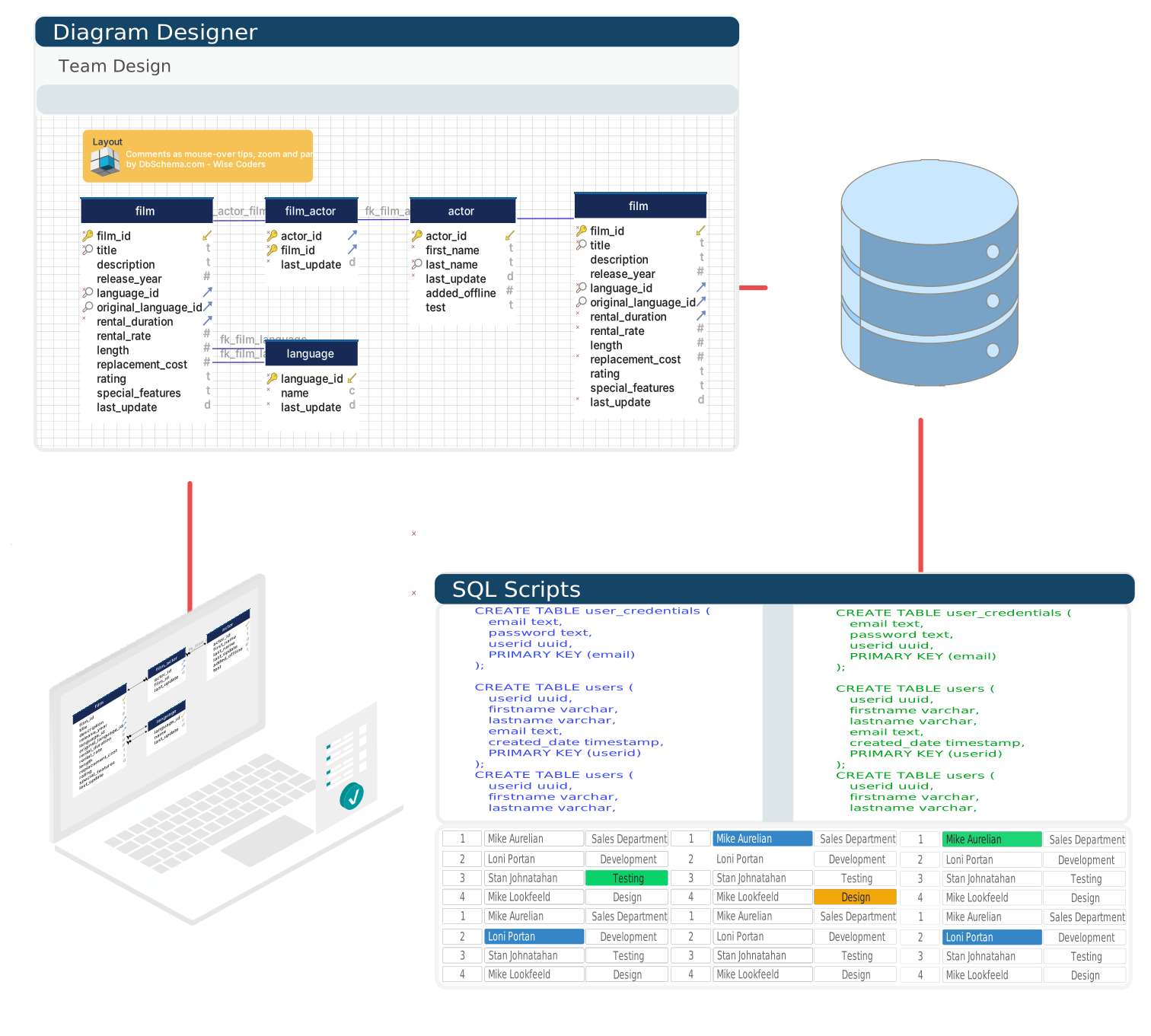

DbSchema lets you design, manage, and document Apache Impala databases. Create ER diagrams, define tables and columns, and generate SQL scripts - with or without a live database connection.
Use Git to share the design, compare it with the Apache Impala database, and deploy changes. DbSchema also includes a data editor, query builder, and HTML5 documentation - everything you need in one tool.
Download DbSchema Download Apache Impala JDBC Driver
Apache Impala provides low-latency SQL queries over data stored on HDFS, Kudu, and S3, making it a popular choice for interactive analytics on Hadoop clusters. While Impala uses the Hive metastore for table definitions, its execution engine is optimized for sub-second query turnaround on large datasets. DbSchema connects to Impala via the Cloudera JDBC driver, visualizes the metastore tables available through Impala's query engine, and provides a desktop SQL client for analysts who prefer a GUI over the Impala shell.
DbSchema reads the Hive metastore through Impala's JDBC connection and renders databases, tables, and
column definitions as an interactive ER diagram. Analysts and data engineers can browse the full schema
structure without resorting to the impala-shell command-line client.
The DbSchema data explorer connects to Impala and lets you browse table data interactively, paginate through results, and apply column filters without writing SQL. This is a practical way for analysts to spot-check data quality in Impala tables that back BI dashboards or downstream data pipelines.
DbSchema's SQL editor supports Impala SQL syntax, including Kudu table operations, Parquet file format hints, and analytic window functions. Run queries directly against Impala's runtime from a desktop client, with results displayed in a sortable, scrollable table view.
Impala listens on port 21050 by default. The standard JDBC URL is:
jdbc:impala://host:21050/default.
Use the Cloudera Impala JDBC driver, available from the Cloudera download portal.
For Kerberos authentication, append:
;AuthMech=1;KrbRealm=REALM;KrbHostFQDN=host;KrbServiceName=impala.
For TLS/SSL connections, add: ;SSL=1;SSLTrustStore=/path/to/keystore.
Add the driver JAR via DbSchema's driver manager under Connections > Manage Drivers.