Drill runs schema-free SQL across HDFS, HBase, S3, MongoDB, and plain files. DbSchema is the desktop client on top: it discovers each storage plugin's schema, builds queries visually, and documents what your Drill installation can actually reach.
Trusted by teams at
Schema-free querying is Drill's superpower and its documentation problem: with no predefined schema, the knowledge of which sources exist — and what lives in each — sits in the heads of whoever configured the storage plugins.

DbSchema turns that hidden inventory into something browsable: plugins, schemas, and queryable objects, laid out in one desktop client.
One desktop client for data sources that never met each other.
Connect to a Drillbit and DbSchema lists the configured storage plugins with their schemas — a visual answer to "what can we actually query from here?"
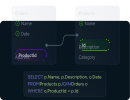
Assemble exploratory queries against Drill tables and file sources in the graphical builder — handy when you know the plugin model but not yet the data.
Write Drill-dialect SQL that joins HDFS files, HBase tables, and MongoDB collections, and run it from one place instead of juggling per-source client tools.
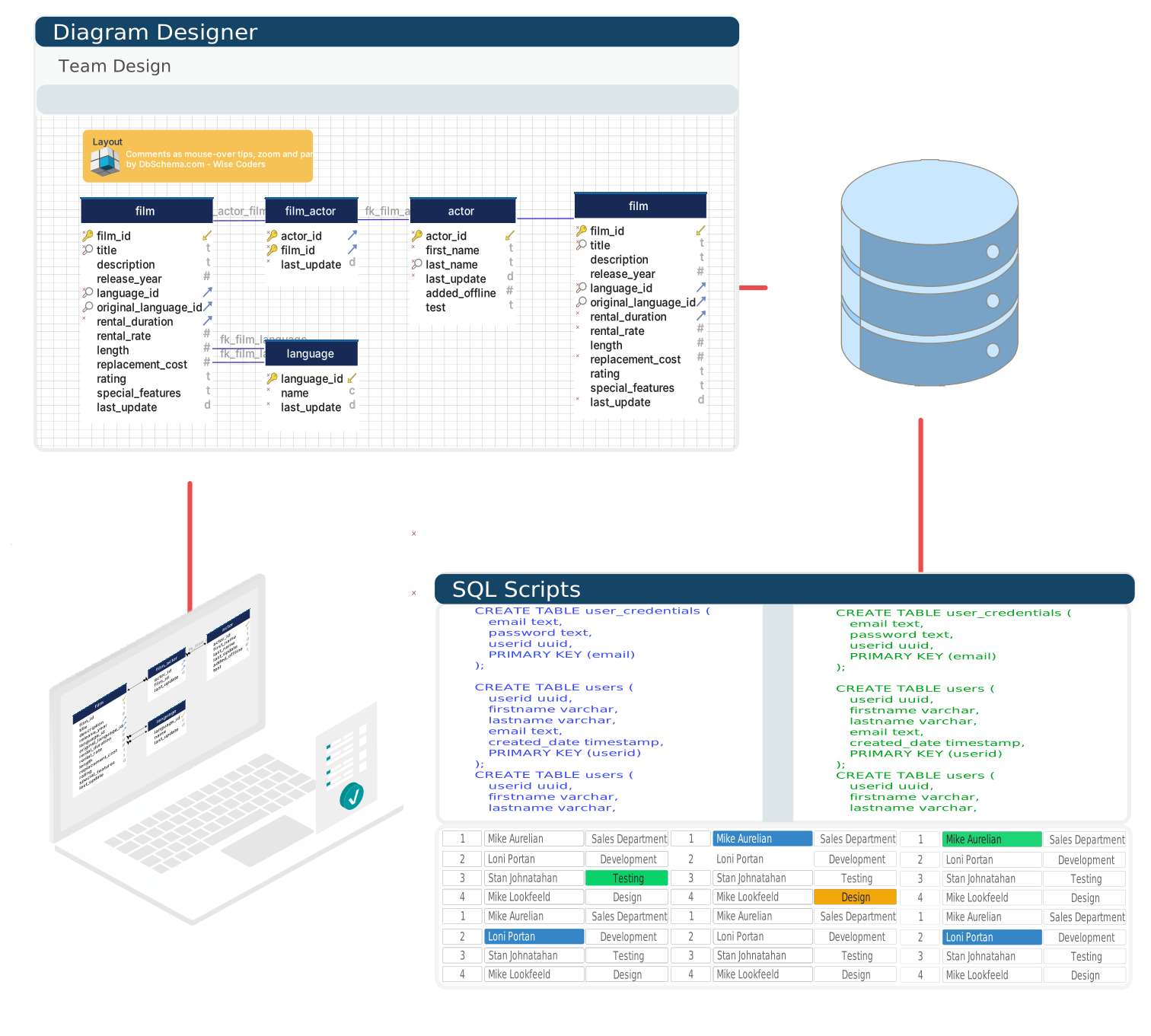
Export the Drill data model as interactive HTML5 documentation: searchable diagrams and object details for every plugin's schema, open in any browser. Analytics and data engineering teams get a shared map of the infrastructure — without asking whoever set it up.
Register the Drill JDBC driver from the Apache Drill
download page in DbSchema's driver manager. For a direct connection, use
jdbc:drill:drillbit=host:31010 — 31010 is Drill's default JDBC port.
When Drill runs on YARN with ZooKeeper coordination, point the URL at the ensemble instead:
jdbc:drill:zk=host:2181/drill/cluster. Either way, DbSchema then lists the storage
plugins and their schemas for querying and diagramming.
The Community Edition costs nothing, asks for no signup, and carries a 15-day Architect trial.
Teams working with Apache Drill often use these engines too. Explore dedicated guides and JDBC setup for each.