Design and Manage Apache Ignite Databases with DbSchema

Build a clearer workflow for Apache Ignite: reverse engineer existing schemas into interactive ER diagrams, model changes visually, and generate reviewed SQL scripts before deployment.

DbSchema is built for visual modeling, schema documentation, and deployment. Keep an offline model in Git, collaborate across teams, and publish documentation that developers, analysts, and stakeholders can navigate in minutes.

DbSchema Database Designer

Download DbSchema See Apache Ignite Features Download Apache Ignite JDBC Driver

What happens after you download?

Get to your first Apache Ignite schema diagram in minutes. No account, no credit card.

1
Install in minutes

Download the installer for Windows, macOS, or Linux and launch DbSchema. No signup required.

2
Connect to Apache Ignite or open a sample

Reverse engineer an existing Apache Ignite database or open a sample model to explore tables, relationships, and indexes.

3
Design, document, and deploy

Edit schema visually, generate documentation, and prepare reviewed migration scripts for safer releases.

Visual Schema Browsing for Apache Ignite Distributed Caches

Apache Ignite is a distributed in-memory computing platform that exposes a SQL layer over partitioned key-value caches. Caches in Ignite are projected as SQL schemas and tables, enabling standard JDBC-based tooling to connect to the cluster and query distributed data. DbSchema connects via the Ignite JDBC thin driver, reads the cache-table mappings across the cluster, and renders them as an interactive entity-relationship diagram — giving your team a clear view of what data is stored and how the schema is structured across the distributed nodes.

Download DbSchema Free See Apache Ignite Features

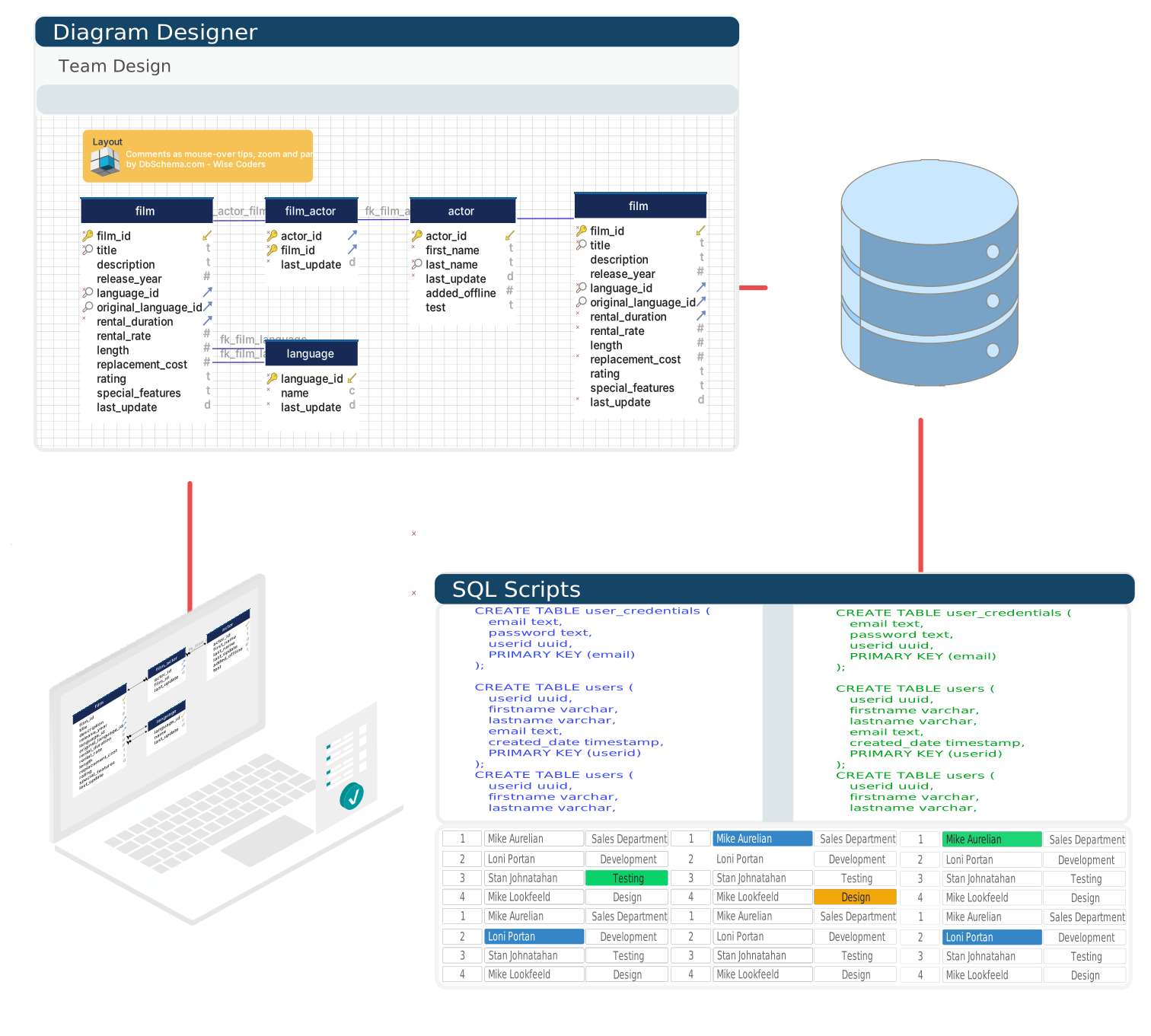
ER Diagrams for Ignite Cache-Table Mappings

DbSchema reads the Ignite SQL catalog and displays cache-backed tables with their column definitions and primary key mappings on a visual canvas. This helps distributed systems teams audit the data model stored across an Ignite cluster without querying system views directly or parsing Ignite configuration XML.

Building queries against Apache Ignite cache tables in DbSchema's query builder

Explore Ignite Cache Data Interactively

The DbSchema data explorer connects to Ignite and lets you browse, filter, and paginate through cache data exposed via the SQL layer. This provides a practical alternative to writing SELECT queries in the Ignite control center or Visor tool when you need to inspect specific data entries in a running cluster.

Browsing Apache Ignite cache table data in DbSchema's data explorer

SQL Editor for Distributed Ignite Queries

DbSchema's SQL editor connects to Apache Ignite and supports its distributed SQL dialect, including collocated joins, distributed aggregations, and cross-cache queries. Run SQL against your Ignite cluster from a desktop GUI without deploying a separate Ignite client application or using the Ignite shell.

Running distributed SQL queries against Apache Ignite in DbSchema's SQL editor

Connecting DbSchema to Apache Ignite

The default thin JDBC port for Apache Ignite is 10800. The JDBC URL format is: jdbc:ignite:thin://host:10800/schema. For multi-node clusters, specify multiple addresses: jdbc:ignite:thin://host1,host2:10800/schema. Download the Ignite JDBC thin driver from the Apache Ignite download page and add it to DbSchema via Connections > Manage Drivers. The thin client driver does not require embedding an Ignite node in the client process, making it suitable for connecting from external tools like DbSchema.

Why DbSchema for Apache Ignite

  • Visualize Ignite cache-table SQL mappings as an interactive schema diagram
  • Run distributed SQL queries against Ignite from a desktop client
  • Browse and filter cache data through the data explorer without writing queries
  • Document the Ignite SQL schema for distributed systems and backend teams
  • Connect to multi-node Ignite clusters using the JDBC thin driver with failover addresses