Design and Manage Apache HBase Databases with DbSchema

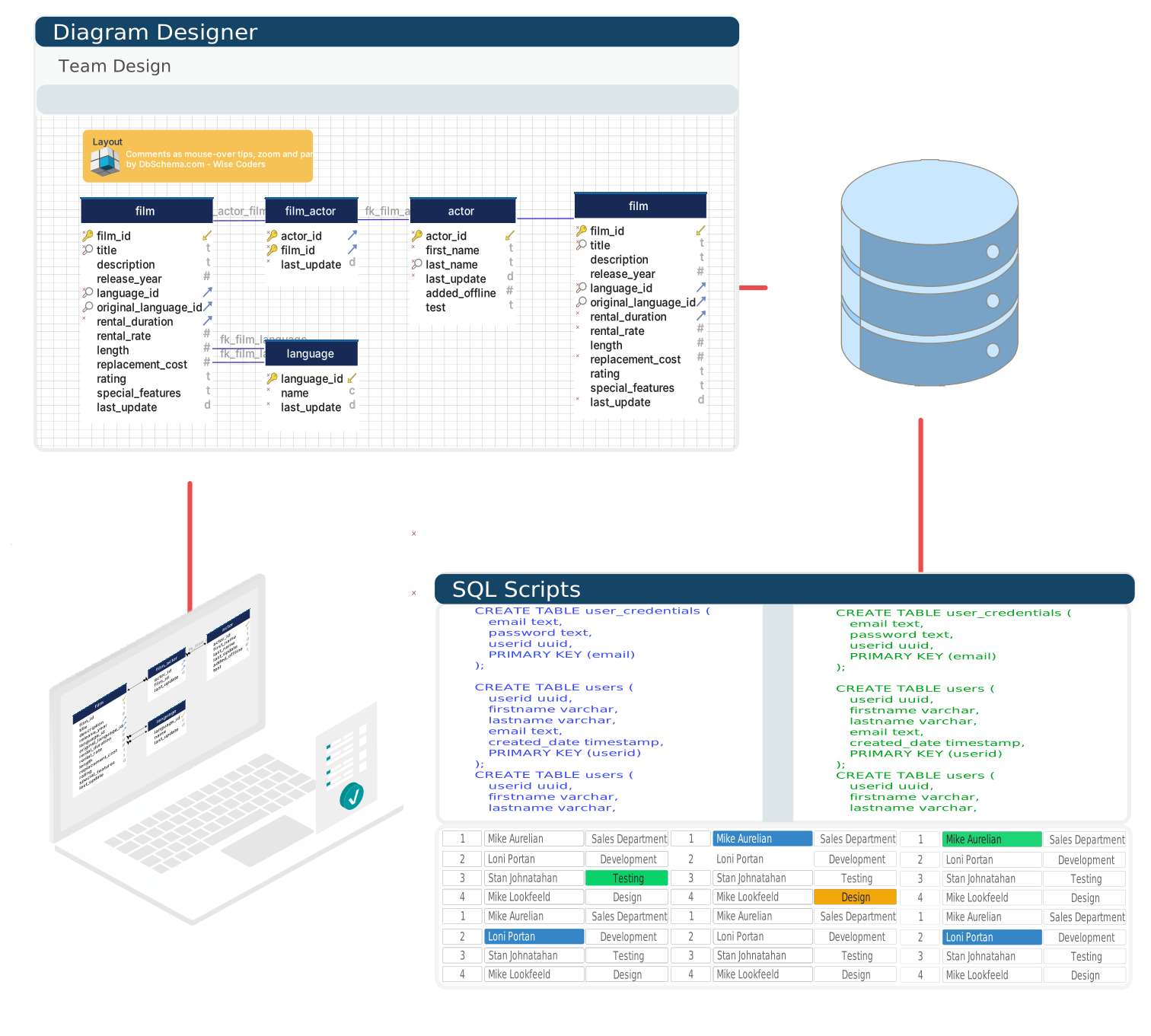
Build a clearer workflow for Apache HBase: reverse engineer existing schemas into interactive ER diagrams, model changes visually, and generate reviewed SQL scripts before deployment.

DbSchema is built for visual modeling, schema documentation, and deployment. Keep an offline model in Git, collaborate across teams, and publish documentation that developers, analysts, and stakeholders can navigate in minutes.

DbSchema Database Designer

Download DbSchema See Apache HBase Features Download Apache HBase JDBC Driver

What happens after you download?

Get to your first Apache HBase schema diagram in minutes. No account, no credit card.

1
Install in minutes

Download the installer for Windows, macOS, or Linux and launch DbSchema. No signup required.

2
Connect to Apache HBase or open a sample

Reverse engineer an existing Apache HBase database or open a sample model to explore tables, relationships, and indexes.

3
Design, document, and deploy

Edit schema visually, generate documentation, and prepare reviewed migration scripts for safer releases.

Apache HBase is a wide-column, NoSQL data store built on top of HDFS that provides random, real-time read and write access to large datasets. Its schema model organizes data into tables with column families — groups of columns stored together on disk — and rows identified by row keys. Apache Phoenix layers a SQL interface on top of HBase, enabling standard SQL DDL and DML operations while translating queries into native HBase scans. DbSchema connects through the Phoenix JDBC driver, reads the Phoenix-managed schema, and exposes HBase table structures for visual exploration and data browsing.

Browsing HBase Column Family and Data Type Structures

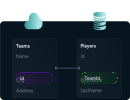
Phoenix exposes HBase column families and their column definitions as a typed SQL schema. DbSchema reads this schema and displays the full data type catalog for each column — including Phoenix-specific types like UNSIGNED_INT, ARRAY, and VARBINARY — giving engineers visibility into the physical column family structure without using the HBase shell.

Download DbSchema Free See Apache HBase Features

Browsing Apache HBase column family data types via Phoenix in DbSchema

Phoenix SQL Query Builder for HBase Tables

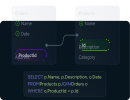
DbSchema's query builder constructs Phoenix SQL SELECT statements visually, handling the row key prefix conditions that Phoenix uses to translate SQL predicates into efficient HBase row key scans. This allows engineers to build performant queries against HBase without deep knowledge of the underlying scan mechanics.

Building Phoenix SQL queries against Apache HBase tables in DbSchema

Data Explorer for Wide-Column HBase Tables

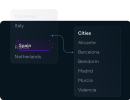
The DbSchema data explorer fetches rows from Phoenix-managed HBase tables and renders them in a paginated tabular view. You can apply column filters and inspect individual cell values across wide tables with many column families, without constructing HBase scan operations manually.

Exploring HBase table data via Apache Phoenix in DbSchema's data explorer

Connecting DbSchema to Apache HBase

DbSchema connects to HBase via the Apache Phoenix JDBC driver. For the thin client, the JDBC URL format is jdbc:phoenix:zookeeper_host:2181:/hbase. Download the Phoenix thin client JDBC driver from the Phoenix release page and register it in DbSchema's driver manager via Settings > Drivers. Alternatively, use the Phoenix thick driver by specifying the full ZooKeeper quorum address directly. For HBase running on Amazon EMR, obtain the ZooKeeper address from the EMR cluster summary page and ensure the security group allows inbound traffic on port 2181. The Phoenix query server must be running for the thin client to connect.

Why Teams Use DbSchema with Apache HBase

  • Column family visualization — see which columns belong to which column families in a structured schema view.
  • Phoenix SQL access — build and execute Phoenix SQL queries visually without writing HBase scan operations.
  • Row data inspection — browse wide-column table contents row by row from the data explorer with filter support.
  • Schema documentation — document the Phoenix-managed HBase schema for teams that lack direct cluster access.
  • EMR integration — connect to HBase on Amazon EMR using the cluster ZooKeeper endpoint and Phoenix thin client.