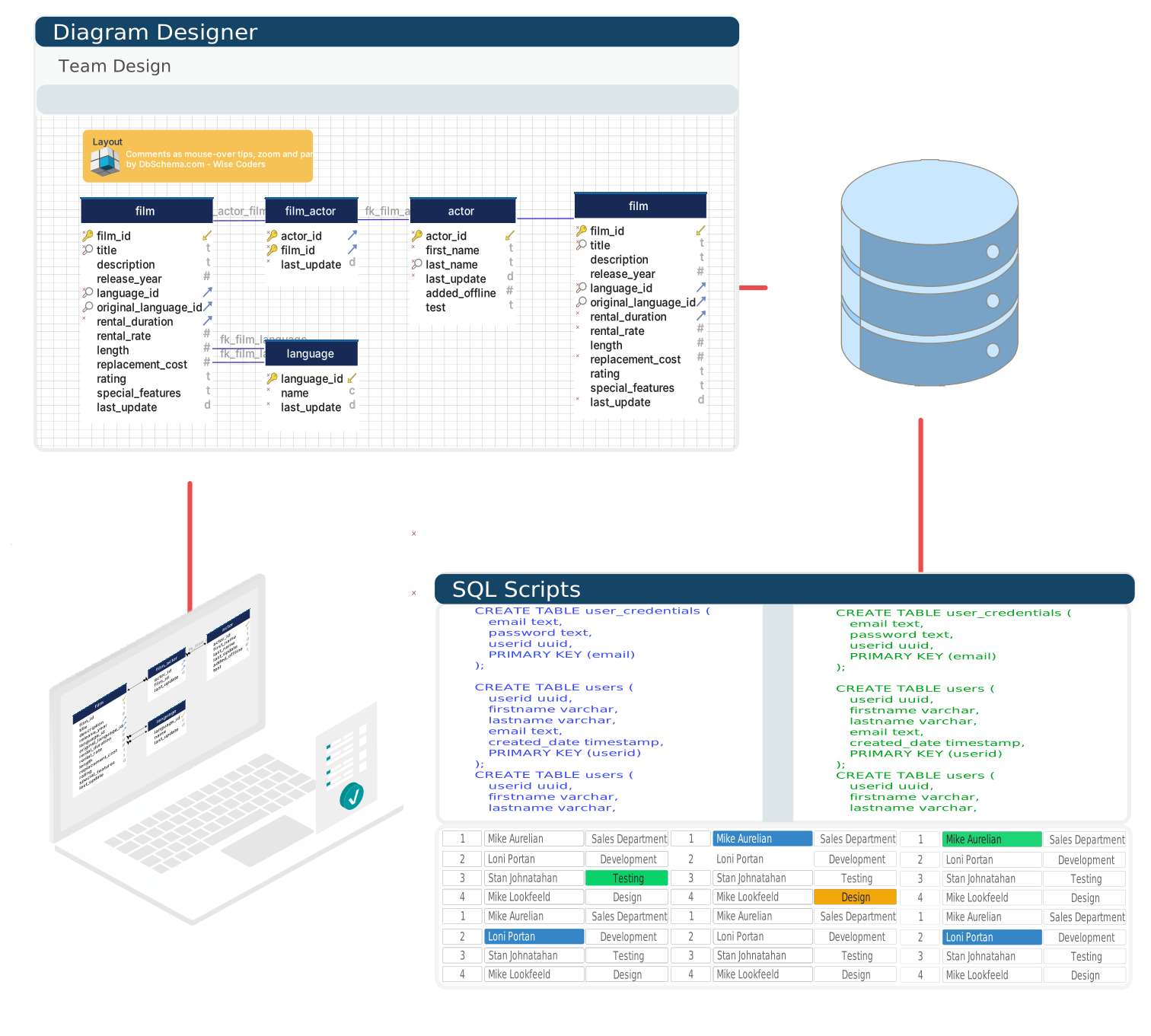
Connect DbSchema to Daffodil DB and turn the live schema into an editable visual model: explore relationships in interactive ER diagrams, plan changes on the canvas, and generate reviewed SQL scripts for deployment.
The workflow is designed for visual modeling, schema documentation, and deployment — keep an offline model in Git, collaborate across teams, and publish documentation that developers, analysts, and stakeholders can navigate in minutes.
Download DbSchema See Daffodil DB Features Download Daffodil DB JDBC Driver · All drivers
Get to your first Daffodil DB schema diagram in minutes. No account, no credit card.
Download the installer for Windows, macOS, or Linux and launch DbSchema. No signup required.
Reverse engineer an existing Daffodil DB database or open a sample model to explore tables, relationships, and indexes.
Edit schema visually, generate documentation, and prepare reviewed migration scripts for safer releases.
Daffodil DB is a pure-Java SQL database that supports both an embedded mode — running inside the same JVM as the host application — and a network server mode accessible via JDBC from remote clients. It was designed for Java environments requiring a portable, dependency-light relational store. DbSchema connects to Daffodil DB in either mode, renders the schema visually, and provides SQL editing and documentation tools for teams maintaining Daffodil DB applications.
Download DbSchema Free See Daffodil DB Features
DbSchema uses the Daffodil DB JDBC driver and supports both deployment modes through their respective connection URLs. Once connected, tables, views, and their column definitions appear in the diagram canvas, providing a visual overview of the database structure.
DbSchema's SQL editor accepts Daffodil DB's SQL dialect, executes queries against the connected instance, and presents results in an inline table. Use it to validate query logic, investigate data anomalies, and test DDL changes before applying them to a production Daffodil DB instance.
For Daffodil DB applications that have grown organically without formal documentation, DbSchema's documentation generator produces a structured HTML report with table listings, column types, constraints, and embedded relationship diagrams — useful for audits, developer onboarding, and migration planning.
Connecting DbSchema to Daffodil DB involves a short sequence:
jdbc:daffodilDB_net://host:3456/dbname, where 3456 is the default server port; for embedded access, use jdbc:daffodilDB_embedded:dbname instead.In embedded mode, only one JVM can hold an exclusive lock on the database at a time, so stop the host application before connecting from DbSchema to avoid a file lock conflict.
Have an undocumented Daffodil DB application on your hands? Download DbSchema free and get a full ER diagram of it in minutes, no matter which deployment mode it runs in.
Teams working with Daffodil DB often use these engines too. Explore dedicated guides and JDBC setup for each.