Design and Manage Azure SQL Databases with DbSchema

Build a clearer workflow for Azure SQL: reverse engineer existing schemas into interactive ER diagrams, model changes visually, and generate reviewed SQL scripts before deployment.

DbSchema is built for visual modeling, schema documentation, and deployment. Keep an offline model in Git, collaborate across teams, and publish documentation that developers, analysts, and stakeholders can navigate in minutes.

DbSchema Database Designer

Download DbSchema See Azure SQL Features Download Azure SQL JDBC Driver

What happens after you download?

Get to your first Azure SQL schema diagram in minutes. No account, no credit card.

1
Install in minutes

Download the installer for Windows, macOS, or Linux and launch DbSchema. No signup required.

2
Connect to Azure SQL or open a sample

Reverse engineer an existing Azure SQL database or open a sample model to explore tables, relationships, and indexes.

3
Design, document, and deploy

Edit schema visually, generate documentation, and prepare reviewed migration scripts for safer releases.

Azure SQL Database is Microsoft's fully managed cloud RDBMS built on the SQL Server engine. It handles patching, backups, and high availability automatically, and supports elastic pools for multi-tenant workload isolation. DbSchema connects via the Microsoft SQL Server JDBC driver — which it downloads automatically — and treats Azure SQL identically to on-premises SQL Server, exposing schemas, tables, views, stored procedures, and indexes for visual design and documentation.

Visual Schema Design for Azure SQL Databases

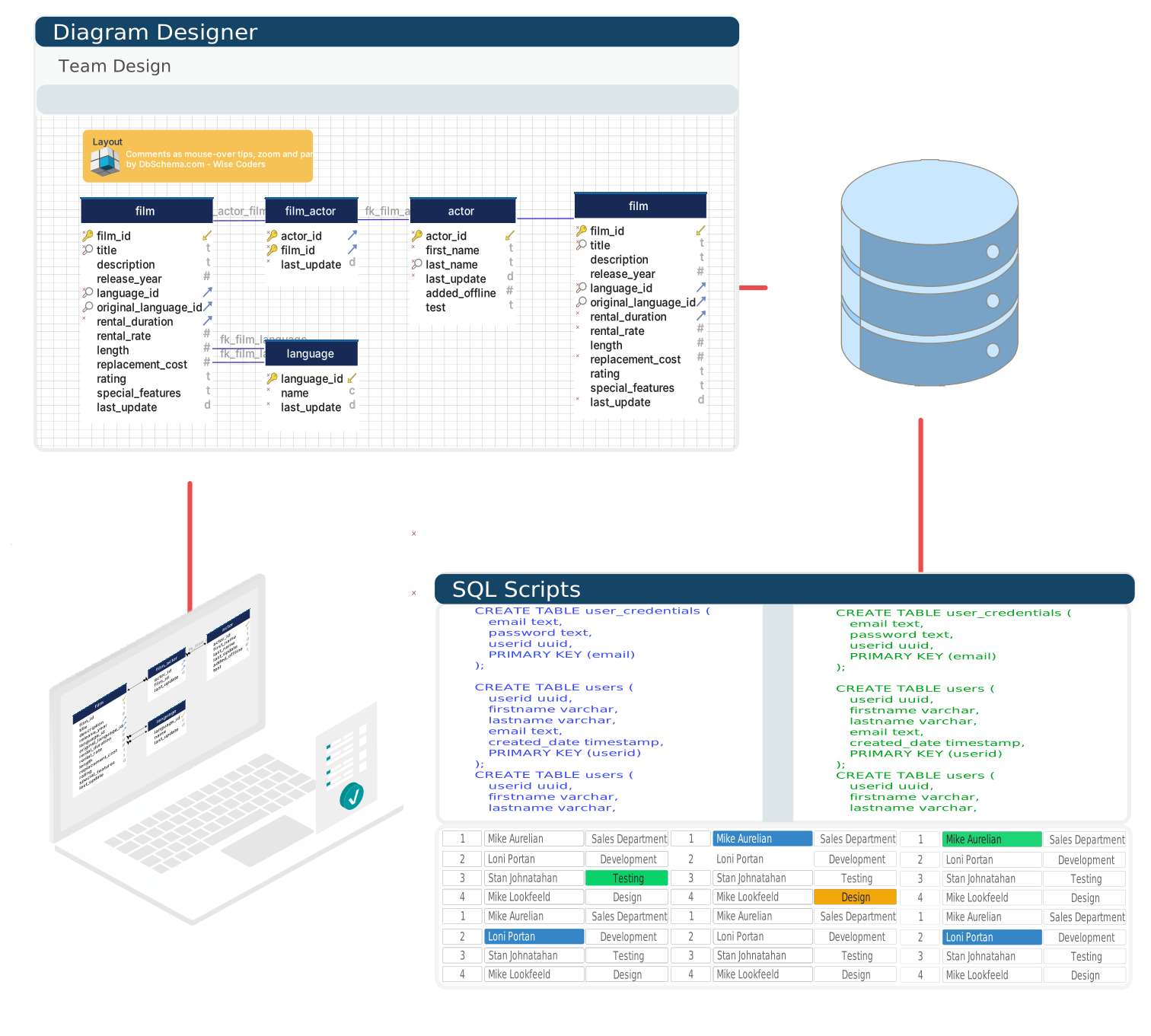
DbSchema reads all user schemas from an Azure SQL database and renders them as interactive ER diagrams. You can create multiple diagram layouts to separate bounded contexts — for example, one layout for the billing domain and another for the user management domain — while all layouts reference the same underlying schema model.

Download DbSchema Free See Azure SQL Features

Designing an Azure SQL Database schema with ER diagrams in DbSchema

Schema Synchronization Between Dev, Test, and Production

Azure SQL databases often run across separate elastic pools for each environment. DbSchema's synchronization tool connects to two Azure SQL instances, generates a structural diff, and produces the T-SQL ALTER and CREATE statements required to bring them into sync. You control which changes to include before a single line of SQL executes against production.

Synchronizing Azure SQL Database schema changes between environments in DbSchema

Groovy Automation Scripts for Schema Tasks

DbSchema's automation engine lets you write Groovy scripts that execute directly against your Azure SQL connection. Scripts can inspect schema metadata, generate reports, bulk-insert reference data, or orchestrate multi-step schema migrations — all without leaving the tool.

Running a Groovy automation script against Azure SQL in DbSchema

Connecting DbSchema to Azure SQL

DbSchema auto-downloads the Microsoft SQL Server JDBC driver. The JDBC URL format is jdbc:sqlserver://server.database.windows.net:1433;database=dbname;encrypt=true. SQL authentication and Azure Active Directory authentication are both supported — for AAD password authentication, append ;authentication=ActiveDirectoryPassword to the URL and supply your AAD credentials. For Azure SQL Managed Instance, use the managed instance hostname on port 1433 with the same URL format; the driver handles the TDS protocol identically. Ensure that the Azure SQL firewall allows connections from your IP address before attempting to connect.

Why Teams Use DbSchema with Azure SQL

  • Multi-environment sync — compare dev, test, and production Azure SQL instances and generate exact T-SQL migration scripts.
  • Offline schema modeling — design schema changes against a saved model without consuming DTUs on the live database.
  • Elastic pool visibility — connect to multiple databases within an elastic pool and document each schema independently.
  • Automation scripts — use Groovy scripts to automate repetitive schema and data tasks against Azure SQL.
  • Schema documentation — export HTML documentation with ER diagrams for compliance and team onboarding.