Explore and Document CockroachDB Clusters Visually

Build a clearer workflow for CockroachDB: reverse engineer existing schemas into interactive ER diagrams, model changes visually, and generate reviewed SQL scripts before deployment.

DbSchema is built for relational modeling, migration planning, and SQL-first collaboration. Keep an offline model in Git, collaborate across teams, and publish documentation that developers, analysts, and stakeholders can navigate in minutes.

DbSchema Database Designer

Download DbSchema See CockroachDB Features Download CockroachDB JDBC Driver · All drivers

What happens after you download?

Get to your first CockroachDB schema diagram in minutes. No account, no credit card.

1
Install in minutes

Download the installer for Windows, macOS, or Linux and launch DbSchema. No signup required.

2
Connect to CockroachDB or open a sample

Reverse engineer an existing CockroachDB database or open a sample model to explore tables, relationships, and indexes.

3
Design, document, and deploy

Edit schema visually, generate documentation, and prepare reviewed migration scripts for safer releases.

CockroachDB is a distributed SQL database that speaks the PostgreSQL wire protocol and replicates data across nodes using the Raft consensus algorithm. Its schema model includes column families — groupings of columns stored together for access locality — and zone configurations that control data placement across regions. DbSchema connects via the PostgreSQL JDBC driver and exposes the full CockroachDB schema for visual design, documentation, and synchronization.

ER Diagram Design for CockroachDB Schemas

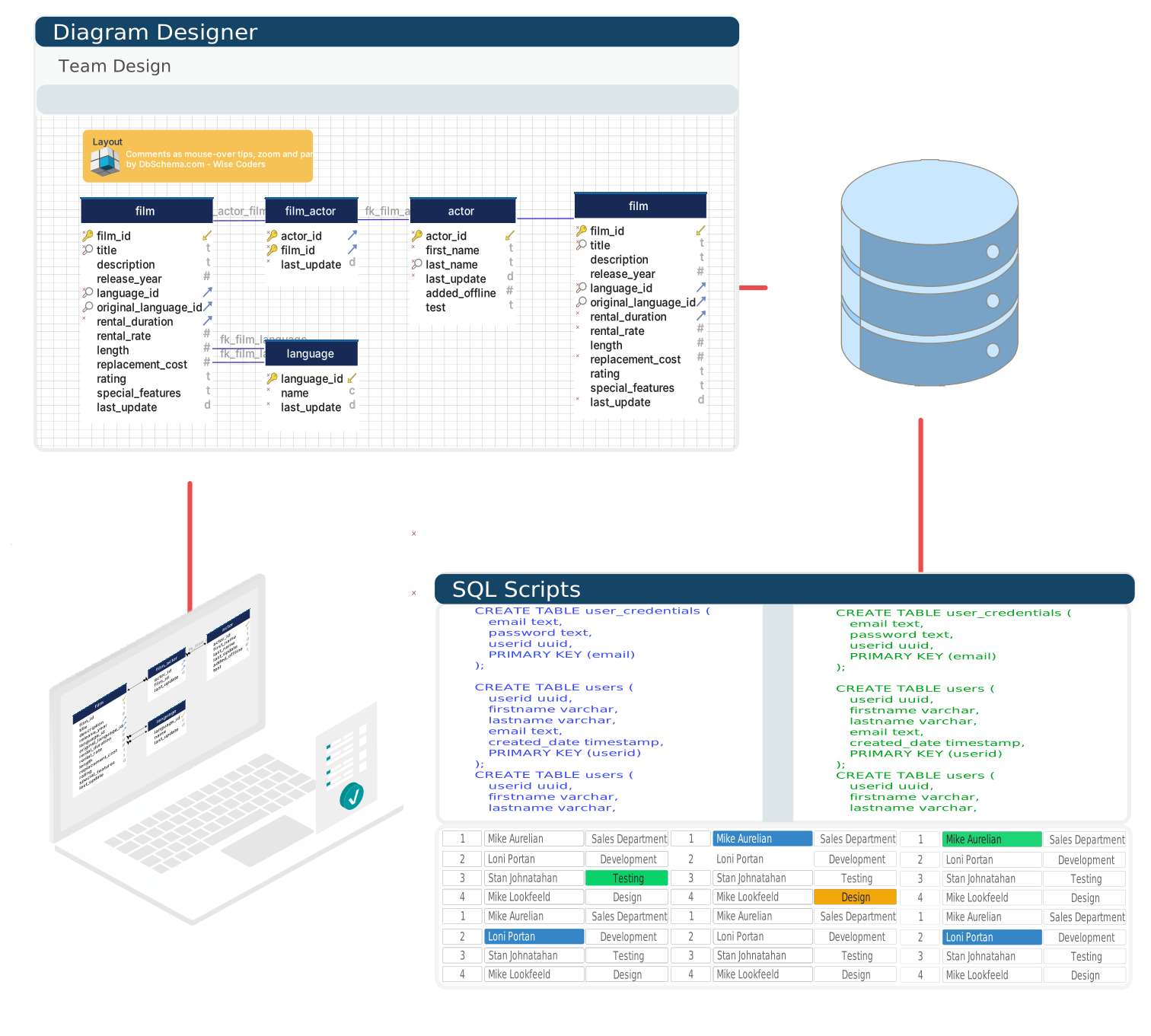
DbSchema reads tables, foreign keys, indexes, and column family definitions from CockroachDB's information schema and renders them as interactive ER diagrams. You can design multi-region schema layouts, annotate tables with notes, and export diagrams as HTML documentation for your distributed systems team.

Download DbSchema Free See CockroachDB Features

Designing a CockroachDB schema with ER diagrams in DbSchema

SQL Editor with CockroachDB Distributed SQL Support

The DbSchema SQL editor connects directly to a CockroachDB cluster and supports the full PostgreSQL- compatible SQL dialect that CockroachDB implements, including SHOW RANGES, SHOW ZONE CONFIGURATIONS, and other cluster-management statements. Multiple editor tabs let you run queries against different databases within the same cluster simultaneously.

Running distributed SQL queries in CockroachDB using DbSchema's SQL editor

Schema Synchronization Across CockroachDB Environments

CockroachDB's online schema change mechanism applies DDL changes without locking tables, but keeping development and production schemas aligned still requires tooling. DbSchema compares two CockroachDB connections — or a saved schema file against a live cluster — and generates the PostgreSQL-compatible DDL needed to resolve differences.

Synchronizing CockroachDB schema changes between environments in DbSchema

How to Connect DbSchema to CockroachDB

Reverse-engineering a CockroachDB cluster into a diagram takes just a few steps in DbSchema:

  1. Install DbSchema on Windows, macOS, or Linux — the download does not require an account.
  2. Create a new connection and select CockroachDB; DbSchema fetches the PostgreSQL JDBC driver automatically since CockroachDB speaks the PostgreSQL wire protocol.
  3. Point the connection at your cluster's host and the default port 26257, matching the JDBC URL form jdbc:postgresql://host:26257/dbname?sslmode=require.
  4. Enter your SQL user and password, then connect — DbSchema loads tables, indexes, and column families into the first ER diagram.

CockroachDB Serverless clusters need the full connection string copied from the CockroachDB Cloud console, which embeds the cluster SNI header (options=--cluster=cluster-name) in the URL. For CockroachDB Dedicated, download the cluster's CA certificate first and reference it with the sslrootcert parameter.

Why Teams Use DbSchema with CockroachDB

  • Column family visibility — see how columns are grouped into storage families within each table in the ER diagram.
  • Multi-region layout — document zone configurations and regional table placements visually.
  • Schema diff and sync — compare dev and production CockroachDB clusters and generate targeted migration DDL.
  • Offline modeling — design schema changes locally without touching the cluster, then apply them using online schema changes.
  • Git-based history — store the DbSchema project file in Git to track every schema change as a versioned commit.

Curious how your own cluster's column families and zone configs look on a diagram? Download DbSchema for free and connect to CockroachDB in minutes — no credit card required.

Frequently asked questions

Yes, DbSchema connects to CockroachDB using the PostgreSQL JDBC driver, since CockroachDB speaks the PostgreSQL wire protocol, and downloads that driver automatically.

CockroachDB listens on port 26257 by default, matching the JDBC URL form jdbc:postgresql://host:26257/dbname?sslmode=require.

Yes, DbSchema reads column family definitions from CockroachDB's information schema and displays how columns are grouped into storage families directly in the diagram.

Teams working with CockroachDB often use these engines too. Explore dedicated guides and JDBC setup for each.

Browse all 100+ supported databases