DbSchema opens an .mdb or .accdb file on Windows, macOS, or Linux
and draws the tables and relationships inside as an ER diagram — no Microsoft Office,
no ODBC configuration, just the file.
Trusted by teams at
Access files power small-business tools and internal apps that outlive the machines they were
built on. Their built-in Relationships window runs solely on Windows with Office installed —
from a Mac or a Linux workstation, an .accdb is a sealed box.
DbSchema reads the file through the pure-Java UCanAccess driver, so any desktop can display, edit, and document the schema inside it.
From first open to migration-ready specification, in one desktop tool.
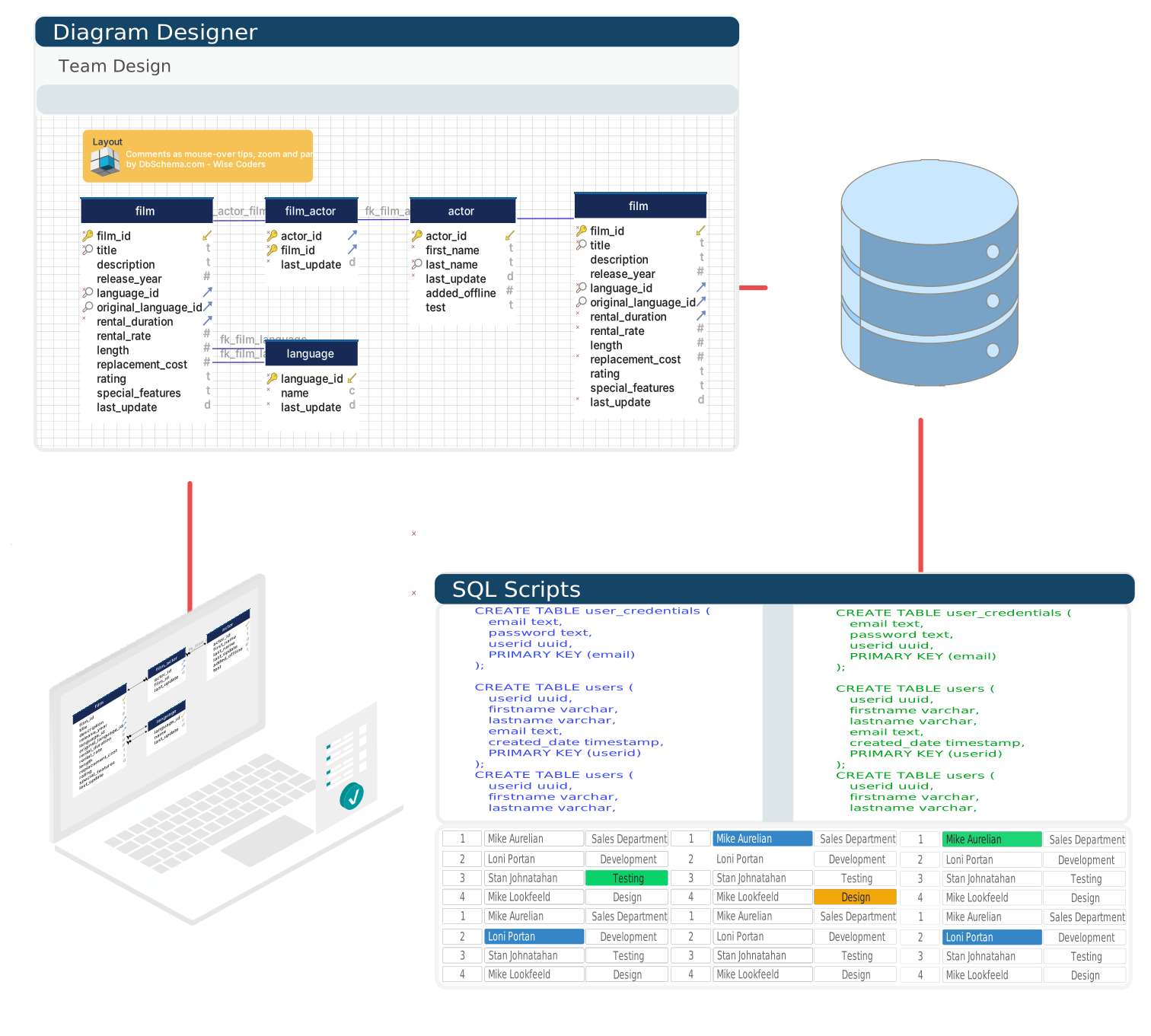

Select the .accdb or .mdb path and DbSchema lays out tables, fields, primary keys, and relationships as an interactive diagram — the map the original developer never drew.
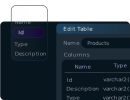
Add columns, adjust data types, and review key constraints in the table editor — practical upkeep for applications whose original author left years ago.
Generate HTML documentation covering tables, field types, indexes, and relationships — readable by colleagues who will never install a database tool.
Teams leaving Access usually discover the schema was never written down. One click renders the model as interactive HTML5 documentation — zoomable diagrams, field notes, hover details — the baseline a replacement database gets built against, and a record of institutional knowledge that would otherwise retire with the file.
Explore the Documentation Tool
DbSchema fetches the UCanAccess JDBC driver automatically,
so connecting means browsing to the file: the URL takes the form
jdbc:ucanaccess:///path/to/database.accdb. Because UCanAccess is pure Java, the JET
engine, Windows ODBC setup, and Microsoft Office all stay uninstalled — which is why the same
steps work unchanged on macOS and Linux. For a password-protected file, append
;jackcessOpener=... with the matching password handler class before connecting.
Free Community Edition, no signup — and the installer includes a 15-day Architect trial.
Teams working with Microsoft Access often use these engines too. Explore dedicated guides and JDBC setup for each.