Time-series schemas your team can see

TimescaleDB Hypertables, Mapped Visually

TimescaleDB is PostgreSQL underneath, so DbSchema connects with the standard PostgreSQL JDBC driver and diagrams hypertables next to ordinary tables — complete with the PostgreSQL type system, foreign keys, and index metadata.

  • One diagram covering hypertables, regular tables, and continuous aggregates
  • Full PostgreSQL syntax in the editor, time_bucket and friends included
  • Catch drift by comparing staging and production schemas
  • Onboard engineers with documentation instead of tribal knowledge
Free Community Edition No signup required 15-day Architect trial included
Free Download

Trusted by teams at
Raw, Rolled Up, or Derived?
A Time-Series Schema Multiplies Fast

Every measurement pipeline adds a hypertable; every dashboard wants a continuous aggregate refreshing on its own schedule. Six months in, telling raw data from rollups — and knowing which feeds which — takes archaeology in the catalog.

DbSchema lays the whole structure out visually, so the data path from sensor to dashboard is something you read, not reconstruct.

Diagram, Verify & Document
Hypertables Like Any Other Table

Standard PostgreSQL tooling, applied to your time-series stack.

Reverse engineer a TimescaleDB schema through the PostgreSQL catalog
Hypertables on the Same Canvas

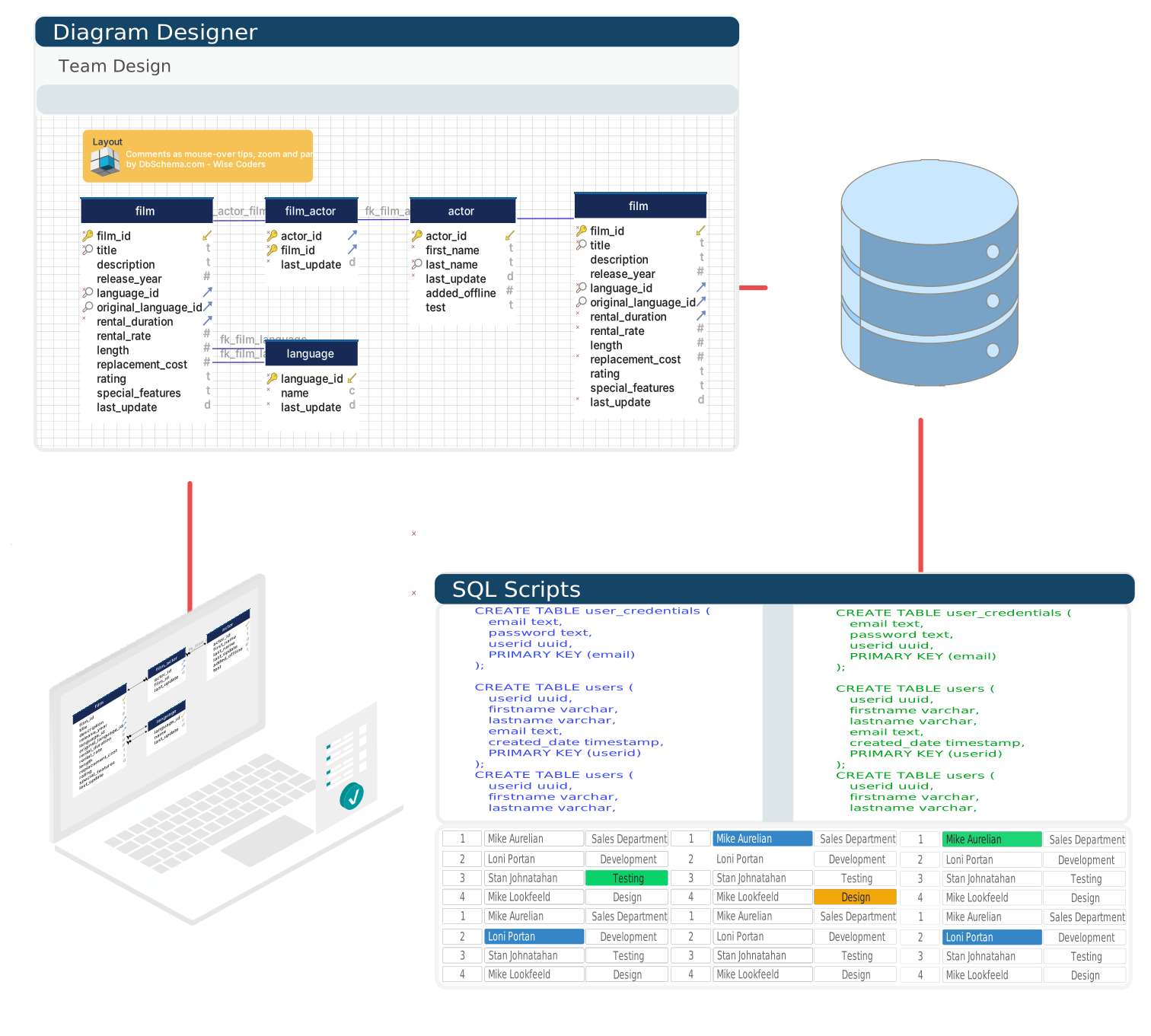
DbSchema reads the standard PostgreSQL system catalog — the extension is transparent to JDBC — and diagrams hypertables, plain tables, and their foreign keys together.

Browse hypertable rows and continuous aggregates in the data explorer
Check the Rollup Actually Refreshed

Page through raw hypertable rows and continuous aggregate contents side by side — spot-check recent measurements and confirm scheduled refreshes completed.

Generate HTML documentation for a TimescaleDB schema
Explain the Pipeline Once, in Writing

Annotate columns in the model and export interactive HTML covering hypertables, aggregate views, types, and relationships — onboarding material that stays current.

Design time-series schemas away from production.

The Schema in a File,
Not Only in the Database

DbSchema holds your TimescaleDB design in a model file separate from any live instance — the difference that makes offline work, code-style review, and deliberate deployment possible.

Design the TimescaleDB schema offline
Model Before You Ingest

Sketch measurement tables and their relationships before the first data point lands.

Version the TimescaleDB schema in Git
A Diff for Every Change

The model lives in Git, so schema changes ride the same pull requests as code.

Review generated SQL before it runs on TimescaleDB
SQL You Approve

Read the generated statements before anything touches the running database.

Compare TimescaleDB staging and production schemas
Staging vs Production

Compare environments against the model and catch drift before the dashboards do.

Connecting to TimescaleDB: Plain PostgreSQL

Nothing TimescaleDB-specific is needed: choose PostgreSQL as the database type and DbSchema downloads the PostgreSQL JDBC driver automatically. Enter host, the default port 5432, database, username, and password — the JDBC URL is jdbc:postgresql://host:5432/dbname. Time-series SQL such as time_bucket, first, and last runs in the SQL editor like any other PostgreSQL query.

Driver notes are on the TimescaleDB JDBC driver page.

Give Your Hypertables a Diagram

Free to install, nothing to sign up for — Architect trial included for 15 days.

Frequently asked questions

Yes. Because TimescaleDB is fully PostgreSQL-compatible, DbSchema connects with the standard PostgreSQL JDBC driver and reverse-engineers hypertables alongside regular tables into one diagram.

TimescaleDB uses the same default port as PostgreSQL, 5432, along with the same host, database name, username, and password connection parameters.

Yes. The free Community edition reverse-engineers hypertables, regular tables, and continuous aggregate views into an ER diagram; Pro adds an offline design model with Git versioning and interactive HTML5 documentation export.

Teams working with TimescaleDB often use these engines too. Explore dedicated guides and JDBC setup for each.

Browse all 100+ supported databases