Design and Manage PointBase Databases with DbSchema

Build a clearer workflow for PointBase: reverse engineer existing schemas into interactive ER diagrams, model changes visually, and generate reviewed SQL scripts before deployment.

DbSchema is built for visual modeling, schema documentation, and deployment. Keep an offline model in Git, collaborate across teams, and publish documentation that developers, analysts, and stakeholders can navigate in minutes.

DbSchema Database Designer

Download DbSchema See PointBase Features Download PointBase JDBC Driver

What happens after you download?

Get to your first PointBase schema diagram in minutes. No account, no credit card.

1
Install in minutes

Download the installer for Windows, macOS, or Linux and launch DbSchema. No signup required.

2
Connect to PointBase or open a sample

Reverse engineer an existing PointBase database or open a sample model to explore tables, relationships, and indexes.

3
Design, document, and deploy

Edit schema visually, generate documentation, and prepare reviewed migration scripts for safer releases.

Visual Tools for Java EE and Embedded PointBase Databases

PointBase is a compact pure-Java database that was bundled with several Java EE application servers — including early versions of BEA WebLogic — as a built-in database for development and testing environments. It supports both an embedded mode running inside a Java application and a server mode accessible over the network. Teams working with older Java EE applications often encounter PointBase as the test or configuration database without dedicated graphical tooling. DbSchema connects via the PointBase JDBC driver and provides schema visualization and SQL editing for these databases.

Download DbSchema Free See PointBase Features

Connect to PointBase and Visualize the Schema

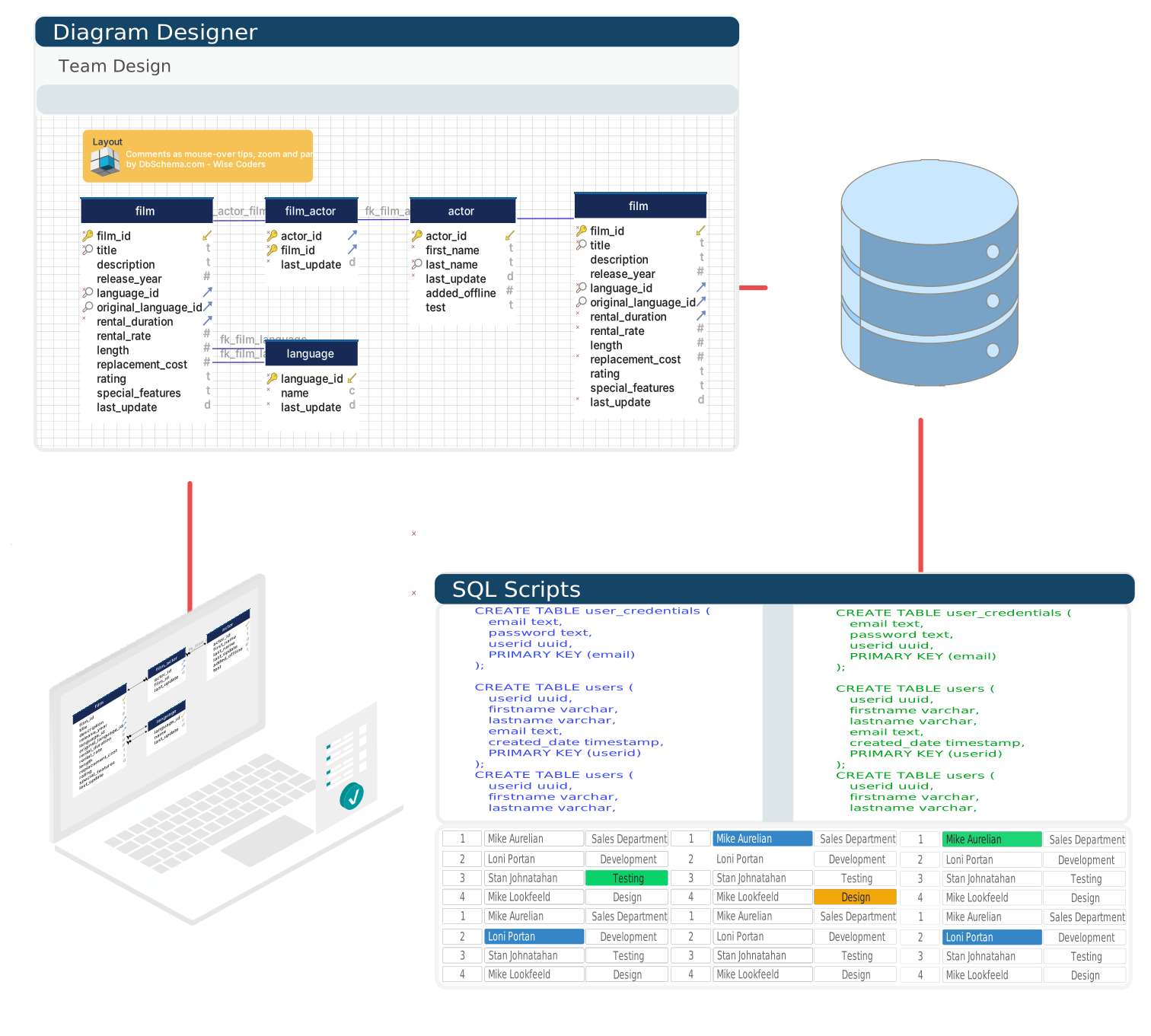
DbSchema reads the PointBase catalog after connecting and renders table definitions, column types, and foreign key relationships in the diagram canvas. This is especially useful for inherited Java EE projects where the PointBase schema was generated by a JPA provider without any accompanying documentation.

Connecting to a PointBase database and loading the schema diagram in DbSchema

Query PointBase Tables with the SQL Editor

The SQL editor provides a direct interface for writing and executing SQL against PointBase in both embedded and server modes. Use it to inspect application data, run DDL statements, and validate schema changes before deploying them to the application server environment.

SQL editor running a query against a PointBase database in DbSchema

Export Schema Documentation

DbSchema's documentation generator produces a structured HTML report of the PointBase schema — including table definitions, column metadata, and relationship diagrams. For Java EE projects with no existing schema documentation, this report provides a durable reference that outlasts the original development environment.

Schema documentation report for a PointBase database generated by DbSchema

Connecting DbSchema to PointBase

For embedded mode, use the JDBC URL jdbc:pointbase:embedded:dbname. For server mode, use jdbc:pointbase:server://host/dbname. The PointBase JDBC driver ships with the PointBase installation — locate pbclient.jar or pbembedded.jar in the installation directory and register it in DbSchema's driver manager. When connecting in embedded mode, the PointBase database files must be accessible from the machine running DbSchema and no other process should hold a lock on the database.

Why DbSchema for PointBase

  • Connect to PointBase in both embedded and network server modes from a single tool.
  • Visualize schemas generated by JPA or Hibernate in Java EE applications.
  • Run SQL queries against PointBase without a dedicated PointBase client application.
  • Generate schema documentation for Java EE application audits and project handovers.
  • Plan migration away from PointBase by designing a target schema model in DbSchema.