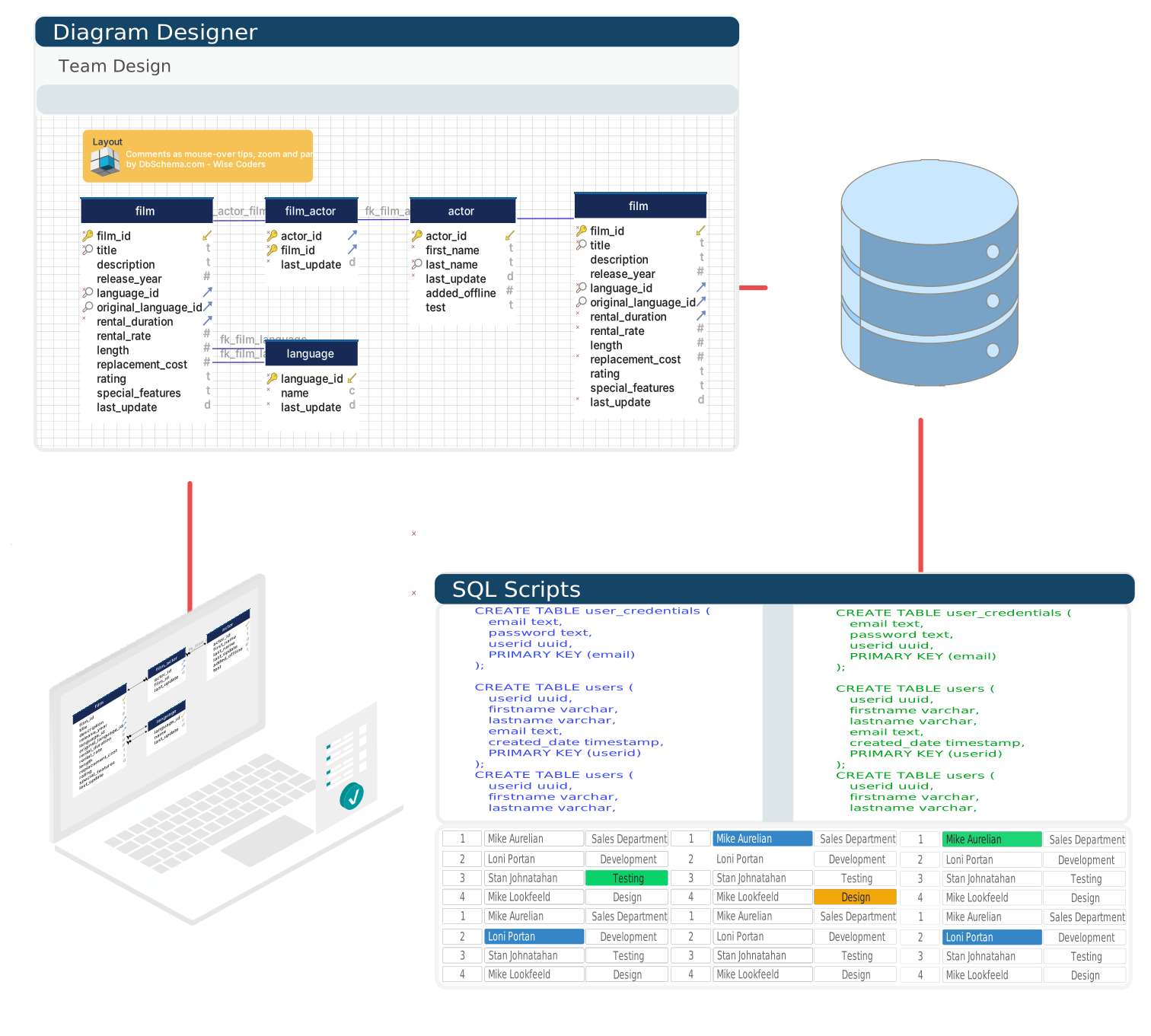
OrientDB keeps documents, graph vertices and edges, key-value pairs, and objects in one engine. DbSchema reads the class hierarchy over JDBC and lays out document classes and vertex-edge relationships together, so the model's facets stop living in separate tools.
Trusted by teams at
OrientDB's multi-model flexibility means one class can serve as a document collection and a vertex type simultaneously — queried relationally in one part of the application, traversed as a graph in another. Powerful, and genuinely hard to hold in your head as the class count grows.

DbSchema draws the answer: the class hierarchy with its inheritance, and the typed edges between vertex classes, in one ER-style diagram.
One tool for all the shapes your data takes.
DbSchema reads OrientDB's classes and renders document structures and vertex-edge topology together, inheritance included, with no manual modeling.
Assemble OrientDB-compatible SELECT statements against vertex and edge classes visually and read the generated query first — the editor also takes TRAVERSE and MATCH.
Page through vertices, edges, or documents class by class and filter on properties — quicker than one-off traversal scripts when verifying a bulk load.
Generate interactive HTML5 documentation of classes, properties, and relationships. Teammates who have never met a multi-model database browse the structure from a link — no OrientDB Studio, no query language, no install.
Explore the Documentation Tool
Download the OrientDB JDBC driver from the official OrientDB repository and register it in
DbSchema's driver manager — it is not bundled. Connect to the binary port
2424, distinct from 2480, which serves the HTTP API: the URL reads
jdbc:orient:remote:host:2424/dbname.
Enterprise Edition uses the same driver and URL format — point the host at the enterprise server. Confirm the server process is reachable on 2424 before connecting. Details on the OrientDB JDBC driver page.
Download once: the Community Edition stays free, Architect is yours for 15 days.
Teams working with OrientDB often use these engines too. Explore dedicated guides and JDBC setup for each.