Design and Manage FileMaker Pro Databases with DbSchema

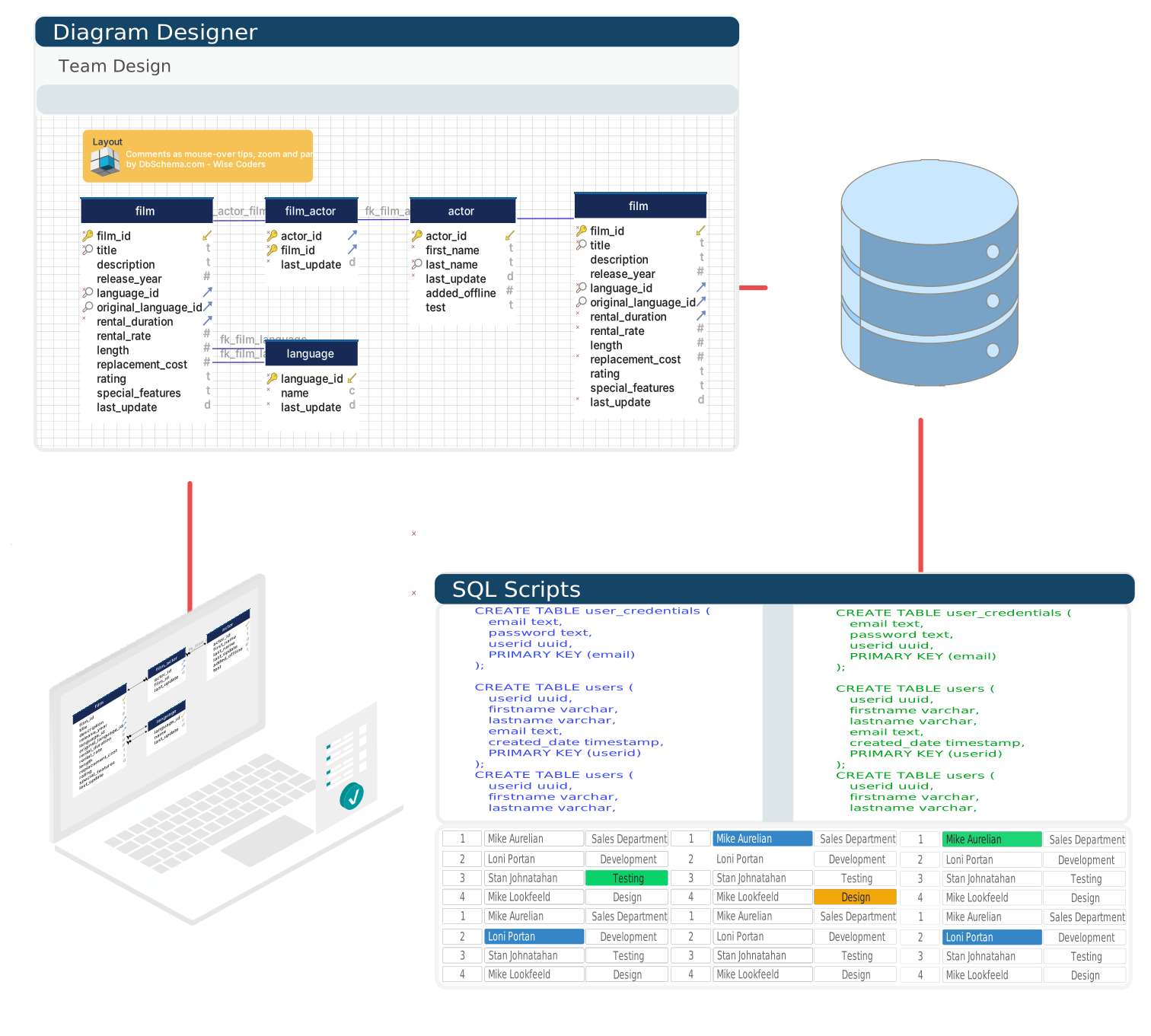
Build a clearer workflow for FileMaker Pro: reverse engineer existing schemas into interactive ER diagrams, model changes visually, and generate reviewed SQL scripts before deployment.

DbSchema is built for visual modeling, schema documentation, and deployment. Keep an offline model in Git, collaborate across teams, and publish documentation that developers, analysts, and stakeholders can navigate in minutes.

DbSchema Database Designer

Download DbSchema See FileMaker Pro Features Download FileMaker Pro JDBC Driver

What happens after you download?

Get to your first FileMaker Pro schema diagram in minutes. No account, no credit card.

1
Install in minutes

Download the installer for Windows, macOS, or Linux and launch DbSchema. No signup required.

2
Connect to FileMaker Pro or open a sample

Reverse engineer an existing FileMaker Pro database or open a sample model to explore tables, relationships, and indexes.

3
Design, document, and deploy

Edit schema visually, generate documentation, and prepare reviewed migration scripts for safer releases.

SQL-Based Schema Exploration for FileMaker Pro Solutions

FileMaker Pro organizes data using a relationship graph and layout-driven interface that differs fundamentally from conventional relational databases. When FileMaker solutions grow in complexity, understanding which tables are connected and how data flows through the system becomes difficult without a structured schema view. DbSchema connects to FileMaker via the FileMaker JDBC driver, discovers the tables and relationships exposed through the JDBC interface, and renders them as an entity-relationship diagram suitable for technical review and migration planning.

Download DbSchema Free See FileMaker Pro Features


Visualize FileMaker Table Relationships via JDBC

Once connected, DbSchema reads the table occurrences and field definitions exposed by FileMaker Server's JDBC interface and displays them on a visual canvas. This makes it practical to audit a FileMaker solution's data structure or prepare migration specifications for moving to a relational database like PostgreSQL or MySQL.

Connecting to FileMaker Pro via JDBC in DbSchema's connection wizard

Inspect FileMaker Field and Table Structures

DbSchema displays the full field list for each table exposed through the FileMaker JDBC driver, including field data types and relationship definitions. This structural view is essential when designing an equivalent schema in a target database for a data migration project.

Inspecting FileMaker Pro table and field definitions in DbSchema

Schema Documentation for FileMaker Solutions

DbSchema generates HTML documentation from the FileMaker JDBC schema, covering tables, fields, and relationships. This documentation is especially useful for FileMaker developers handing off solutions to clients or third-party developers who need to understand the data model without access to the FileMaker application itself.

Auto-generated schema documentation for a FileMaker Pro database in DbSchema

Connecting DbSchema to FileMaker Pro

FileMaker Server must have ODBC/JDBC sharing enabled in the Admin Console before DbSchema can connect. Use the FileMaker JDBC driver (fmjdbc.jar), available from the FileMaker developer resources. The JDBC URL format is: jdbc:filemaker://host:2399/dbname, where dbname is the name of the hosted FileMaker database file. Add the driver JAR via DbSchema's driver manager under Connections > Manage Drivers. The database file must be open and hosted on FileMaker Server — local FileMaker Pro files are not accessible via JDBC without FileMaker Server running.

Why DbSchema for FileMaker Pro

  • Visualize FileMaker table and field relationships exposed through the JDBC interface
  • Generate schema documentation for FileMaker solutions being migrated or audited
  • Run SQL queries against FileMaker data from a standard JDBC-based SQL client
  • Create ER diagrams showing the SQL-accessible data model for external developers
  • Use DbSchema as a migration planning tool when moving FileMaker data to a relational database