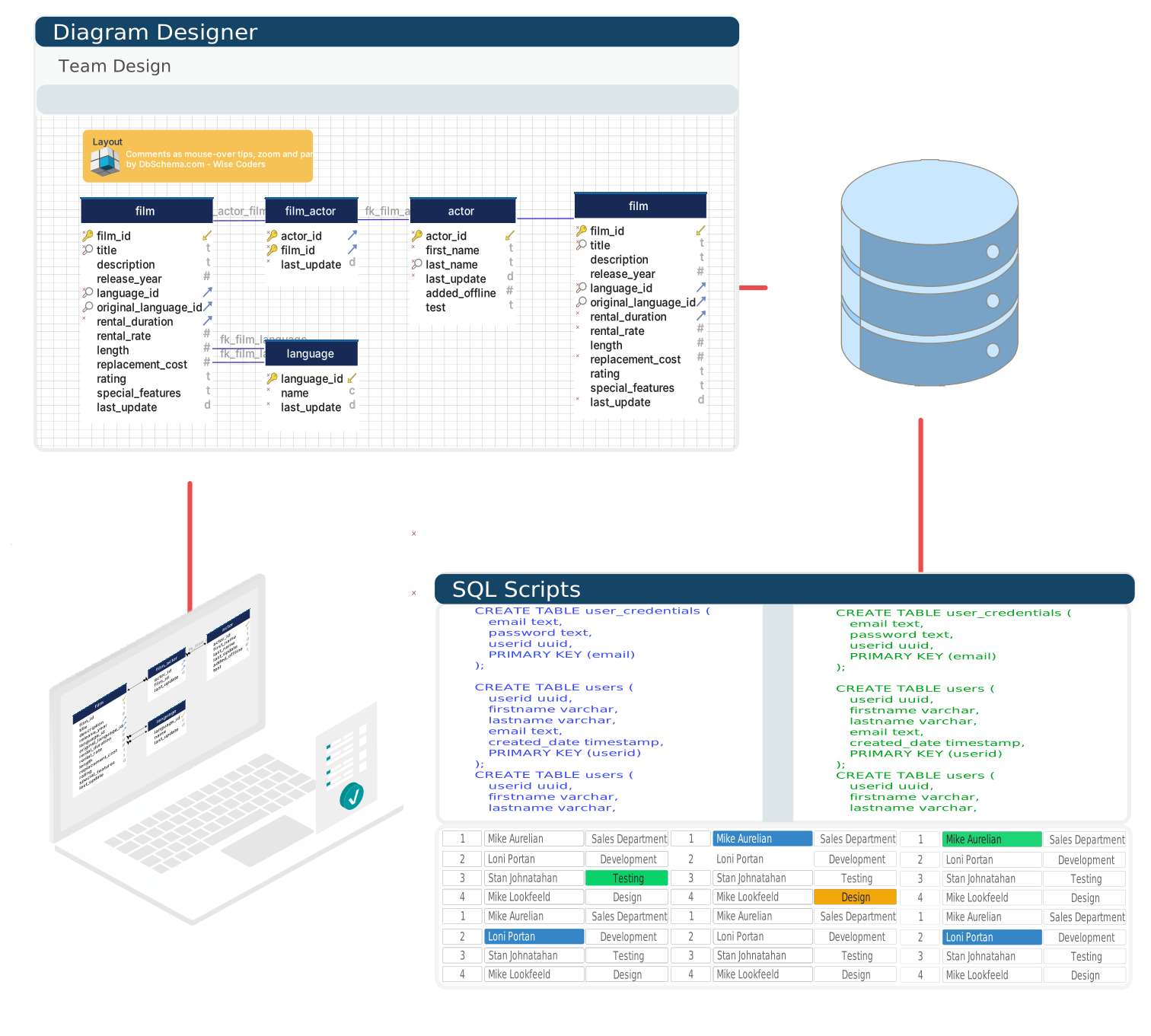
A Synapse workspace mixes dedicated SQL pools, serverless endpoints, and Spark. DbSchema focuses on the dedicated SQL pool — the persistent warehouse — and renders its tables, views, and relationships as diagrams, documentation, and T-SQL changes you review first.
Trusted by teams at
A dedicated pool collects fact tables, conformed dimensions, and views faster than anyone writes them down. The joins live in analysts' heads — and modifying a shared dimension without a map is how dashboards break on a Monday.
DbSchema draws that map: the pool reverse engineered into diagrams, published as a catalog your data governance team can browse, with every planned change visible as T-SQL first.
Warehouse modeling from a desktop client, without opening Synapse Studio.

DbSchema reads the pool's tables, views, and relationships over JDBC and lays them out as ER diagrams — instant orientation for anyone new to the warehouse.
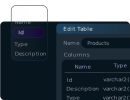
Create tables, set column types, and draw fact-to-dimension relationships visually — then apply to the pool or export the change as a T-SQL script for review.
The visual builder turns table and filter selections into T-SQL and runs it on the pool — warehouse exploration for people who would rather not hand-write queries.
One click exports the pool schema as self-contained HTML5 documentation: zoomable diagrams, table and column definitions, comments. Governance teams, auditors, and stakeholders browse it with nothing installed and no access to the warehouse itself.
Explore the Documentation Tool
Modeling a dedicated SQL pool and connecting DbSchema (3 min).
The connection uses the SQL Server JDBC driver, downloaded automatically, with the URL form
jdbc:sqlserver://workspace.sql.azuresynapse.net:1433;database=poolname; append
;authentication=ActiveDirectoryPassword for Azure Active Directory sign-in.
Remember the workspace firewall: it must allow inbound connections from the machine running DbSchema.
No signup required; the installer carries the free Community Edition and a 15-day Architect trial.
Teams working with Azure Synapse Analytics often use these engines too. Explore dedicated guides and JDBC setup for each.