Learn SQL in your browser
A free SQL tutorial in short lessons on one shop database. Every example runs on real PostgreSQL in your browser, and the page checks your answers.
Database design, migrations, SQL and everyday database work — explained with practical examples.
A free SQL tutorial in short lessons on one shop database. Every example runs on real PostgreSQL in your browser, and the page checks your answers.
Compare database design tools that run natively on Linux, see which modellers list only Windows and macOS, and open your own database in DbSchema Community
Compare five data modelling tools for Snowflake on connection, reverse engineering, VARIANT support and model storage, with a fit guide per team.
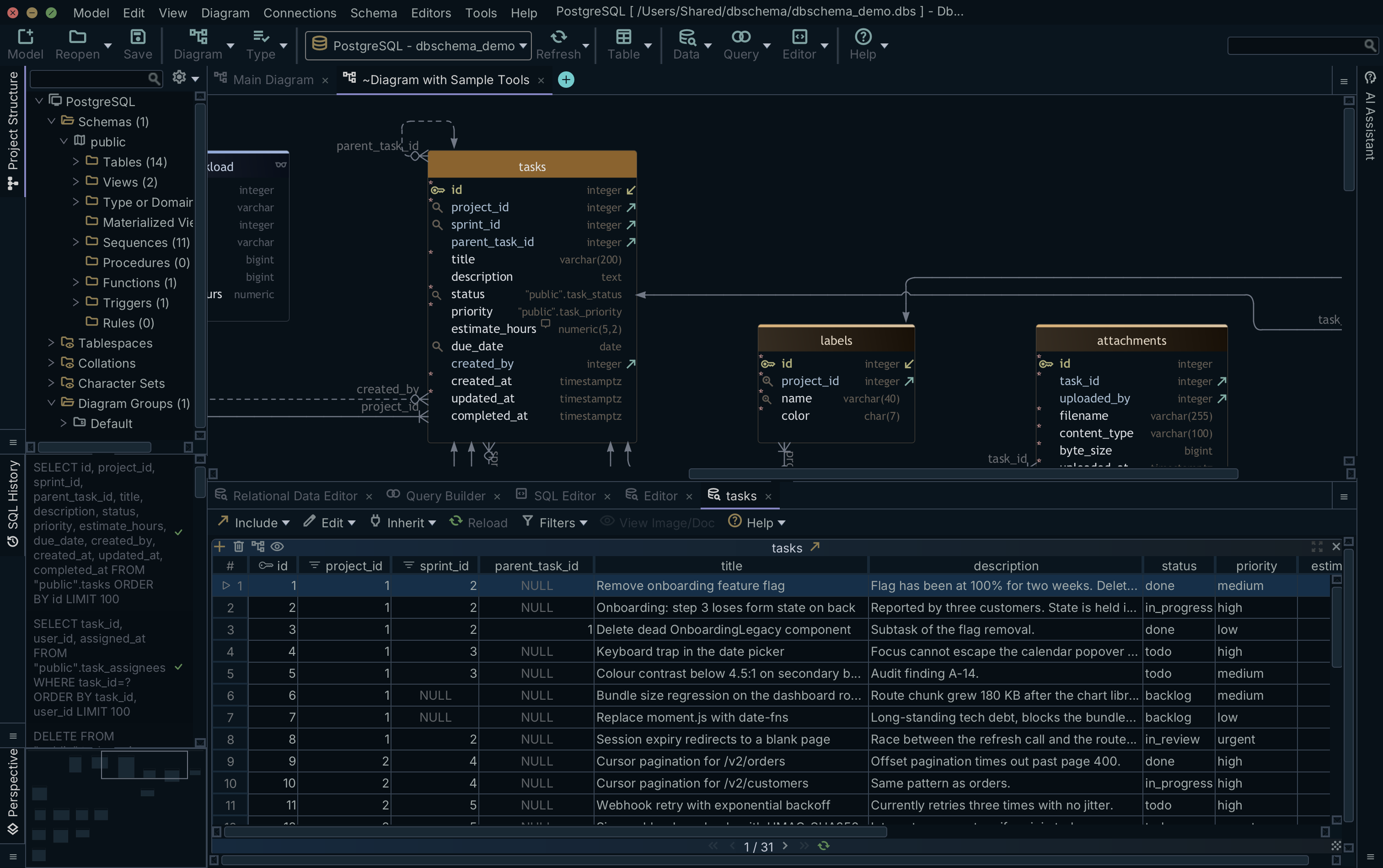
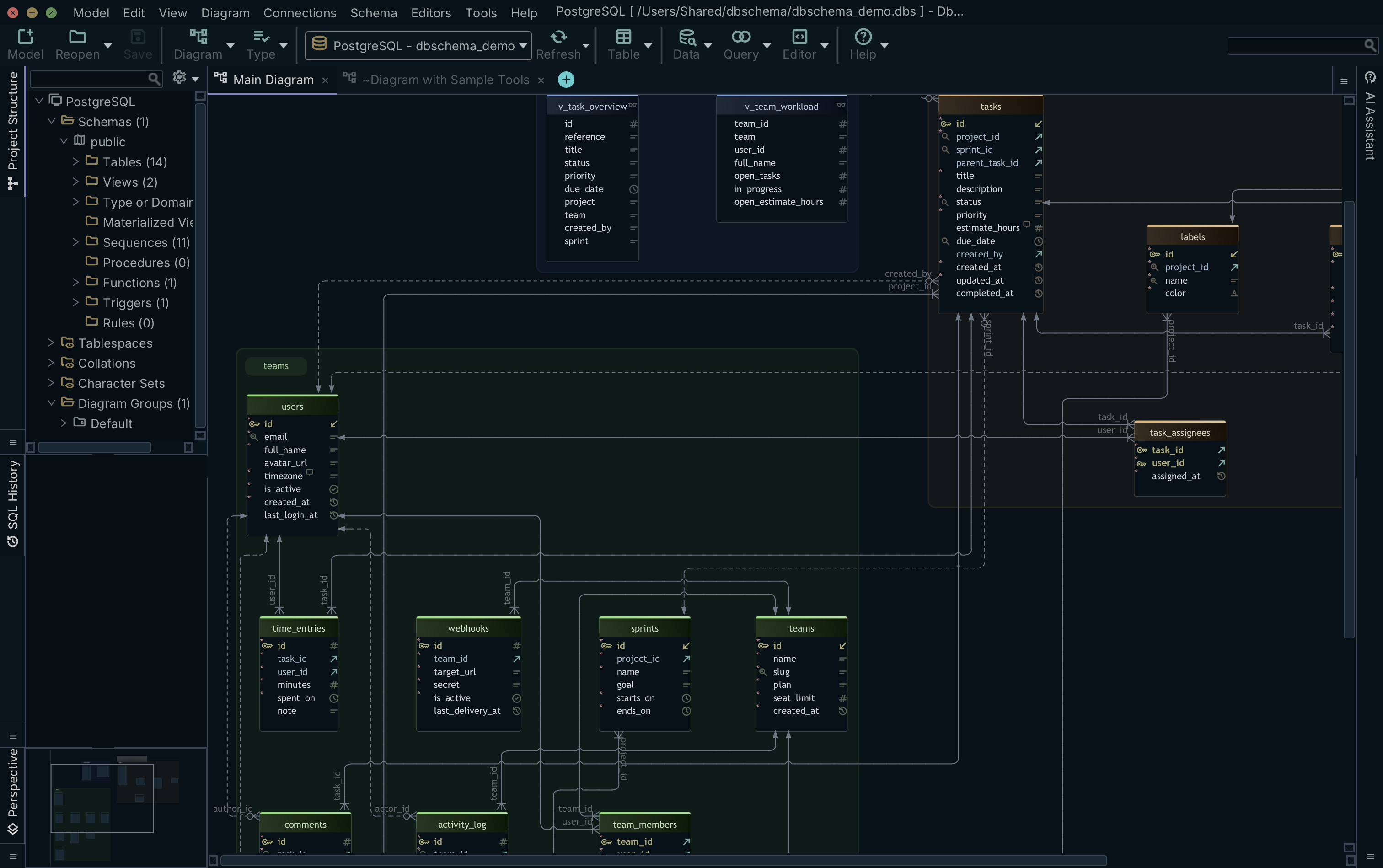
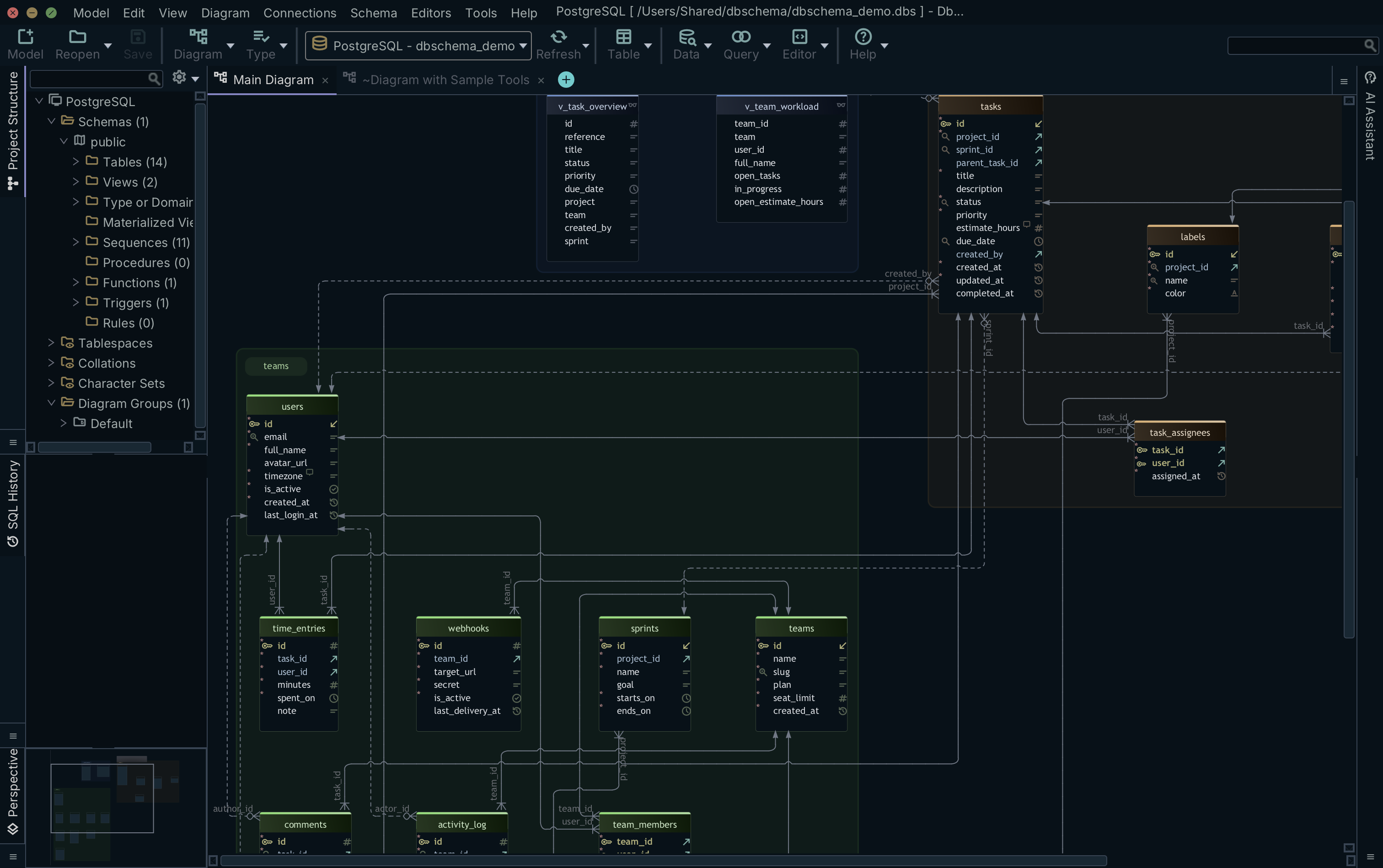
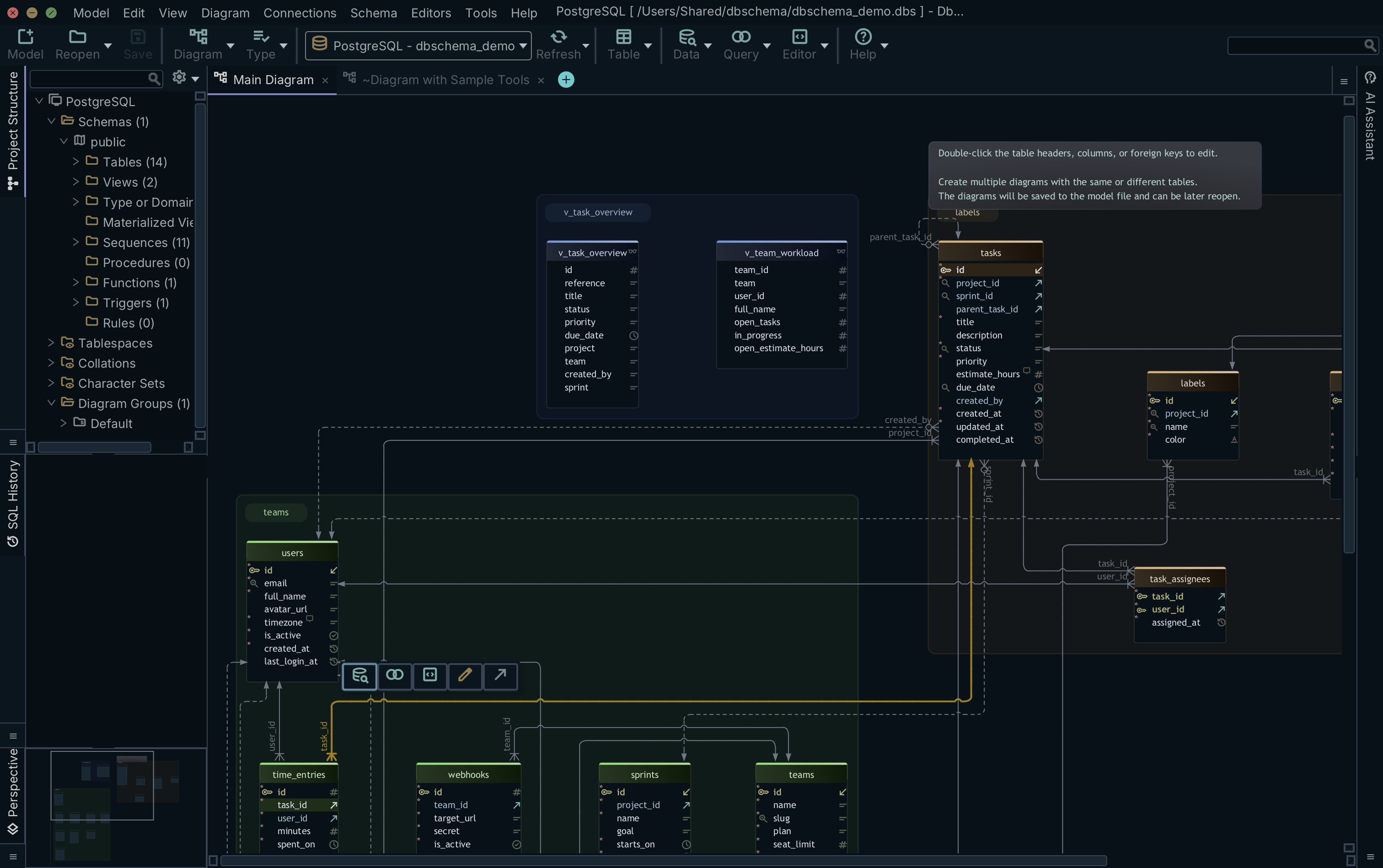
Learn how to connect a tool to a live database, reverse-engineer a schema into an ER diagram, and uncover undeclared foreign keys with DbSchema.
How DbSchema's free Community Edition opens the PostgreSQL database behind pgAdmin's ERD tool, what that ERD does, and where a modelling tool goes further.
Compare six AI ER diagram generators on input, output and where the model lives, and see how to draw an ER diagram from your real database instead.
Compare erwin Data Modeler, ER/Studio, and PowerDesigner on repository features, cross-platform support, and team licensing costs for database architects.
Open, export and fix DBeaver ER diagrams, learn why relationship lines go missing, and know when to open the same database in DbSchema.
Learn SQL wildcard characters with %, _, ESCAPE, ILIKE, and NOT LIKE examples. Compare databases and test safe pattern searches in DbSchema.
Learn SQL NULL-handling functions like IFNULL, ISNULL, COALESCE, and NVL, with examples, pitfalls, and practice exercises.
Learn SQL HAVING with GROUP BY using COUNT, SUM, AVG, JOIN, and COUNT DISTINCT examples. Understand HAVING vs WHERE and write safer reporting queries.