DbSchema vs DbVisualizer
For the person weighing these two products for a team that has to design a schema, document it and keep it in step with the database.
On this page
The comparison usually starts with a schema nobody drew: foreign keys that live only in the application code, and a request for documentation by Friday. DbSchema is the choice for that job. It reverse-engineers the schema into a diagram you edit, keeps the design in a local model file you version in Git and diff against the live database, and exports the documentation from that same file. DbVisualizer is a SQL client, built around the query rather than around the design. Both run on Windows, macOS and Linux.
DbSchema vs DbVisualizer at a glance
| Tool | Engines | Diagrams and modelling | Query tooling | Data editing | Documentation | Licence |
|---|---|---|---|---|---|---|
| DbSchema | 70+ SQL and NoSQL databases over JDBC | Diagram is the model; offline .dbs design; compare and synchronize (Pro) | SQL editor with Groovy; Query Builder driven by foreign keys (Pro) | Relational Data Editor, data importer, data generator (Pro) | Interactive HTML5, PDF and Markdown (Pro) | Free Community; Pro 294.00 USD perpetual; 15-day Architect trial |
| DbVisualizer | Any JDBC driver; extended support on a named list | References graphs, free edition; no offline model file documented | SQL Commander, query builder, explain plan and charts, Pro | Table data viewer and editor, table import and export, Pro | Result-set export; no schema documentation feature documented | Subscription: 199.00 USD first year, 89.00 USD renewal; free edition |
Every price and edition in that table was read from the two vendors' own pages on 5 September 2026. The DbSchema row shows Pro; Architect, which adds logical and conceptual design, is 470.40 USD. Both DbSchema figures are the ones the purchase page shows on its Business tab, in US dollars, and that page prices in the currency of whoever opens it, with lower amounts on its Personal and Universities & Students tabs. DbVisualizer's figures exclude VAT, so put both sides in the same currency before you compare them.
Three rows carry most of the decision. Modelling, because only one of the two keeps a design that exists apart from the server. Documentation, because only one of the two produces a schema document at all. And the licence, because one is a payment you make once and the other is a yearly one. The sections below take those three in order, with the engine list first, and each one names the edition that carries the feature so the comparison stays honest about the bill.
Connectivity and supported engines
Both products reach databases over JDBC, so both connect to almost anything with a driver. What differs is what happens after the connection. DbSchema connects to 70+ SQL and NoSQL databases, downloads the driver when you pick one, and builds a model from whatever it finds, including a MongoDB structure inferred from a configurable sample of documents per collection. DbVisualizer splits its list in two: named engines get extended support, meaning database-specific object types and object actions, and the rest fall back to generic JDBC[2], which its own page sums up as any database reachable with a JDBC driver.
For a mixed estate, read that split rather than the raw count on either side. Extended support is where a client stops being a generic table browser, and on the DbSchema side the equivalent question is which engines the diagram, the documentation and the synchronization all work on, which is every engine it supports.
Interface and workflow
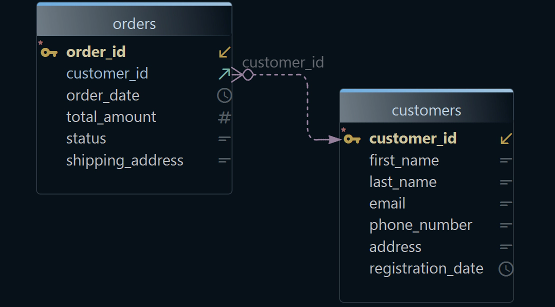
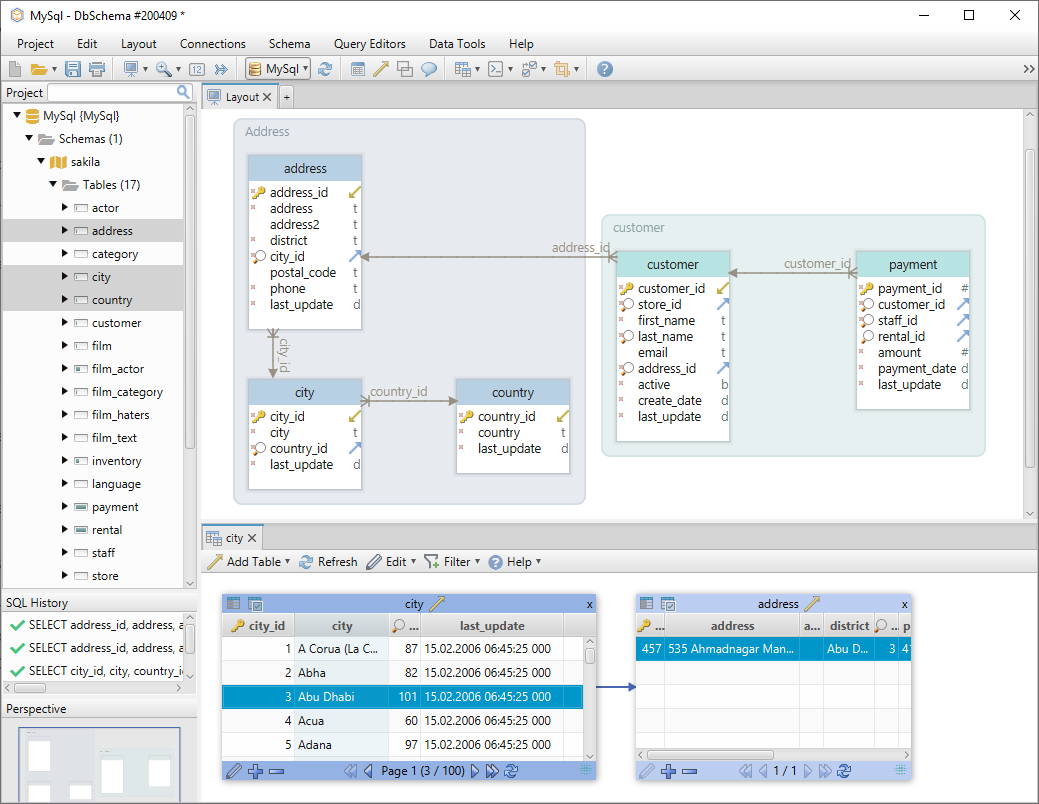
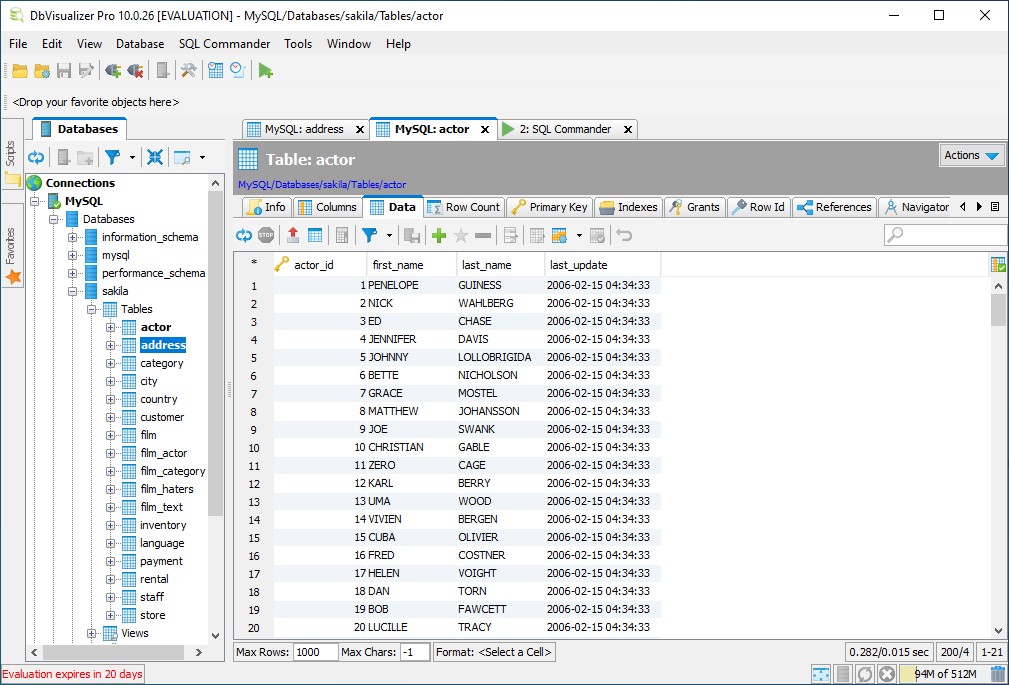
DbSchema arranges tables on an interactive canvas. Open several diagrams focused on different parts of one database, each with its own layout and its own visible tables, edit objects in the diagram instead of through separate forms, and the arrangement is saved with the model rather than rebuilt next time. DbVisualizer keeps an administrative shape: a left-hand object tree, objects opened into tabular Object Views, and SQL Commander tabs for queries.
One is built around a picture of the schema, the other around a list of it, and that is the choice the rest of this page turns on. The picture pays for itself twice: once when somebody new has to understand a database nobody documented, and again when a change has to be discussed before it is made, because a diagram is the thing colleagues can argue with. The DbSchema canvas is also where you group tables, colour them and write the comments that later become the documentation.
Query tools
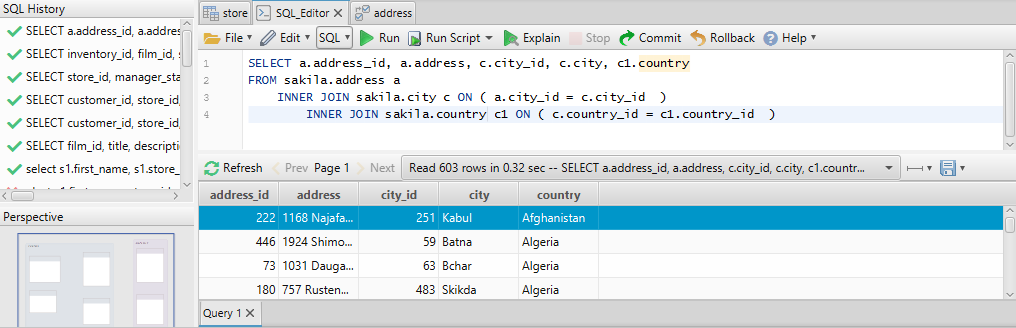
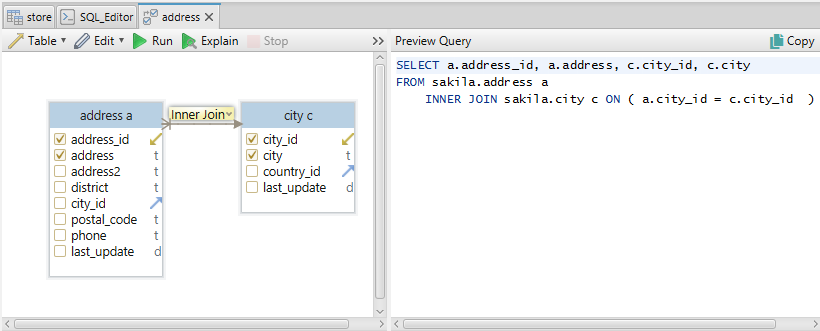
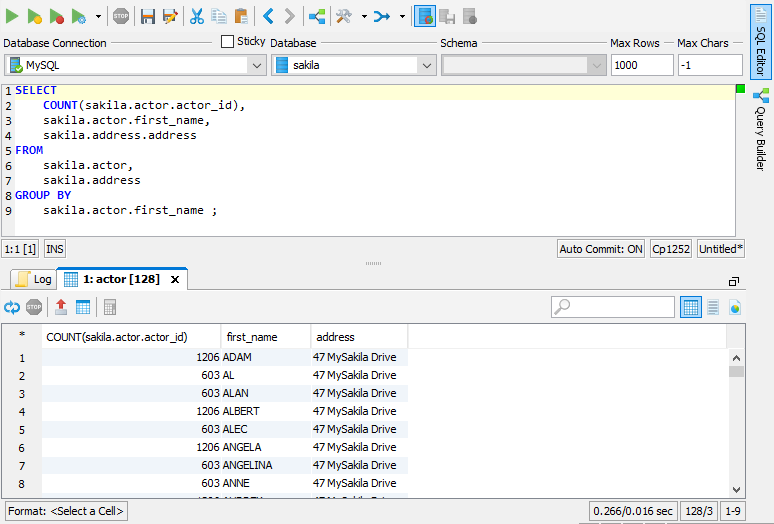
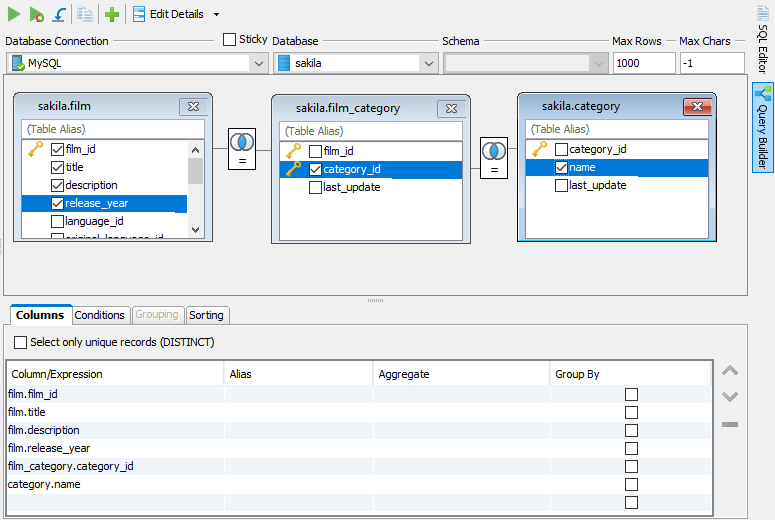
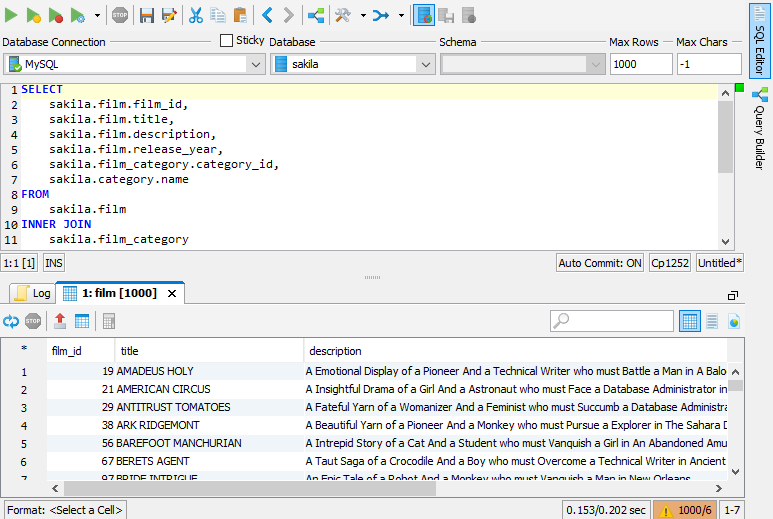
Both ship a SQL editor, and both add a visual query builder on top of it. The DbSchema editor switches to Groovy or JavaScript from the language dropdown, runs the selected text or the statement at the cursor, and keeps an SQL History pane of every statement executed in the session, where clicking an entry loads it back into the editor. Its Query Builder is driven by foreign keys: drag tables in and the joins follow the relations already in the model, and where the database declares no foreign key you drag one column onto another in the diagram to create a virtual one. The Query Builder is Pro.
DbVisualizer's SQL Commander covers the typed-query side, with memory-saving options for large scripts, saved query templates and an explain plan. Two facts are worth knowing before you plan around it: the query builder and the explain plan are Pro[1], and its version control covers SQL scripts, with branches, history and change tracking[3], rather than a schema model.
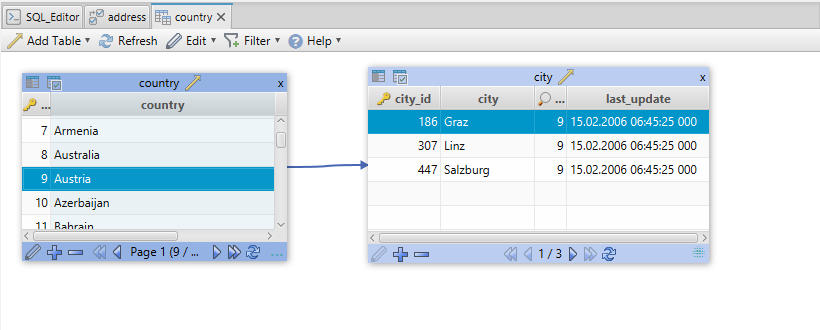
DbSchema adds a third surface the comparison would otherwise miss. The Relational Data Editor opens several linked tables side by side and refilters every child pane as you select a row in the parent, cascading down foreign keys as many levels as the schema has. It answers questions about related rows without writing the joins, and it is Pro.
Schemas and diagrams
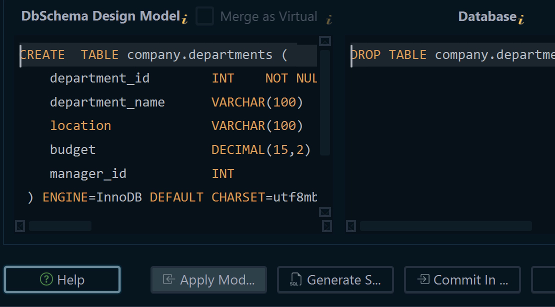
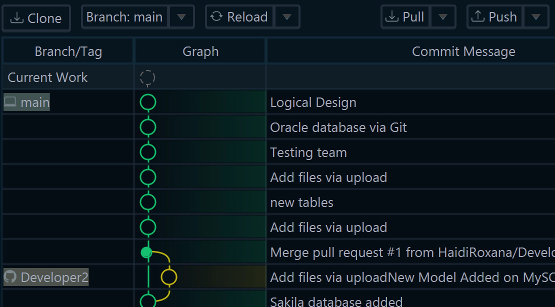
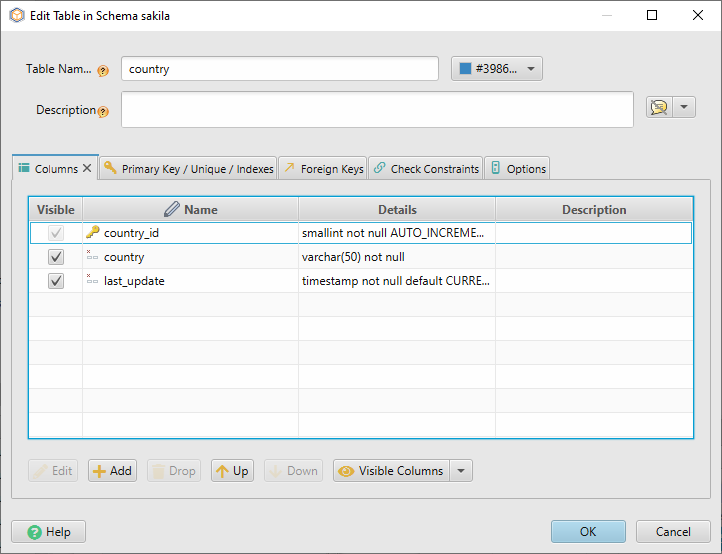
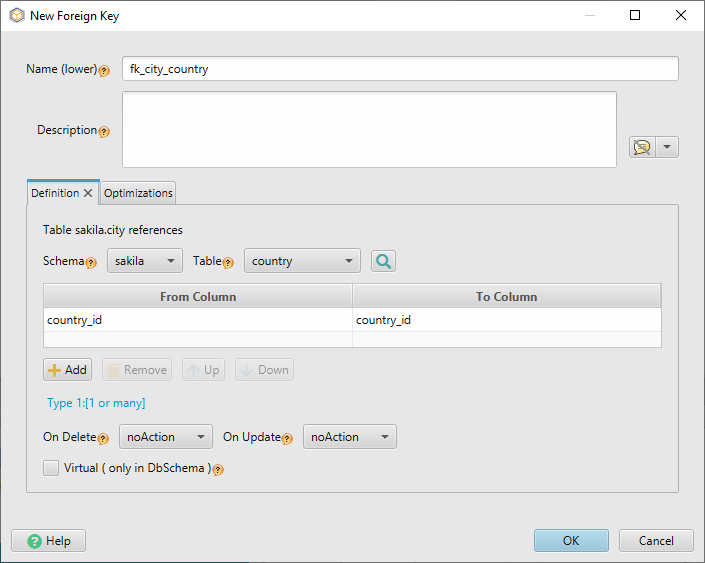
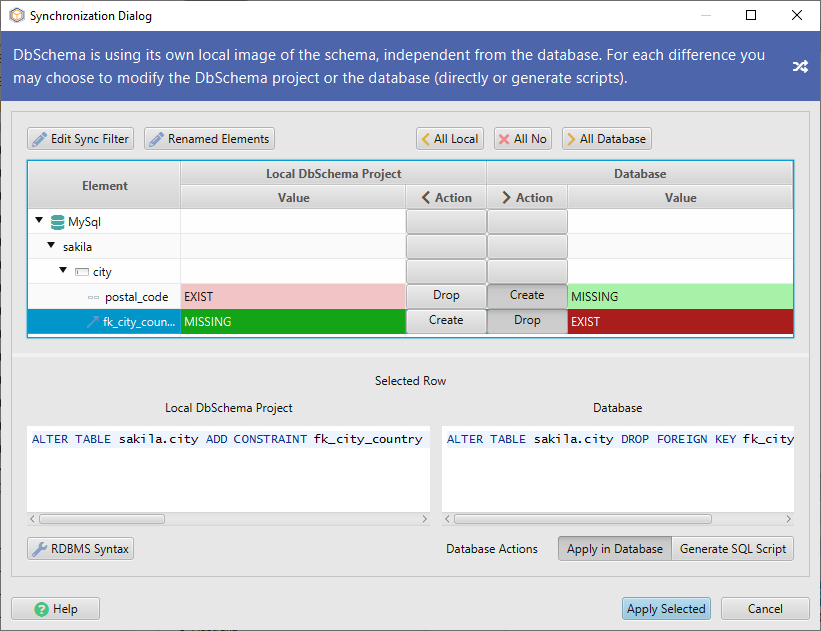
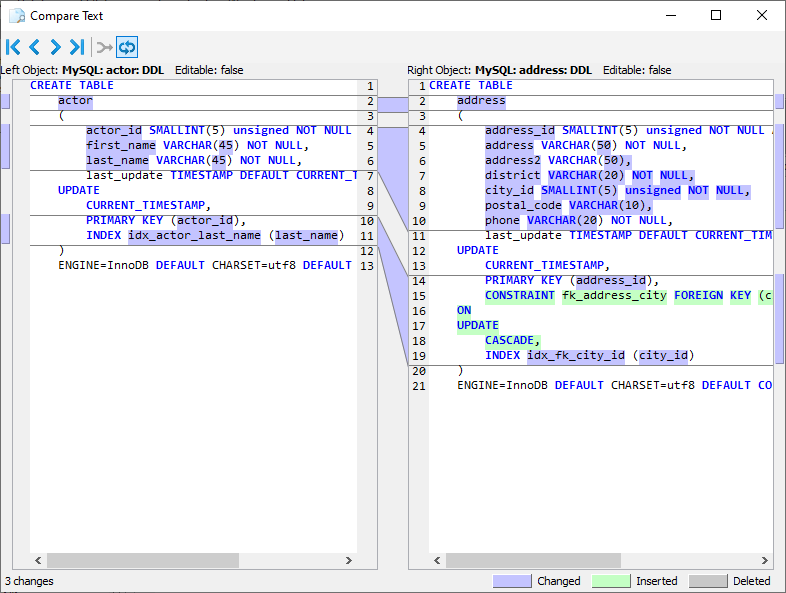
The widest distance between the two is here, and it is the reason to pick one over the other. The whole DbSchema workflow is built on the diagram: design a schema offline, create virtual foreign keys the database never declares, then compare and synchronize the local model against the live database. The model is a single .dbs file, plain indented XML holding the schema plus every diagram, layout and comment, so a schema change reads as added and removed lines in a pull request and two versions of it can be compared object by object.
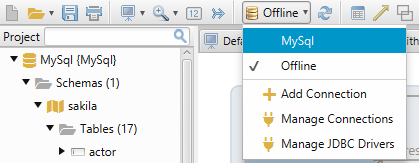
Which step touches what matters here. Editing the diagram changes the model file; the database changes only when Schema → Synchronize Model with Database runs the generated SQL, which you read and edit first. Saving to file, synchronization and documentation export are Pro. The diagramming itself is covered in more depth in the DbSchema database diagrams tool.
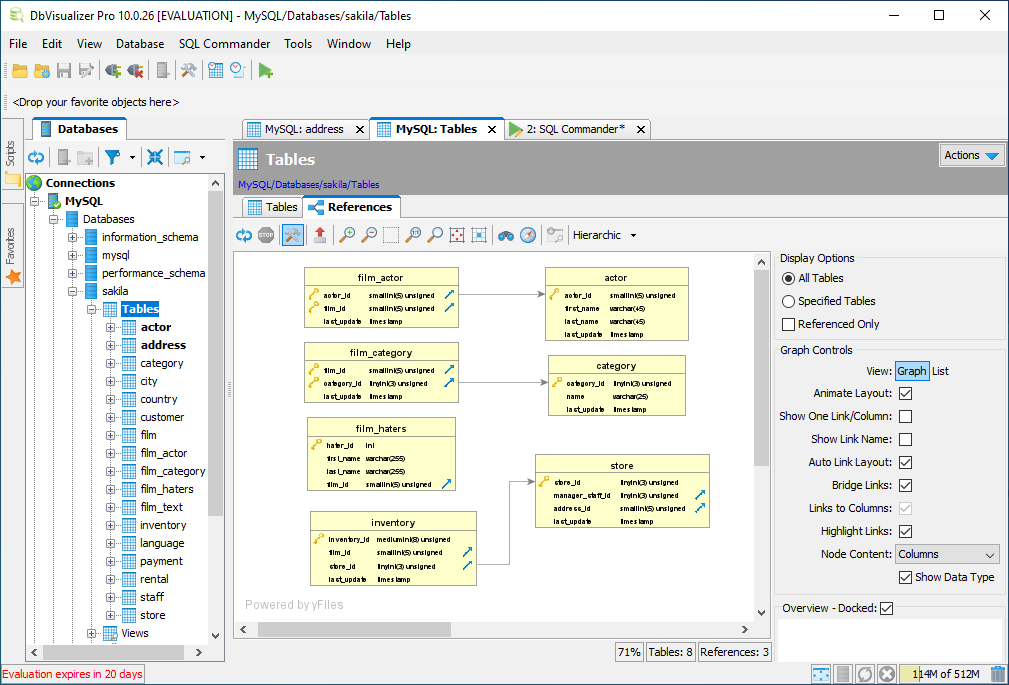
DbVisualizer's schema surface is list-based. References graphs ship in the free edition[1] and draw a picture of an existing schema; beyond them, the features page documents no offline model file and no design-first diagram workflow. Table management, and procedure, function, package and trigger support, are Pro.
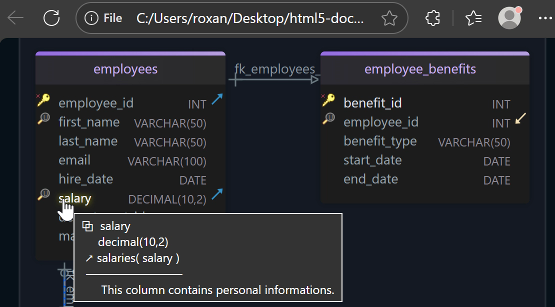
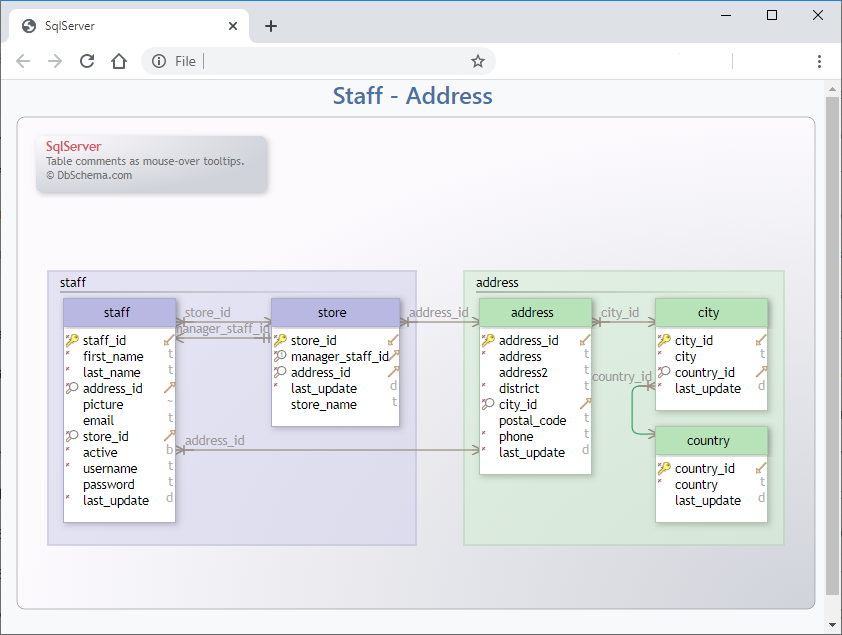
On output, DbSchema exports interactive HTML5, PDF and Markdown documentation of the model from Diagram → Export HTML5 or PDF Documentation, with the diagram as a vector image and column descriptions as mouse-over tooltips. DbVisualizer exports result sets in several formats; schema documentation is not a feature its pages describe.
Data editing and browsing
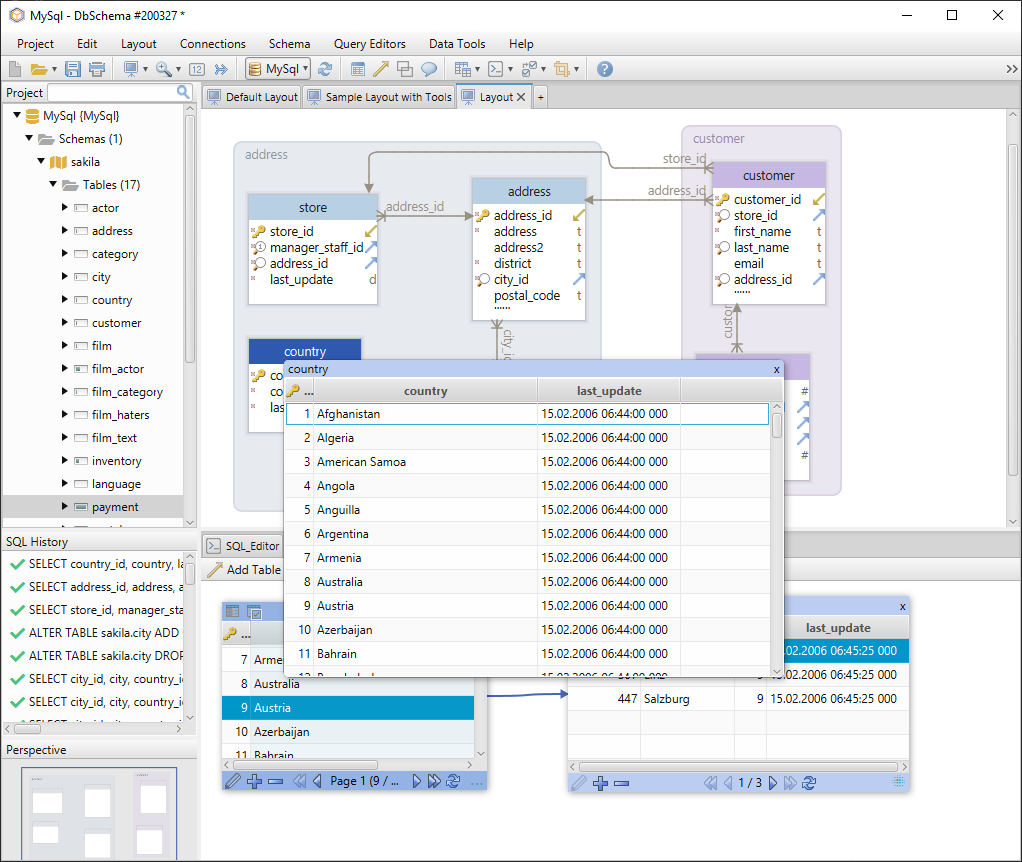
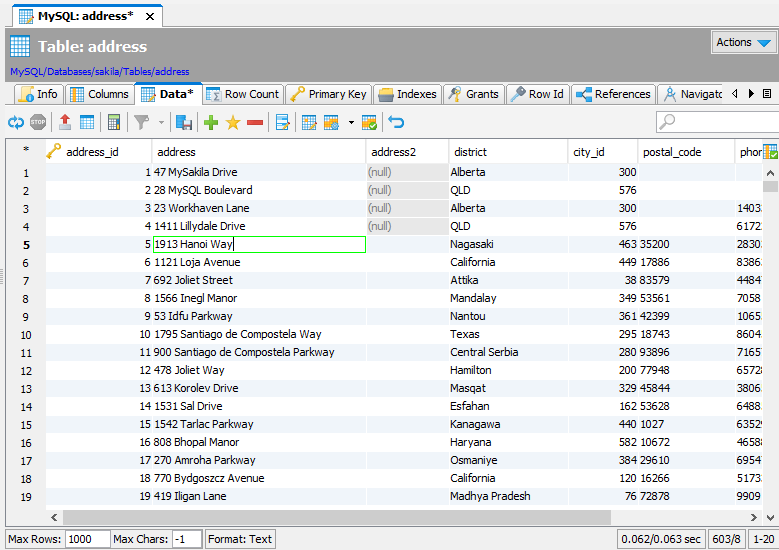
DbSchema browses data visually. A quick view opens a table's rows straight from the diagram, the Relational Data Editor walks linked tables together, and the Data Importer loads delimited text, CSV, XML and Excel. For filling a test environment, the Data Generator produces configurable, reproducible rows in foreign-key-aware order. Browsing relational data, the importer and the generator are all Pro; the free Community Edition connects, reverse-engineers, draws diagrams and runs SQL.
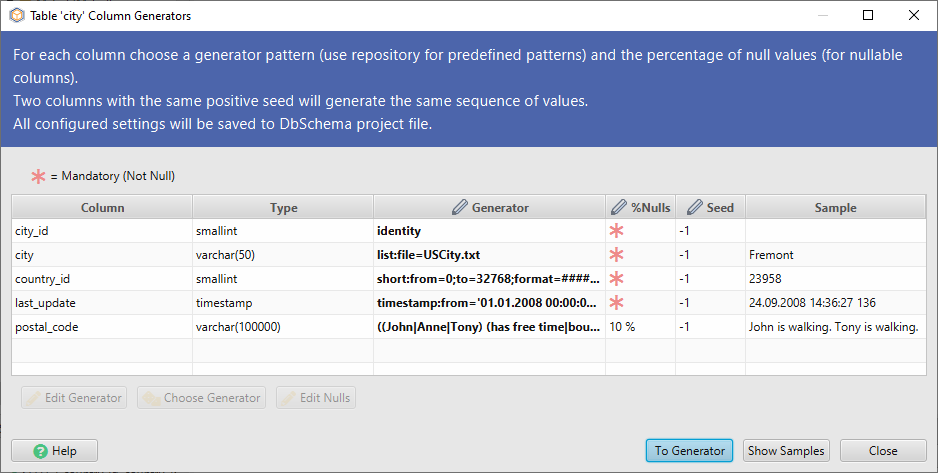
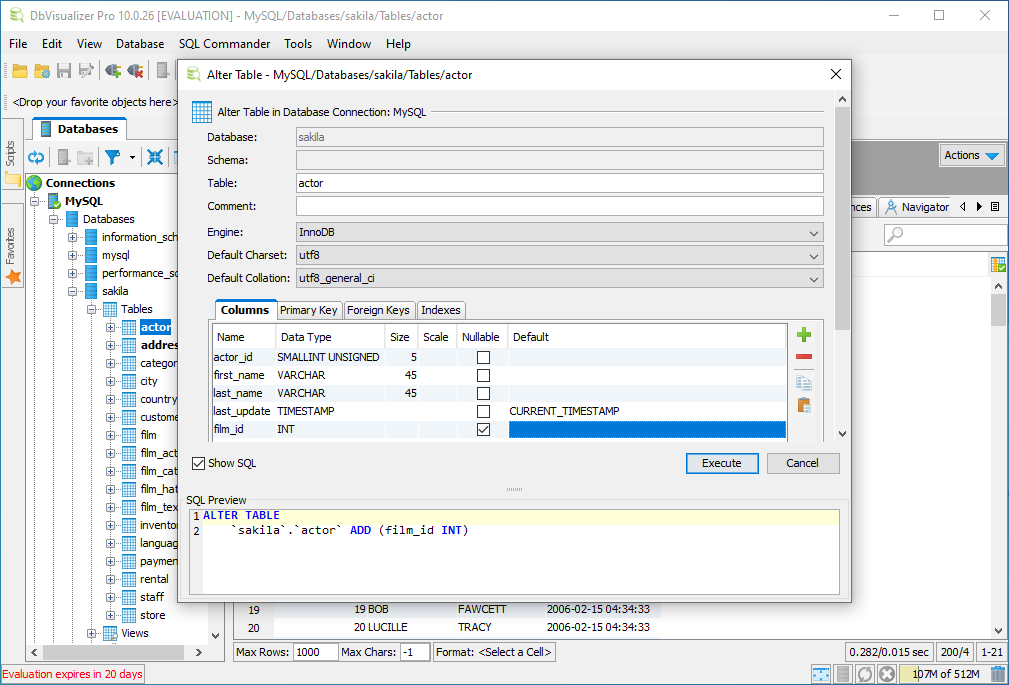
DbVisualizer gives a grid: inline editing as you view an object, table import and export, and comparison of DDL and data between two tables. The table data viewer and editor, and table import and export, are Pro[1].
The difference in this row is what the two products assume you know. A grid asks you which table to open and expects you to write the join yourself; the Relational Data Editor asks which row, then follows the foreign keys for you, including the virtual ones you drew on the diagram.
Licensing and price
The two deals have different shapes. DbSchema sells a perpetual licence with the first year of maintenance included: Pro is 294.00 USD once and 75.00 USD a year afterwards, Architect is 470.40 USD once and 120.00 USD a year, and the renewal buys later releases rather than continued use, so the version you own keeps working either way. Monthly terms exist as well, and a new installation starts a 15-day free Architect trial with no credit card. Community Edition is free for any use. Those DbSchema figures are the Business tab ones in US dollars; the purchase page prices in the currency of whoever opens it, and its Personal and Universities & Students tabs carry lower amounts.
DbVisualizer prices per user and by support tier. Pro with 60-day support is 199.00 USD per user for the first year[1] and 89.00 USD a year afterwards; with premium support the two figures are 229.00 and 119.00. All of them exclude VAT, and all include what DbVisualizer calls a perpetual usage licence, so you keep the version you had when a subscription lapses. Volume discounts start at four users and reach 144.00 USD new and 65.00 USD renewal at 50 or more[1], with 50% off for non-profits and for start-ups in their first five years. The trial runs 21 days.
Compare the free editions on what they cover, since both cost nothing. DbSchema Community Edition connects to every supported database, reverse-engineers it, draws interactive diagrams and runs SQL, which already answers the question this comparison starts with. The DbVisualizer free edition covers connections, SQL history, monitoring and References graphs, and leaves the query builder, the table data editor and table import and export to Pro[1].
Which one to buy
Buy DbSchema when the schema itself is the deliverable, which is the case for any team that designs before it deploys: work offline in the model file, keep it in Git so a schema change is reviewable in a pull request, synchronize it against the database once the design is agreed, and hand stakeholders interactive HTML5 documentation. The diagram-first workflow is also the quickest way to read a database nobody on the team wrote, and it covers document stores on the same canvas as the relational ones.
DbVisualizer is built for the other half of the day, typed SQL against a live connection, with extended object support on its named engines and version control over scripts. The two overlap least exactly where DbSchema is strongest, so a team that owns the schema loses nothing by making DbSchema the seat it buys.
Download DbSchema at https://dbschema.com/download.html and open your own database in it. Reverse-engineering a schema into a diagram, the interactive diagrams and the SQL editor are in the free Community Edition; the offline model file, schema synchronization, HTML5 documentation, the Query Builder, the Relational Data Editor and the data generator are Pro, and logical and conceptual design is Architect.
Sources
Compare the two on your own database
DbSchema reverse-engineers your schema into interactive diagrams, keeps the model in a versionable .dbs file, and synchronizes it against the live database. Diagrams and the SQL editor are in the free Community edition.