Best Database Documentation Tools in 2026: Compared and Reviewed
For the person who has to hand a database schema to colleagues who will never open a database client, and is choosing the tool that produces it.
On this page

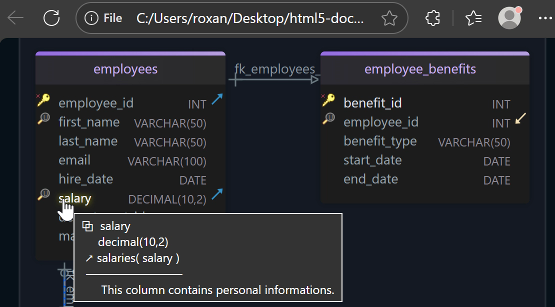
Three of the seven tools on this page generate schema documentation at all; the other four draw a diagram and export DDL. DbSchema is the one to pick when the documentation should come out of the same model you design in: it writes interactive HTML5, PDF and Markdown from the model file, with the diagram embedded as a vector image and your table and column descriptions carried through as mouse-over tooltips.
dbForge Documenter and Navicat are the other two generators, each built around one part of the job: a single engine documented in formal HTML and PDF, and a data dictionary that exports on a schedule. DataGrip, HeidiSQL and DBeaver show you a schema and export DDL, which answers a question for someone already connected to the database.
Every claim below was checked against the vendor's own current page on 5 September 2026. If you would rather score the tools yourself than start from a shortlist, read How to Choose a Database Documentation Tool, which sets out five criteria (offline modeling, interactive export, version control, engine coverage and licensing) and the questions to ask before you buy.
What database documentation should include
Database documentation should carry a diagram of the schema, every table and column with its data type, the primary and foreign keys, the indexes and constraints, the comments that hold the business meaning, and the date and schema version it was generated from. Documentation that cannot say which version of the schema it describes is a screenshot rather than documentation.
- A diagram showing the tables and the relationships between them
- Every table and column, with data types and nullability
- Primary keys, foreign keys and the referential actions they carry
- Indexes and constraints, including CHECK rules that encode business logic
- Comments and descriptions written by the people who own the data
- The generation date and the schema version the document describes
The last line is the one the tools disagree on. Regenerating from a live database is what keeps the other five honest, and it is the column in the table below that separates a documentation tool from a diagram viewer. For the wider category rather than the documentation cut of it, see the comparison of free database design tools, and for what DbSchema puts in its own output, the schema documentation page.
Comparison table
| Tool | Databases | Documentation output | Regenerates from a live database | Comments | Offline | Price |
|---|---|---|---|---|---|---|
| DbSchema | all SQL and NoSQL via JDBC | interactive HTML5, PDF, Markdown; Pro | yes, reverse engineering is in every edition | yes, on tables and columns | yes, model file is Pro | Community free, Pro perpetual[3] |
| dbForge Documenter | MySQL, SQL Server, Oracle, PostgreSQL | HTML and PDF, searchable | yes | yes, extended properties | yes | $79.95[1] |
| Navicat | MySQL, PostgreSQL, SQL Server, Oracle, MongoDB and more | Data Dictionary, templated, automated PDF | yes | yes | yes | $299 perpetual[2] |
| MySQL Workbench | MySQL only | DBDoc, several formats; Standard and Enterprise | yes | yes | yes | free[4] |
| DataGrip | all major engines via JDBC | none; diagrams and DDL export | yes, for diagrams | yes, in the IDE | yes | free non-commercial[5] |
| DBeaver | any database with a JDBC driver | none; diagram image export | yes, ERD from a live connection | basic | yes | Community free[10] |
| HeidiSQL | MariaDB, MySQL, SQL Server, PostgreSQL, SQLite and more | none; SQL export | not applicable | basic | yes, and portable | free |
The documentation output column is what sorts the table. Three of these seven produce schema documentation, and a fourth does it only on a commercial license. The other three draw diagrams and export DDL. Both kinds are useful, and only one of them is documentation.
Price follows the export rather than the connection. Documentation is a paid tier almost everywhere, including in our own product, so the free-versus-paid line in this category falls between drawing a schema and publishing it.
Comments start to count as soon as the schema carries business meaning. A column name documents nothing by itself, and the sentence someone wrote next to it is the part a colleague needs. DbSchema, dbForge Documenter and Navicat all carry those sentences into the document they generate, and DbSchema shows them again as tooltips over the diagram in the HTML5 export.
Tools that generate schema documentation
DbSchema
DbSchema writes documentation out of the same model that draws the diagram. Open Diagram → Export HTML5 or PDF Documentation, choose the format, choose which diagrams go in, and choose how far the detail runs, down to indexes and comments.
- Interactive HTML5, PDF and Markdown output, which the Pro edition covers
- All SQL and NoSQL databases DbSchema reaches over JDBC, documented from one model file
- The diagram carried into the HTML5 export as a vector image
- Anything typed in the Description field of a table or column, in every format, and again as a mouse-over tooltip in the HTML5 output
- Comment tags, key-value pairs on a table or column, for metadata such as an owner or a sensitivity level
- Reverse engineering into the model in every edition, free Community included[3]
- Regeneration on every CI build from a Groovy automation script, with no interface open
The model file is what separates this from an export of whatever is deployed right now. DbSchema documents a .dbs model you have reviewed, and the HTML5 output opens in any browser with no server behind it, which is what makes it the copy you can hand to someone outside the team.
Documentation output, the saved model file and offline design are Pro, sold once with the first year of maintenance included and an optional yearly renewal after that. The purchase page carries the current figure, in your own currency and on separate tabs for Business, Personal and Universities & Students[3]. Community connects, reverse-engineers and draws the diagram; Architect adds logical and conceptual design on top of everything in Pro.

dbForge Documenter
dbForge Documenter is a standalone documentation generator, sold per engine.
- HTML and PDF documentation, extended properties, and searchable output[1] you can customize
- One product per engine, so MySQL, SQL Server, Oracle and PostgreSQL are four separate purchases
- $79.95 for the MySQL edition as a full-featured Standard subscription[1]
The sibling product prices the same capability differently. Inside dbForge Studio for MySQL, database documentation belongs to the Enterprise tier at $269.95[7], above Standard at $119.95 and Professional at $209.95, so the number you compare against depends on which Devart product a quote names.
dbForge Documenter documents a schema; it does not design one. The document comes out of the database rather than out of a model you edit, which is the line between it and DbSchema in the table above.

Navicat
Navicat's Data Dictionary generates templated documents and can export them on a schedule.
- A document for each database element, generated from pre-designed templates[9] you can personalize
- Automated processes that export the result as PDF and share it with stakeholders by email[9]
- $299 for Standard and $449 for Enterprise[2] on Navicat for MySQL, perpetual, with volume discounts from five seats
- Free Lite editions for basic work
- Navicat On-Prem Server, a web-based on-premise installation that keeps shared connection settings, queries, snippets and model workspaces inside your own network[12]
Set it up once and it keeps producing, which is a different shape of the same job DbSchema does from a Groovy script in the build.

MySQL Workbench, where DBDoc sits behind a commercial license
MySQL Workbench has a real documentation generator called DBDoc, and its licensing is the detail most roundups get wrong, this page included in its earlier form.
On MySQL's own feature matrix, four capabilities are marked for Standard and Enterprise, not Community[4]:
- documenting database schemata
- documenting all SQL object types
- documentation output in multiple formats
- schema validation and model validation
The free GPL edition gives you EER diagrams, reverse and forward engineering, schema diff, schema sync and the migration wizard that pulls a schema in from SQL Server, Access, Sybase ASE or PostgreSQL, and it stops before the export.
The other boundary is the engine. Workbench models MySQL and nothing else, so a second database in the estate is a second tool, where DbSchema documents both from one model file.

Tools that show a schema without documenting it
DataGrip
DataGrip is a database IDE, and it is on this list because people reach for it when they need to understand a schema.
- Diagrams, schema diff, import and export[6], code completion and refactoring, on JetBrains' own features page
- No data dictionary, no HTML export of the schema, and no PDF
- A free non-commercial license[5] for learning, open-source work and hobby projects
- Commercial use from EUR 10.90 a month for an individual, with a perpetual fallback license on the yearly plans
- Detailed code-related data collected by default[5] on the free non-commercial tier, which the settings switch off and which is off by default on the commercial subscriptions

DBeaver
DBeaver Community is free and open source under Apache.
- Any database with a JDBC driver[11]
- Community release 26.2, from 30 August 2026[11], with the ERD in the free build
- Diagrams from a live connection, exported as images
- No schema documentation output
- Lite at $113 a year, Enterprise at $255 and Ultimate at $510[10], with NoSQL engines, cloud databases and the visual query builder among the paid features
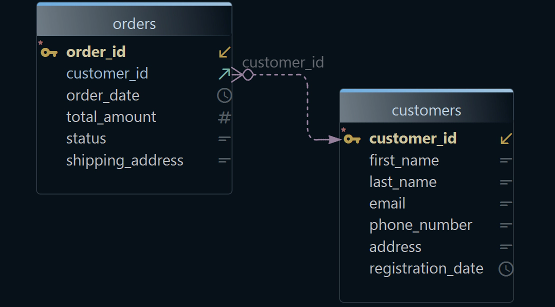
A diagram image is what reaches the person you send it to, without the columns, types, keys or comments around it. For a direct comparison, see the DBeaver alternative page.

HeidiSQL
HeidiSQL is free and open source, with a portable build.
- Release 12.21, from 3 August 2026[8]
- MariaDB, MySQL, SQL Server, PostgreSQL, SQLite, Interbase and Firebird[8]
- Windows, Linux and macOS, with a portable build that needs no installation
- Connecting, editing data and structures, running queries and SQL export[8], plus importing files
- No documentation generator
An earlier version of this page listed HeidiSQL with HTML documentation output, which was wrong.

Which tool fits which documentation job
| If you need to | Tool that fits | Because |
|---|---|---|
| publish documentation from a design-first model | DbSchema Pro | HTML5, PDF and Markdown from one model file |
| document several engines from one tool | DbSchema Pro | the model file is engine-independent |
| produce formal HTML and PDF for a single engine | dbForge Documenter | searchable output, extended properties |
| regenerate and distribute docs on a schedule | DbSchema Pro, or Navicat | a Groovy automation script in the build; Navicat's Data Dictionary exports PDF and mails it |
| document MySQL on a free license | DbSchema Community, then Pro | Workbench DBDoc is Standard and Enterprise only |
| read and refactor SQL daily | DataGrip | free non-commercial license, full IDE |
| explore many engines for free | DbSchema Community, or DBeaver Community | DbSchema Community covers 70+ SQL and NoSQL databases, DBeaver Community any JDBC database; both draw a diagram, neither exports documentation for free |
| check one table from a portable client | HeidiSQL | free, portable build, SQL export |
The fifth row is the one people arrive with. None of these seven generates MySQL documentation on a free license: Workbench's DBDoc is Standard and Enterprise, and the free tiers of the rest export DDL and diagram images. The route that stays in one tool is DbSchema, whose free Community Edition reverse-engineers MySQL into the diagram and whose Pro edition exports that diagram and every column around it.
The first two rows go to DbSchema for a reason the price column hides. Devart sells one Documenter per engine, so a MySQL estate and a PostgreSQL estate are two purchases, while one DbSchema model file documents both from the same export dialog. The free Community Edition takes you as far as the diagram on every engine it supports, and the export is where Pro begins.
How to publish living database docs with DbSchema
- Connect to the database, or start from a model file if the schema does not exist yet
- Reverse-engineer the schema and arrange it across several diagrams
- Type descriptions into the tables and columns that need business context
- Run Model → Model Validation to catch missing keys and broken references
- Run Diagram → Export HTML5 or PDF Documentation and pick the format
- Re-run the export after each schema change, or call it from a Groovy script in the build
Steps two to five change the .dbs model file only; the database is not written to at any point in that list, and the export reads the model rather than the connection. What makes the result worth keeping is that the diagram, the descriptions and the export all come out of one file, so the next regeneration picks up every comment the last one had. The saved model file and the export are Pro features, and step six is where a build server takes the job off your hands.
Most comparisons of documentation tools list seven products as though they all did the same thing. Three generate documentation, a fourth does it on a commercial license, and three draw diagrams. Download DbSchema at https://dbschema.com/download.html, reverse-engineer the schema your colleagues keep asking you about, type a description into the tables that need one, and export the HTML5 set for them to open in a browser. Connecting, reverse-engineering and the diagrams are in the free Community Edition. The documentation export, the saved model file and schema synchronization are Pro.
FAQ
What is the best tool for database documentation overall?
DbSchema, when the documentation should come out of the model you designed in and cover more than one engine. dbForge Documenter produces formal HTML and PDF for a single engine, and Navicat's Data Dictionary runs on a schedule.
Which tool is best for interactive HTML database documentation?
DbSchema Pro, whose HTML5 export carries the diagram as a vector image, a searchable table list and every column description as a mouse-over tooltip. It opens in a browser with no server behind it.
Can I generate documentation from an existing database?
Yes, with DbSchema Pro, dbForge Documenter, Navicat, or MySQL Workbench on a commercial license. All of them reverse-engineer the schema first; in DbSchema that step is in the free Community Edition and the export is the part Pro adds.
Is a database IDE enough for documentation?
Not on its own. DataGrip and DBeaver both draw diagrams and export DDL, which answers questions for people who have the IDE open, and DbSchema covers the people who do not by exporting HTML5, PDF or Markdown they can read in a browser.
What is the difference between schema documentation and a diagram?
A diagram is the map of the tables and their relationships. Documentation is that map plus every column, type, key, index, constraint and comment, in a format someone can search without opening a database tool.
Sources
- dbForge Documenter for MySQL pricing
- Navicat for MySQL pricing
- DbSchema editions and pricing
- MySQL Workbench feature comparison
- DataGrip pricing
- DataGrip features
- dbForge Studio for MySQL pricing
- HeidiSQL
- Navicat for MySQL features
- DBeaver commercial editions
- DBeaver Community
- Navicat On-Prem Server
Generate documentation from your own schema
DbSchema reverse-engineers the database into an interactive diagram and exports HTML5, PDF and Markdown documentation from the same model file. Connecting, reverse-engineering and the diagrams are free in Community Edition; the documentation export is Pro.