Cassandra tables are designed query-first: the partition key decides where data lives, the clustering columns decide its order. DbSchema puts those decisions on a diagram — and documents the keyspace so the design outlives its designer.
Trusted by teams at
A healthy keyspace grows a table per query pattern. Six months in, nobody remembers which
table serves which query, or why that clustering order was chosen — and
DESCRIBE in cqlsh explains one table at a time.
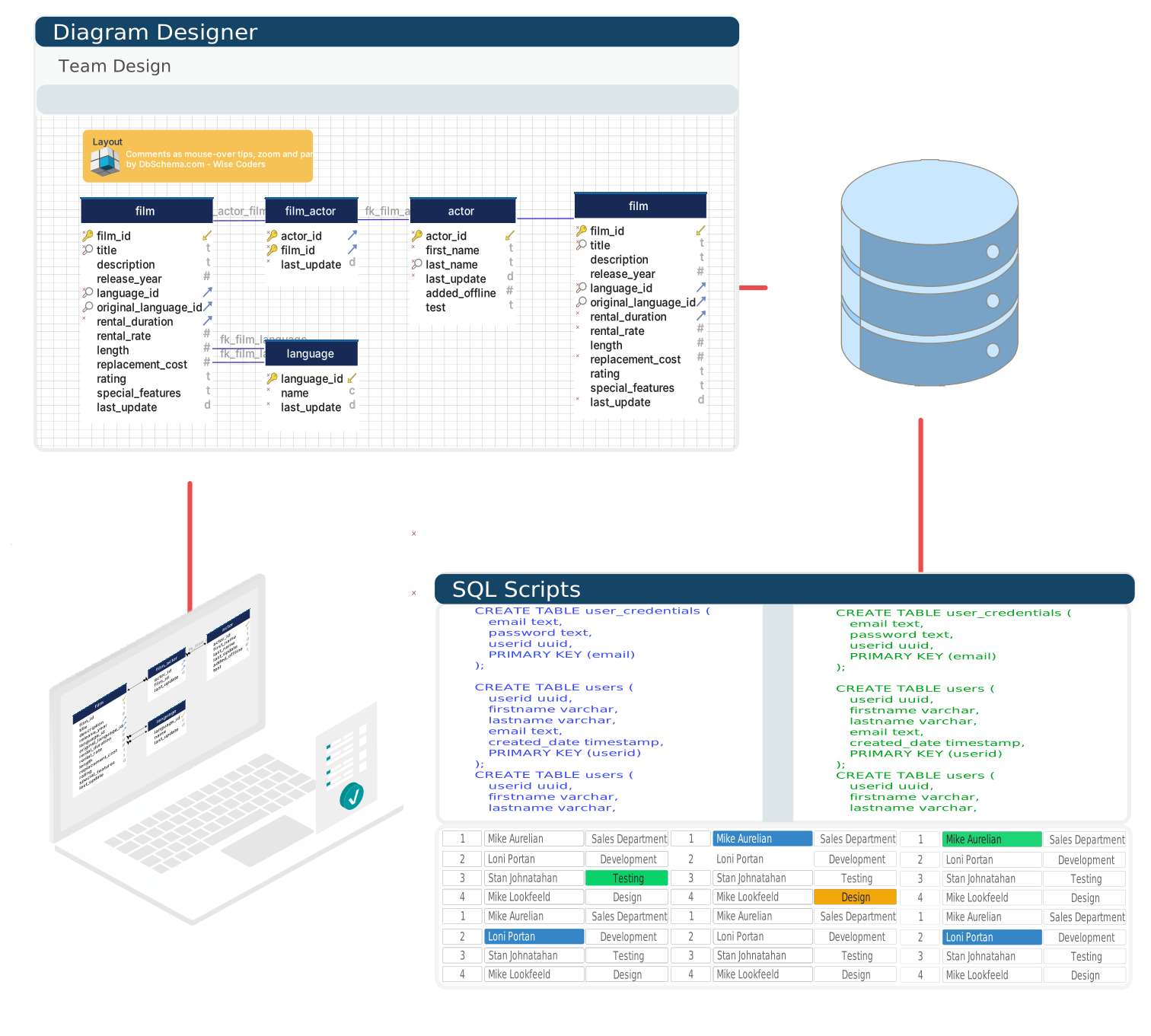

DbSchema lays the whole keyspace on a canvas, keys and types included, and exports the design as documentation the team keeps.
Tooling that understands partition keys instead of pretending Cassandra is relational.
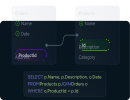
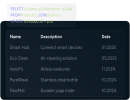
The visual builder assembles SELECT statements within Cassandra's query rules, so what you compose is what the cluster will actually accept and execute.
Type CQL, execute it against the cluster, and work with the results in a grid you can export — day-to-day exploration without a cqlsh session on a node.
Group tables by the queries they serve, annotate why each exists, and render UDT structures inline — the data model becomes something you show, not retell.
Generate HTML documentation straight from the system catalog: replication settings, table definitions annotated with partition and clustering keys, UDTs, and index structures. Anyone on the team reads it in a browser — no cqlsh access required.
Explore the Documentation Tool
DbSchema ships its own open-source Cassandra JDBC driver,
with the source published on
GitHub. A self-hosted cluster
connects on the native transport port 9042 via
jdbc:cassandra://host:9042/keyspace; if the cluster runs
PasswordAuthenticator, add your Cassandra username and password, and prefer SSL for
production connections.
For DataStax Astra DB, download the secure connect bundle from the Astra console and connect with
jdbc:cassandra:///keyspace?secureconnectbundle=/path/to/bundle.zip, using the Astra
client ID and secret as credentials.
Grab the installer — no account, a free Community Edition, and 15 days of Architect.
Teams working with Apache Cassandra often use these engines too. Explore dedicated guides and JDBC setup for each.