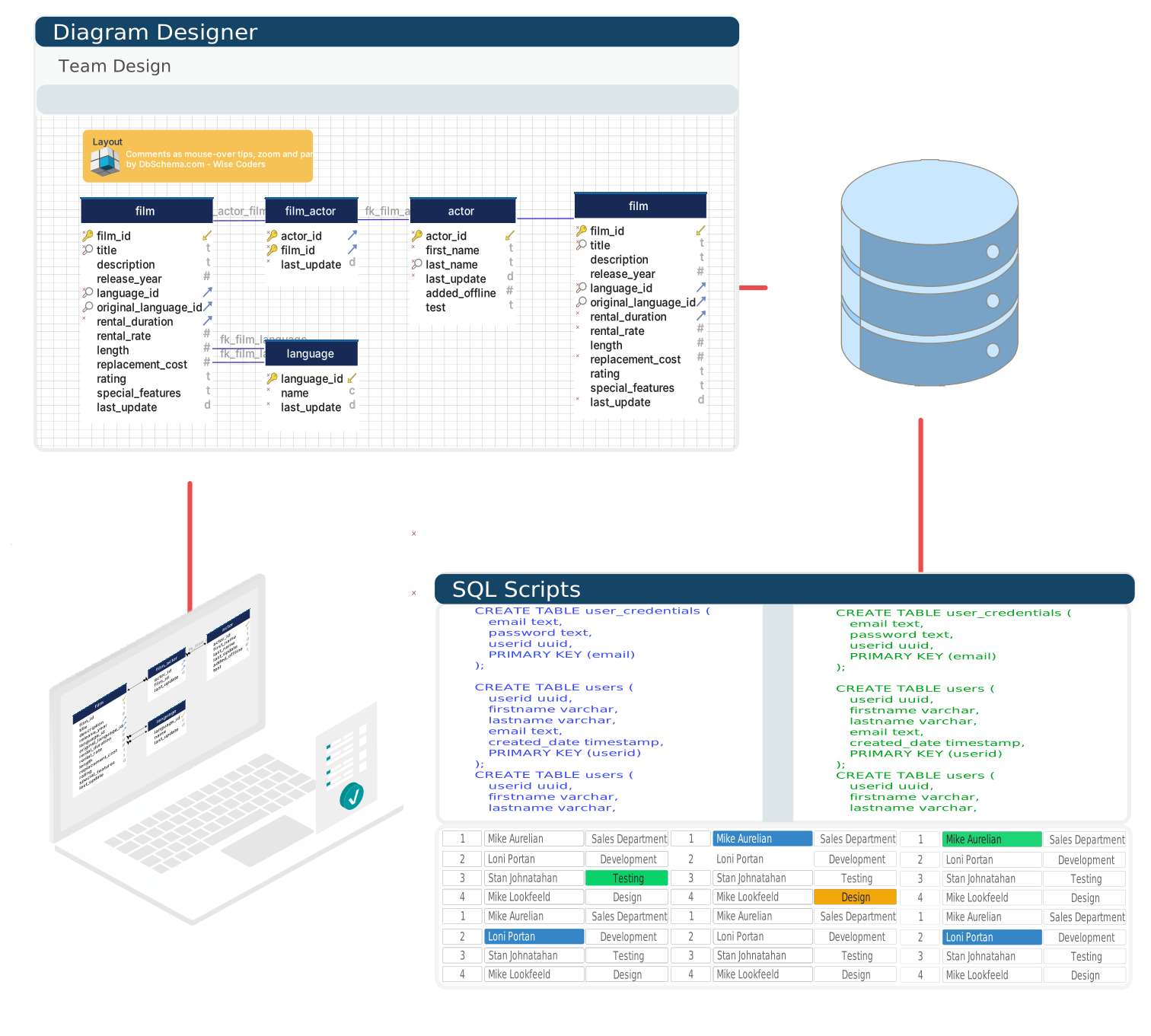
Build a clearer workflow for Exasol: reverse engineer existing schemas into interactive ER diagrams, model changes visually, and generate reviewed SQL scripts before deployment.
DbSchema is built for visual modeling, schema documentation, and deployment. Keep an offline model in Git, collaborate across teams, and publish documentation that developers, analysts, and stakeholders can navigate in minutes.
Download DbSchema See Exasol Features Download Exasol JDBC Driver
Get to your first Exasol schema diagram in minutes. No account, no credit card.
Download the installer for Windows, macOS, or Linux and launch DbSchema. No signup required.
Reverse engineer an existing Exasol database or open a sample model to explore tables, relationships, and indexes.
Edit schema visually, generate documentation, and prepare reviewed migration scripts for safer releases.
Exasol is an in-memory columnar database engineered for extreme analytical query throughput. It supports both standard schemas and virtual schemas — virtual schemas provide a read-only projection over external data sources such as Amazon S3, Hive, or relational databases, exposed through the same SQL interface as native tables. DbSchema connects to Exasol via JDBC and renders both schema types as ER diagrams, giving analytics engineers a unified view of physical and virtual table structures alongside their relationships, without switching between the Exasol client and other documentation tools.
Download DbSchema Free See Exasol Features
DbSchema's diagram editor lets you create and edit Exasol tables, select column types suited to Exasol's analytical SQL dialect, and define constraints and relationships on the canvas. The editor generates Exasol-compatible DDL that can be applied directly or exported as a migration script for peer review.
The SQL editor in DbSchema supports Exasol's SQL syntax with highlighting and result display in a tabular grid. Write analytical queries — including Exasol-specific functions and window operations — and execute them directly against the in-memory engine to take advantage of its sub-second response times for large aggregations.
The data explorer lets you browse Exasol table contents row by row, apply column filters, and paginate through results without writing a query. Use this to verify ETL pipeline output, audit data quality after batch loads, or inspect the contents of virtual schema tables backed by external sources.
Exasol's default JDBC port is 8563. Download the Exasol JDBC driver from the Exasol download portal and register it via DbSchema's driver manager. The JDBC URL format is jdbc:exa:host:8563. For EXACloud or self-hosted deployments with TLS enabled, use the cluster's primary IP address. On non-production environments using self-signed certificates, append ;validateservercertificate=0 to suppress certificate validation errors during initial setup.