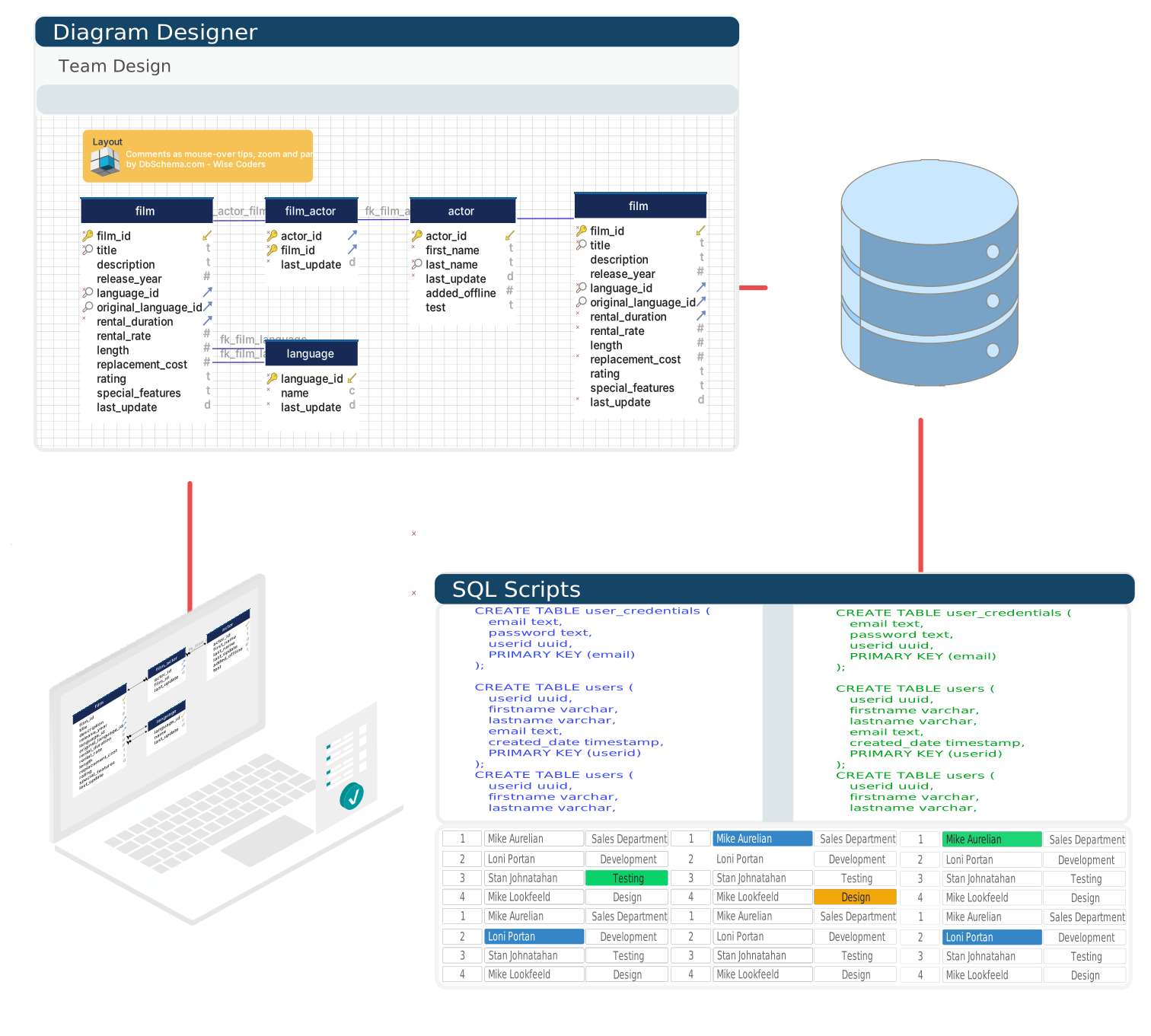
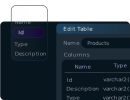
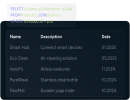
DbSchema lets you design, manage, and document IBM DB2 databases. Create ER diagrams, define tables and columns, and generate SQL scripts - with or without a live database connection.
Use Git to share the design, compare it with the IBM DB2 database, and deploy changes. DbSchema also includes a data editor, query builder, and HTML5 documentation - everything you need in one tool.
Download DbSchema Download IBM DB2 JDBC Driver
DB2 installations in enterprise environments typically span multiple schemas, contain large numbers of stored procedures and triggers, and use tablespaces, buffer pools, and partitioning strategies that reflect years of production tuning. DbSchema imports DB2 catalog metadata from the SYSCAT views and renders the result as an interactive ER diagram — making complex object graphs navigable without requiring direct knowledge of DB2 system catalog tables.
DbSchema maps tables, views, and foreign key relationships from multiple DB2 schemas onto a single canvas. Add or remove schema objects from the diagram without touching the live database, and use the visual layout to identify undocumented dependencies or orphaned tables before a migration.
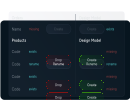
DbSchema compares two DB2 environments — test versus production, or an updated schema model versus the live catalog — and generates a DDL migration script covering every structural difference. The side-by-side diff view lets you audit each change before deployment, reducing the risk of unintended alterations in a production DB2 instance.
The SQL editor provides autocomplete for DB2 SQL syntax, catalog object names, and built-in functions. Execute queries against a live DB2 connection and review result sets directly in the editor pane, without switching between tools or maintaining a separate query management workflow.
DB2 listens on port 50000 by default. The JDBC URL format is
jdbc:db2://host:50000/DBNAME — the database name is case-sensitive and must match the
name shown in the DB2 catalog. Download the IBM Data Server Driver for JDBC and SQLJ from IBM's
website, then register the JAR in DbSchema's driver manager UI. Ensure the DB2 instance is running
and that the TCP/IP protocol is enabled in the database manager configuration
(db2set DB2COMM=TCPIP). The connecting user must have CONNECT privilege on the target
database.