Design and Manage Vertica Databases with DbSchema

Build a clearer workflow for Vertica: reverse engineer existing schemas into interactive ER diagrams, model changes visually, and generate reviewed SQL scripts before deployment.

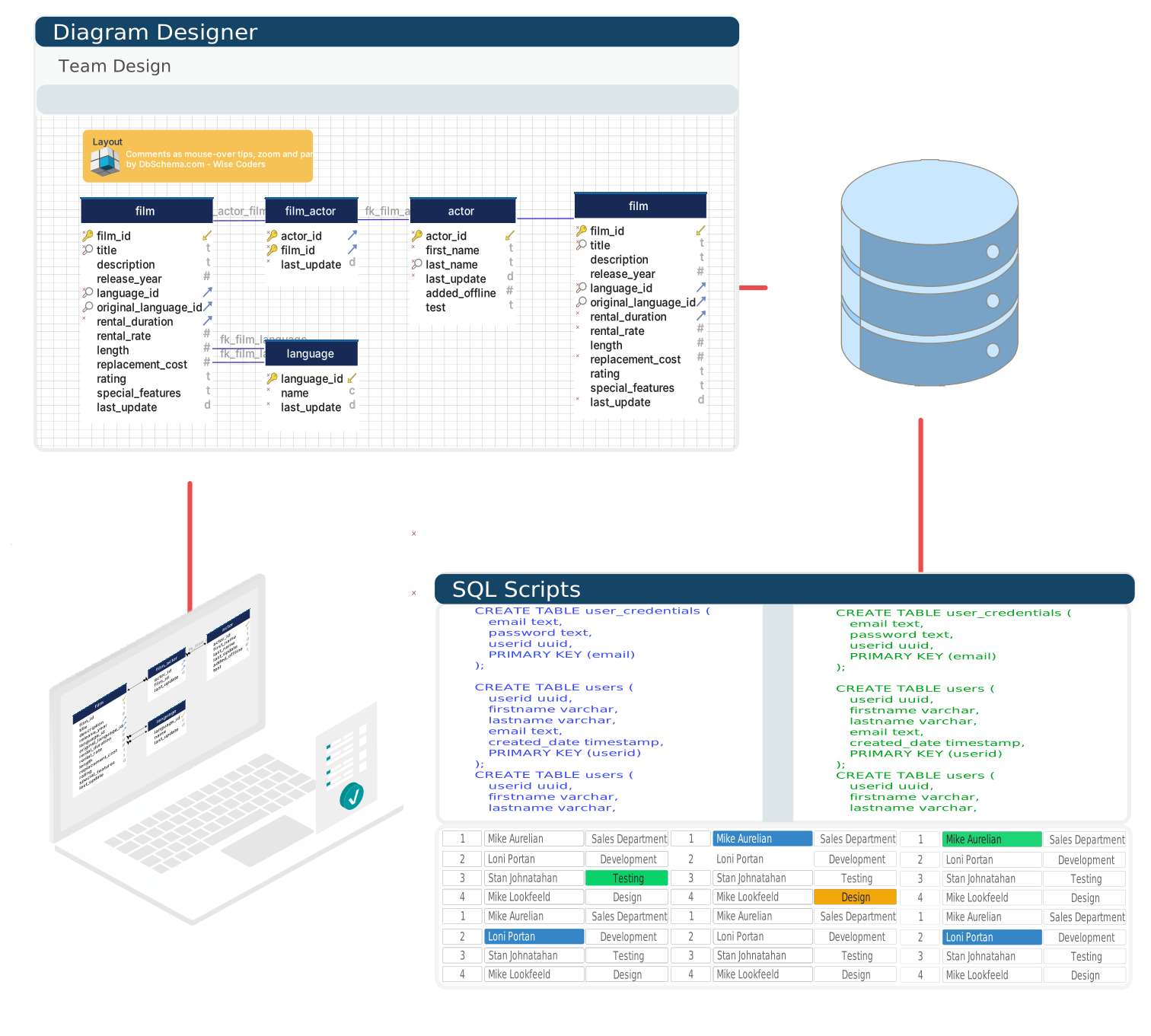
DbSchema is built for visual modeling, schema documentation, and deployment. Keep an offline model in Git, collaborate across teams, and publish documentation that developers, analysts, and stakeholders can navigate in minutes.

DbSchema Database Designer

Download DbSchema See Vertica Features Download Vertica JDBC Driver

What happens after you download?

Get to your first Vertica schema diagram in minutes. No account, no credit card.

1
Install in minutes

Download the installer for Windows, macOS, or Linux and launch DbSchema. No signup required.

2
Connect to Vertica or open a sample

Reverse engineer an existing Vertica database or open a sample model to explore tables, relationships, and indexes.

3
Design, document, and deploy

Edit schema visually, generate documentation, and prepare reviewed migration scripts for safer releases.

Visualizing Vertica's Columnar Schema Structure

Vertica is a massively parallel, columnar analytical database that physically stores data through a projection system — each table can have multiple projections with different sort orders and segmentation strategies. At the logical layer, Vertica schemas contain tables, views, sequences, and user-defined objects. DbSchema connects to Vertica and renders this logical schema as an ER diagram, giving analytics engineers a clear picture of table relationships, column definitions, and view dependencies across each Vertica schema. This visual reference makes it easier to understand query routing and plan schema modifications in a large analytical deployment.

Download DbSchema Free See Vertica Features

Design Vertica Schemas in the Visual Editor

DbSchema's diagram editor lets you create and modify Vertica tables by editing entities directly on the canvas. Column types, NOT NULL constraints, and FK relationships are managed through a point-and-click interface, with DbSchema generating the corresponding Vertica-compatible DDL for review.

Designing a Vertica analytical schema visually in DbSchema

Write and Run Vertica SQL

The SQL editor in DbSchema supports Vertica SQL syntax with syntax highlighting and result tabulation. Run analytical queries — window functions, time-series aggregations, approximate queries — directly against the Vertica cluster from a desktop client without needing the vsql command-line tool.

Writing and running analytical SQL against a Vertica cluster in DbSchema

Document Vertica Schemas for the Analytics Team

DbSchema generates schema documentation as self-contained HTML with embedded diagrams and full table definitions. Analytics teams use this to maintain a browsable reference for the Vertica data model that is accessible without a live database connection or Vertica client installation.

Auto-generated Vertica schema documentation with ER diagrams in DbSchema

Connecting DbSchema to Vertica

Vertica's default JDBC port is 5433. Download the Vertica JDBC driver from the Vertica client drivers download page and register it via DbSchema's driver manager. The JDBC URL format is jdbc:vertica://host:5433/dbname. Ensure the Vertica node's firewall permits inbound TCP connections on port 5433 from the client machine running DbSchema. For multi-node clusters, connecting to any node is sufficient; Vertica routes the session internally.

Why Teams Use DbSchema with Vertica

  • Visualize Vertica table and view relationships as navigable ER diagrams
  • Write and execute Vertica SQL with syntax support from a desktop SQL editor
  • Generate schema documentation for the analytics team and data consumers
  • Compare schemas between Vertica environments and generate migration DDL
  • Design schema modifications visually before applying them to production clusters