The metastore on a single canvas

A Visual Workbench for Apache Hive Metastore Schemas

Hive organizes HDFS data into databases, tables, and partitions tracked in the metastore — and usually explored through beeline or Hue. DbSchema connects via HiveServer2 and gives the warehouse a desktop GUI: schema diagrams, a HiveQL editor, and documentation.

  • Walk databases, tables, and partitions visually
  • Track how partitioned ORC and Parquet tables evolved
  • Run HiveQL and page through results in a grid
  • Connect to standard or Kerberized HiveServer2

Free Community Edition No signup required 15-day Architect trial included
Free Download

Trusted by teams at
The Metastore Remembers Everything
beeline Shows One Table at a Time

Year after year, partitioned tables backed by ORC and Parquet files gain partitions and columns, and the warehouse structure drifts away from anyone's memory of it. Piecing it back together from CLI output is slow, and Hue shows fragments.

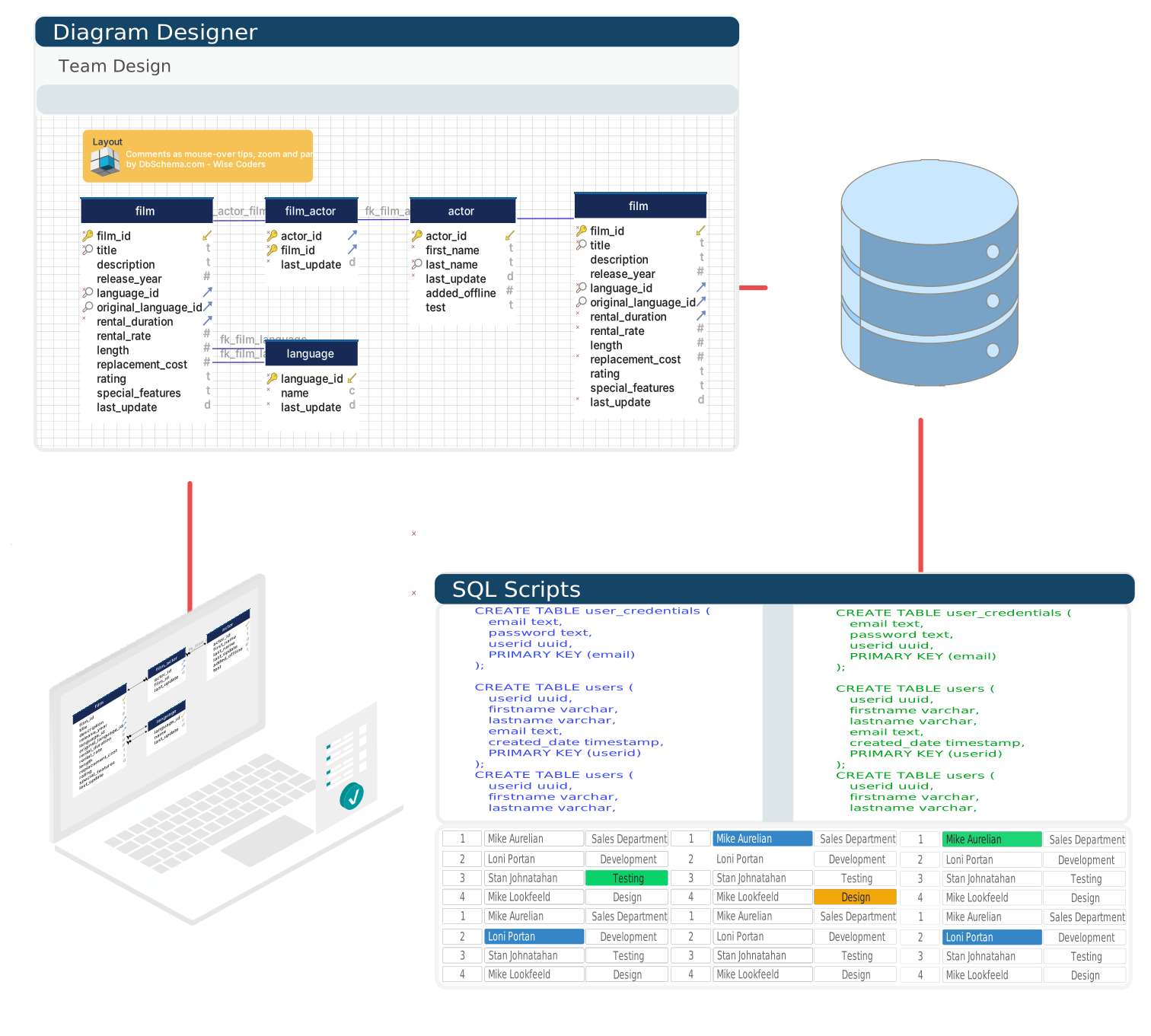
DbSchema reads the metastore through HiveServer2 and lays the entire structure out as one interactive diagram — the overview the warehouse never had.

Explore, Query & Publish
the Hive Warehouse from Your Desktop

A single tool where the metastore, HiveQL, and the docs meet.

Explore the Apache Hive metastore as an interactive schema diagram
Databases, Tables, Partitions — Mapped

DbSchema reads the metastore over the HiveServer2 JDBC interface and presents tables, partitions, and column definitions as an interactive schema diagram.

Run HiveQL queries in DbSchema's SQL editor
HiveQL with a Result Grid

The editor supports HiveQL syntax — partitioned table queries, ORC and Parquet format hints, Hive-specific functions — so ad-hoc work stops requiring a Hue or Zeppelin notebook.

Generate HTML documentation for an Apache Hive warehouse schema
A Warehouse Reference for BI Teams

Export the warehouse schema as browsable HTML documentation, so analytics and BI colleagues answer their own structure questions in a browser.

Plan warehouse tables away from the cluster.

The Cluster Executes
The Model Explains

DbSchema holds the warehouse design in a model file of its own — something HiveQL scripts scattered across jobs never give you. Design on the canvas, keep the file with your project, and apply changes knowingly.

Design the Hive warehouse schema without a cluster connection
Design Away from the Cluster

Lay out new tables and partitioning ideas on the canvas, connection optional.

Keep the Hive schema model under version control
Keep the Model in Git

The design is a file; version it with the pipelines that depend on it.

Preview generated Hive DDL statements
Preview Every Statement

Generated DDL is shown for reading before anything reaches HiveServer2.

Apply reviewed Hive schema changes when ready
Apply When Ready

Push the reviewed change to the warehouse on your schedule, not mid-experiment.

HiveServer2 Connection Facts

HiveServer2 listens on port 10000 by default, and a standard connection uses jdbc:hive2://host:10000/default. For a Kerberized cluster, append the principal: jdbc:hive2://host:10000/default;principal=hive/host@REALM.

Add the Hive JDBC driver bundle (hive-jdbc-*.jar plus its dependencies) from the Hive distribution or Maven Central through DbSchema's driver manager; on CDH or HDP deployments, the vendor-provided driver from Cloudera or Hortonworks gives the best compatibility. Setup details are on the Hive JDBC driver page.

Get the Whole Warehouse on One Diagram

Download once: Community Edition free forever, Architect trial for 15 days.

Teams working with Apache Hive often use these engines too. Explore dedicated guides and JDBC setup for each.

Browse all 100+ supported databases