Design and Manage SingleStore Databases Visually with DbSchema

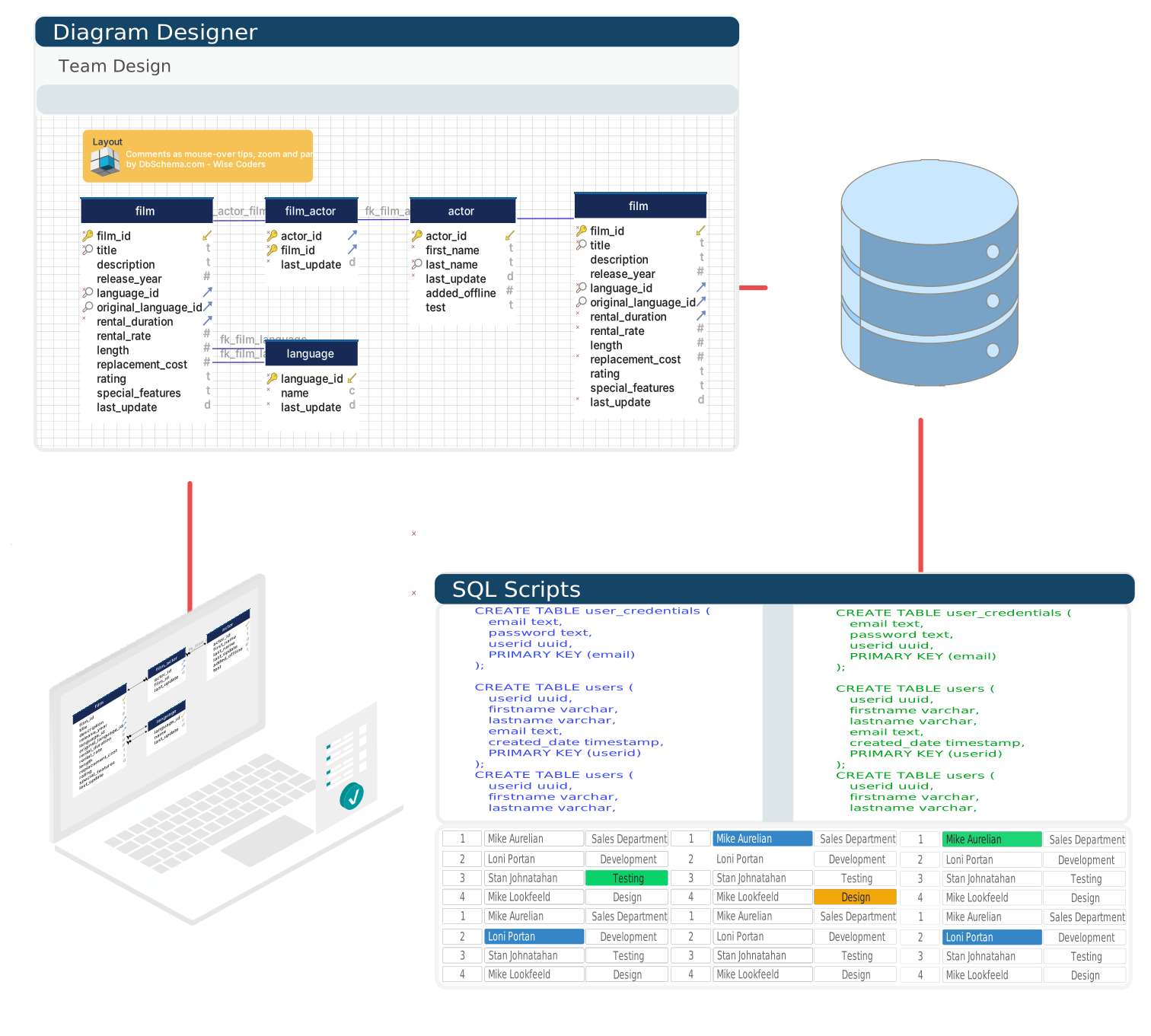
DbSchema lets you design, manage, and document SingleStore databases. Create ER diagrams, define tables and columns, and generate SQL scripts - with or without a live database connection.

Use Git to share the design, compare it with the SingleStore database, and deploy changes. DbSchema also includes a data editor, query builder, and HTML5 documentation - everything you need in one tool.

DbSchema Database Designer

Download DbSchema Download SingleStore JDBC Driver

SingleStore is a distributed relational database built for hybrid transactional and analytical processing (HTAP). It stores data in either rowstore tables — optimized for point lookups and low-latency writes — or columnstore tables — optimized for analytical scans and aggregations — and allows both types to coexist in the same database. DbSchema connects to SingleStore, renders the schema with storage type annotations visible, and provides SQL tooling for both transactional and analytical query workloads.

SQL Editor for SingleStore HTAP Workloads

The DbSchema SQL editor connects to SingleStore and supports the full SingleStore SQL dialect, including AGGREGATION KEY, SHARD KEY, and SORT KEY clauses. Multiple tabs let you run transactional queries against rowstore tables and analytical queries against columnstore tables side by side, without switching tools.

Running SingleStore HTAP SQL queries in DbSchema's SQL editor

Interactive Data Explorer for Real-Time Analytics

DbSchema's data explorer lets you browse table contents row by row, apply column filters, and paginate through large result sets without writing SQL. For SingleStore columnstore tables holding millions of analytical rows, this provides a fast way to inspect the data distribution and verify that ingestion pipelines are producing the expected output.

Exploring SingleStore table data in DbSchema's data explorer

Schema Synchronization Across SingleStore Environments

SingleStore deployments typically span self-managed clusters and cloud workspaces. DbSchema connects to two SingleStore instances, compares their schemas, and generates migration DDL that handles differences in table storage types, shard keys, and column definitions. You review the proposed changes before executing anything against the target cluster.

Synchronizing SingleStore schema changes between environments in DbSchema

Connecting DbSchema to SingleStore

SingleStore is MySQL-compatible and listens on port 3306 by default. Use the SingleStore JDBC driver or the MySQL Connector/J driver — DbSchema can download either. The JDBC URL format is jdbc:singlestore://host:3306/dbname for the native driver, or jdbc:mysql://host:3306/dbname for Connector/J. For SingleStore Helios (cloud), copy the workspace endpoint from the SingleStore portal and authenticate with workspace credentials. Workspace group firewalls must allow inbound connections from your IP before DbSchema can connect.

Why Teams Use DbSchema with SingleStore

  • HTAP schema visualization — see rowstore and columnstore tables together in the same ER diagram with storage type context.
  • Shard key documentation — capture shard and sort key definitions in the schema model for distribution planning.
  • Real-time data browsing — explore live analytical data in columnstore tables directly from the data explorer.
  • Cross-environment diff — compare on-premises and Helios cloud schemas and generate targeted migration DDL.
  • SQL testing — develop and test analytical queries in the SQL editor before embedding them in application code.