Design and Manage Trino Databases Visually with DbSchema

DbSchema lets you design, manage, and document Trino databases. Create ER diagrams, define tables and columns, and generate SQL scripts - with or without a live database connection.

Use Git to share the design, compare it with the Trino database, and deploy changes. DbSchema also includes a data editor, query builder, and HTML5 documentation - everything you need in one tool.

DbSchema Database Designer

Download DbSchema Download Trino JDBC Driver

Trino's Connector-Based Architecture and Multi-Catalog Schema Visualization

Trino (formerly PrestoSQL) is a distributed MPP SQL query engine that does not store any data itself. Instead, it federates queries across external data sources through a connector system. Each connector is registered as a catalog, which exposes one or more schemas, each containing tables. Common connectors include Hive (for files on HDFS or S3), Apache Iceberg, Delta Lake, MySQL, PostgreSQL, Kafka, and MongoDB, meaning a single Trino cluster can query data from all of these sources simultaneously.

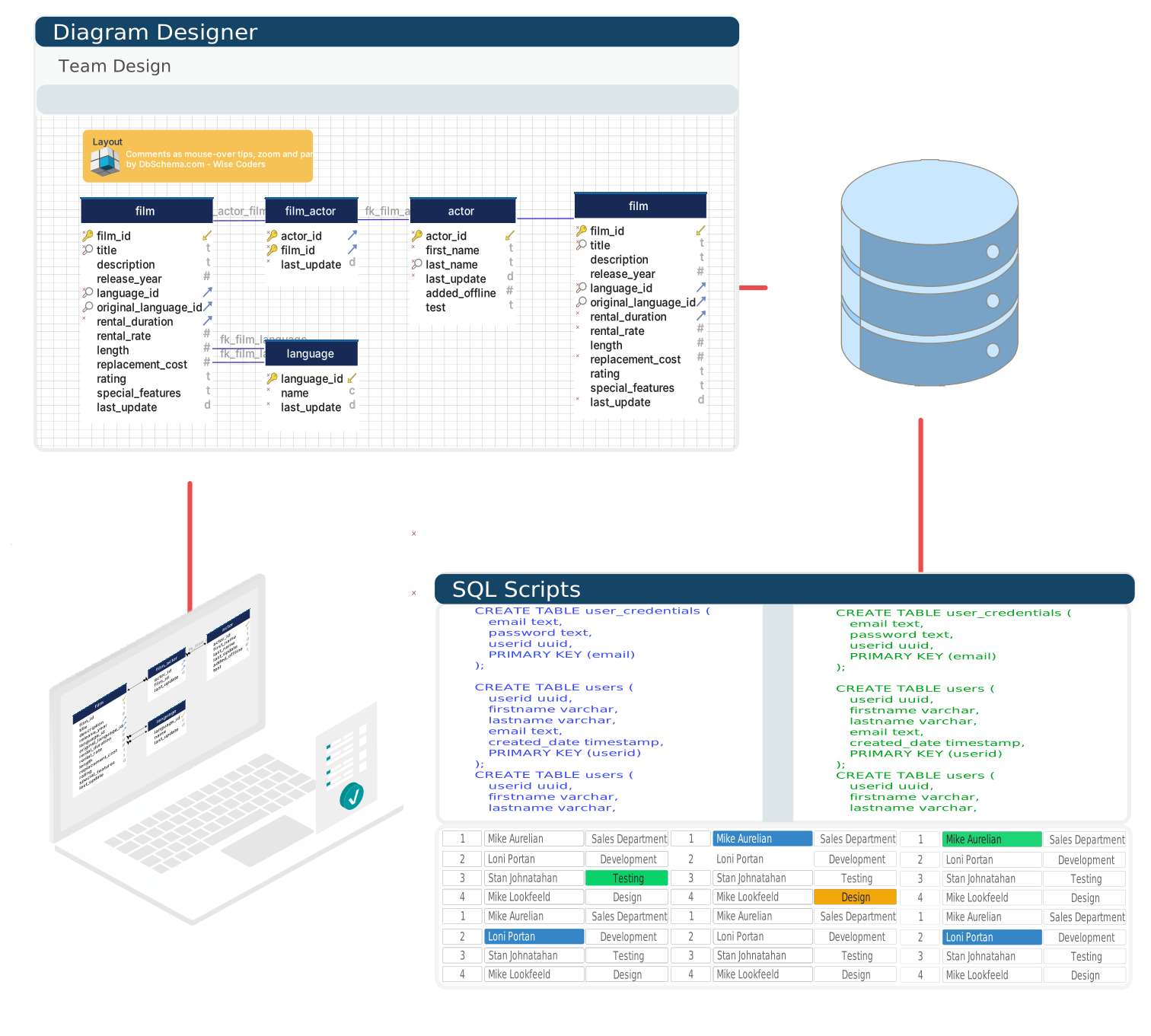

DbSchema connects to Trino via the official Trino JDBC driver and discovers all configured catalogs and their schemas. Each catalog appears as a separate top-level node in the schema tree, and DbSchema renders the tables and views within each catalog schema as entities in the visual diagram. This gives data engineering teams a unified visual map of every data source that Trino federates — an overview that is otherwise only available by querying information_schema across multiple catalogs manually.

Trino multi-catalog schema with Hive, Iceberg, and PostgreSQL sources visualized in DbSchema

Writing Federated SQL Queries That Span Multiple Catalogs

One of Trino's defining capabilities is the ability to join tables from different data sources in a single SQL statement. A query can join a Hive table on S3 with a PostgreSQL dimension table and a Kafka topic, all in one SELECT. DbSchema's SQL editor submits these queries via the Trino JDBC driver and returns results in the built-in results grid, making it a practical authoring environment for complex cross-source analytics that would otherwise require multiple separate tool connections.

Three-part catalog.schema.table naming is required in Trino SQL when referencing tables outside the currently selected catalog. DbSchema's schema tree lets you browse the catalog hierarchy and drag table names into the editor to avoid typos in fully-qualified names. The SQL editor also supports EXPLAIN output to review Trino's distributed query plan and identify expensive broadcast joins or full table scans.

Writing federated SQL queries across multiple Trino catalogs in DbSchema

Exploring Data from Hive, Iceberg, and Other Trino-Connected Sources

The DbSchema data explorer works with any table visible through Trino, regardless of the underlying storage system. You can browse rows from an Iceberg table stored in S3, a Delta Lake table in ADLS, or a MySQL table through the MySQL connector, all using the same explorer interface. This unified access is particularly useful for data engineers who need to spot-check data quality across multiple source systems during pipeline development or incident investigation.

Because Trino pushes down predicates to connectors wherever possible, the data explorer's column filters will be executed efficiently even against large-scale data sources. Trino's access control layer (file-based or Open Policy Agent) governs what the JDBC user can see, so the explorer respects the same permissions that apply to any other Trino client.

Exploring Trino-federated data from Hive and Iceberg sources in DbSchema

Connecting DbSchema to Trino

Select Trino from the database list in DbSchema and provide the Trino JDBC driver (trino-jdbc-*.jar), available from the Trino release page. The driver class is io.trino.jdbc.TrinoDriver. The JDBC URL format is: jdbc:trino://coordinator:8080/hive/default. The URL path specifies the default catalog (hive) and schema (default) for the session; you can omit the schema and use fully-qualified three-part names in your queries instead.

Trino's default coordinator port is 8080. Authentication methods include password (via LDAP or a file-based realm), Kerberos, OAuth2/JWT, and certificate-based, depending on your cluster configuration. For clusters with HTTPS and password auth, the URL should use jdbc:trino://coordinator:443/ and you must enable TLS in the connection properties. Pass additional Trino session properties such as query_max_execution_time via JDBC connection properties in the DbSchema advanced settings dialog.

Why Teams Use DbSchema with Trino

  • Provides a visual map of all Trino catalogs and their schemas in one diagram, replacing manual SHOW SCHEMAS queries.
  • Enables federated SQL authoring with a GUI editor, lowering the barrier for analysts less comfortable with the Trino CLI.
  • Lets data engineers explore tables from Hive, Iceberg, Delta Lake, and RDBMS sources through a single interface.
  • Makes cross-catalog join queries easier to build by allowing table names to be browsed and inserted from the schema tree.
  • Generates offline documentation of multi-source data architectures that would otherwise require stitching together documentation from each connector's source system.
  • Supports access-controlled exploration — the JDBC user's Trino permissions determine what data and schemas are visible in DbSchema.