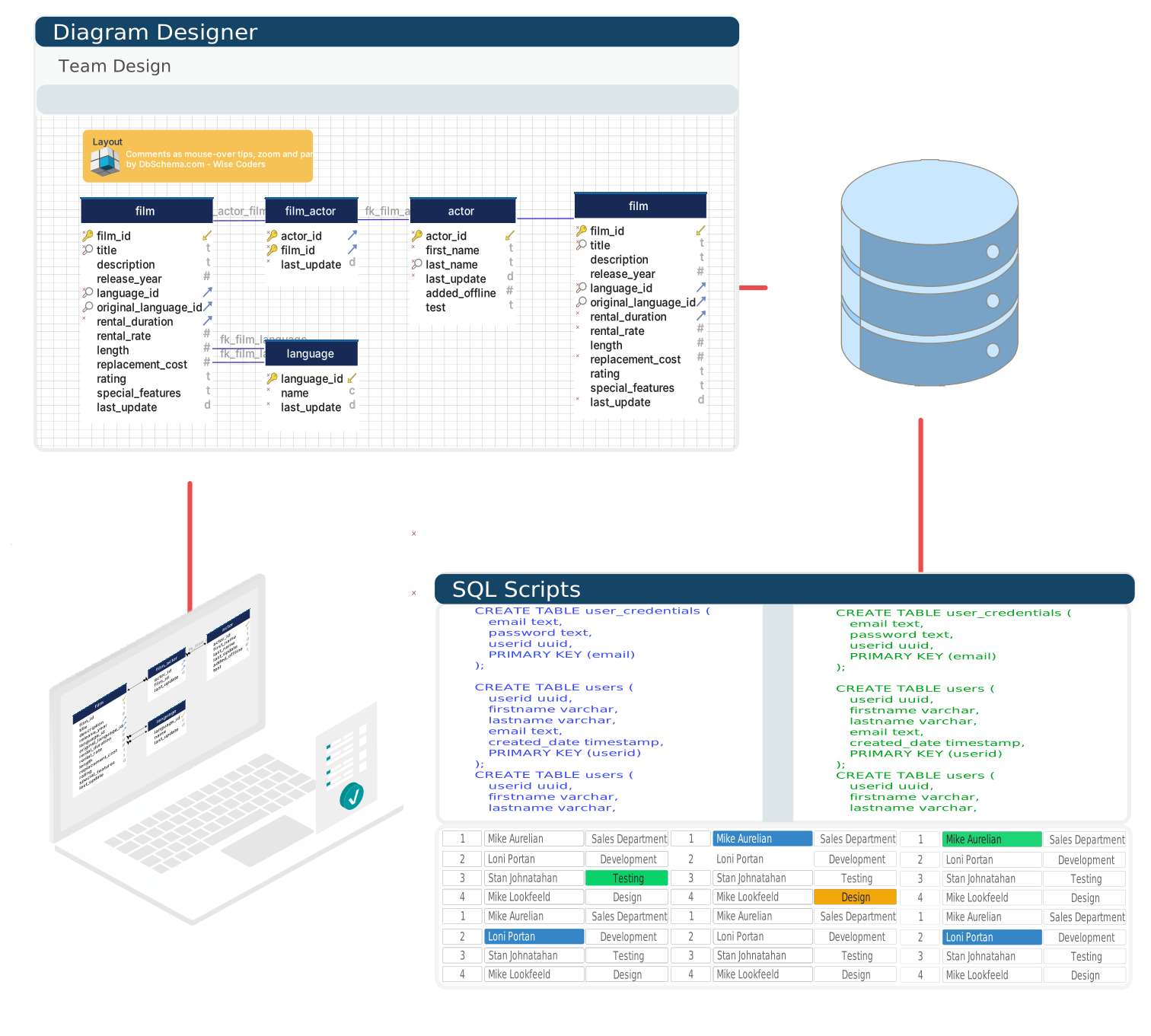

DbSchema connects to ThoughtSpot through its JDBC driver, discovers the Falcon tables behind your worksheets, and renders them as an ER diagram — a developer-oriented complement to the web modeling interface.
Trusted by teams at
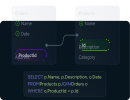
ThoughtSpot's web interface models worksheets for search-driven analytics, but the engineers who feed the Falcon engine — building ingestion pipelines, validating loads, tracking what changed — work a level below it, where the platform offers no picture.
DbSchema supplies that picture: the Falcon tables, their columns, and their join relationships on a canvas the data engineering group controls.
Engineering-side tooling for the data layer under your search analytics.
DbSchema discovers the available Falcon tables over the JDBC driver and arranges them with their join relationships into a navigable ER view.
Pick tables, columns, and filters in the visual builder to check data loaded into the Falcon engine — validation and debugging queries take clicks, not syntax.
Compare schema versions across development and production ThoughtSpot deployments and get every structural difference listed instead of hunting for it.
Track schema evolution alongside worksheet and pinboard configuration by exporting interactive HTML5 documentation: table structures, column types, and join definitions, browsable from a link with nothing to install.
Explore the Documentation Tool
Download the ThoughtSpot JDBC driver from the ThoughtSpot developer portal and register it in
DbSchema under Connections > Manage Drivers. The driver class is
com.thoughtspot.jdbc.Driver, and the JDBC URL follows
jdbc:thoughtspot://host:12345/, where 12345 is the port commonly
configured for the JDBC endpoint. Authenticate with your ThoughtSpot username and password.
Step-by-step driver registration is covered on the ThoughtSpot JDBC driver page.
Download free, no account — the 15-day Architect trial ships in the same installer.
Teams working with ThoughtSpot often use these engines too. Explore dedicated guides and JDBC setup for each.