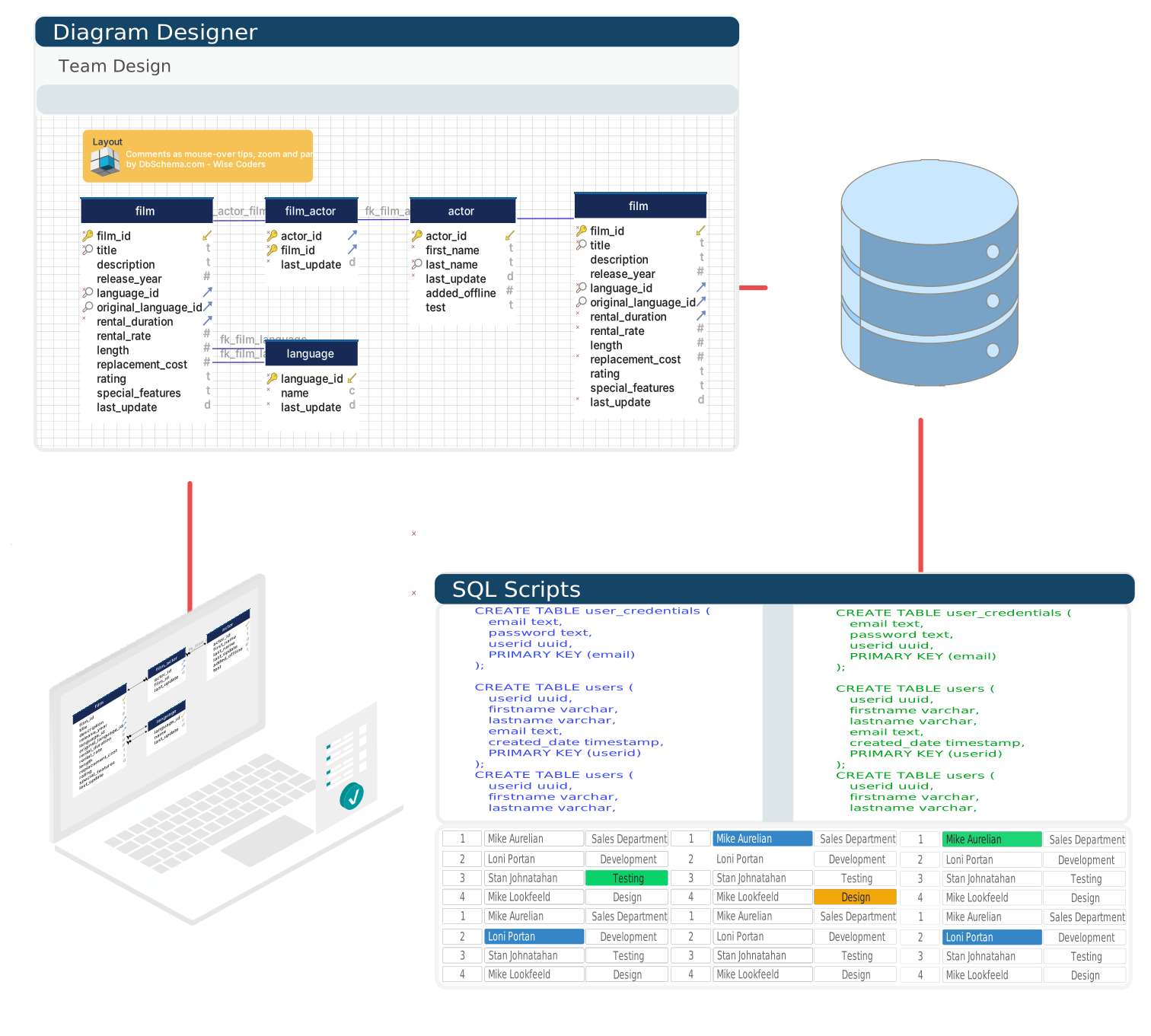
Starburst and Trino answer SQL by federating it across Hive metastores, Apache Iceberg tables, relational databases, and object storage. DbSchema connects to the coordinator and turns those catalogs into ER diagrams, visual queries, and shareable documentation.
Trusted by teams at
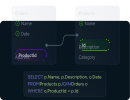
Federation is the point of Trino: a single query joins a Hive table to an Iceberg table to a row in a relational store. It is also the problem — the complete data model exists in no single source system, only in the union of catalogs.

DbSchema renders each catalog's schemas as ER diagrams on one canvas, so cross-catalog relationships stop living only in the heads of the engineers who wrote the queries.
Desktop tooling for the federated layer.
Connect to the coordinator and browse catalog-level schemas as ER diagrams — Hive, Iceberg, and JDBC-connected sources rendered side by side.
Drag tables from different catalogs into the query builder; DbSchema writes the fully qualified Trino SQL, and you read it before it runs on the cluster.
Write and execute statements against the coordinator with schema-aware autocomplete, then export result sets to CSV, Excel, or JSON.
Turn catalog metadata into interactive HTML5 documentation of the federated data model — searchable diagrams, table and column details, hover comments. New hires and governance reviewers study the data landscape from a link, with zero access to the coordinator itself.
Explore the Documentation Tool
Download the Trino JDBC driver (trino-jdbc-*.jar) from trino.io and register it
in DbSchema's driver manager. Open-source Trino takes a URL of the form
jdbc:trino://host:8080/catalog/schema; Starburst Enterprise uses
jdbc:trino://host:8080 with the catalog and schema chosen separately in DbSchema's
connection dialog.
Deployments secured with Kerberos or LDAP take their authentication properties in the advanced connection panel. More on the Starburst JDBC driver page.
Free Community Edition. 15-day Architect trial. Zero signup forms.
Teams working with Starburst / Trino often use these engines too. Explore dedicated guides and JDBC setup for each.