Design and Manage Gupta SQLBase Databases with DbSchema

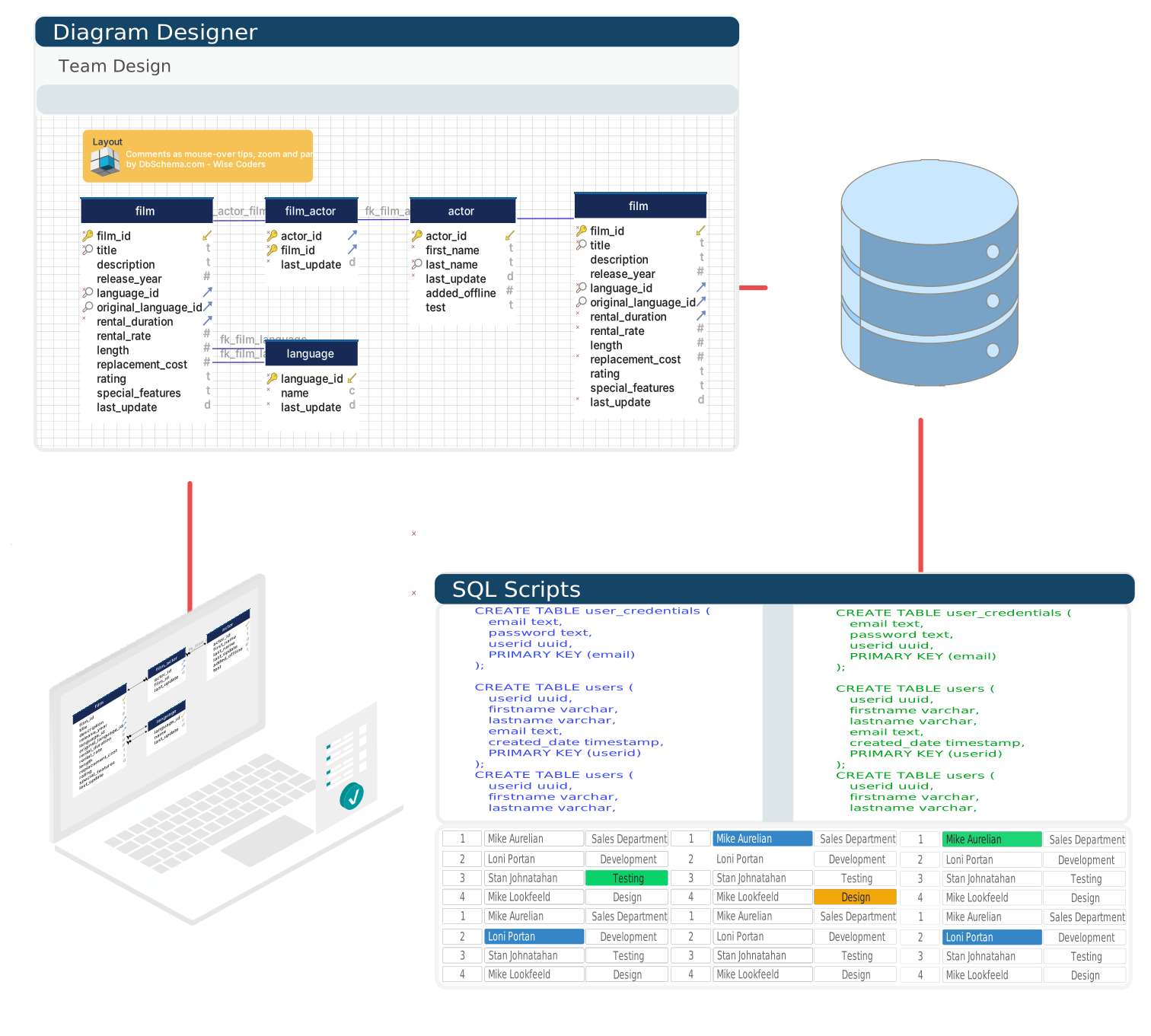
Build a clearer workflow for Gupta SQLBase: reverse engineer existing schemas into interactive ER diagrams, model changes visually, and generate reviewed SQL scripts before deployment.

DbSchema is built for visual modeling, schema documentation, and deployment. Keep an offline model in Git, collaborate across teams, and publish documentation that developers, analysts, and stakeholders can navigate in minutes.

DbSchema Database Designer

Download DbSchema See Gupta SQLBase Features Download Gupta SQLBase JDBC Driver

What happens after you download?

Get to your first Gupta SQLBase schema diagram in minutes. No account, no credit card.

1
Install in minutes

Download the installer for Windows, macOS, or Linux and launch DbSchema. No signup required.

2
Connect to Gupta SQLBase or open a sample

Reverse engineer an existing Gupta SQLBase database or open a sample model to explore tables, relationships, and indexes.

3
Design, document, and deploy

Edit schema visually, generate documentation, and prepare reviewed migration scripts for safer releases.

Visual Schema Tools for a Legacy Enterprise PC/LAN Database

Gupta SQLBase is a relational database that powered client-server enterprise applications through the 1990s, developed by Gupta Technologies and later maintained by Centura Software. It was widely deployed on PC/LAN networks and remains in production at organizations that have not yet migrated away from legacy Centura-based applications. DbSchema connects to SQLBase via its JDBC driver, renders the schema visually, and generates documentation for teams responsible for maintaining or migrating SQLBase-backed systems.

Download DbSchema Free See Gupta SQLBase Features

Connect to SQLBase and Load the Schema

DbSchema uses the SQLBase JDBC driver to read the database catalog and display table definitions, column types, and relationships in the diagram canvas. For applications where no schema diagram has ever been produced, this provides an immediate visual overview of the database structure.


Connecting to a Gupta SQLBase server and loading the schema diagram in DbSchema

Run SQL Queries Against SQLBase

DbSchema's SQL editor executes queries against the connected SQLBase instance. Use it to inspect data, validate migration scripts, or test DDL constructs to understand how SQLBase handles specific data types and constraints before replicating the schema in a modern database.

SQL editor executing a query against a Gupta SQLBase database in DbSchema

Document the SQLBase Schema

For long-running SQLBase applications where the original design documentation has been lost, DbSchema's documentation generator produces a current-state HTML report covering all tables, columns, and relationships. This report is an essential prerequisite for planning a migration to PostgreSQL, SQL Server, or another modern target.

Schema documentation report generated from a Gupta SQLBase database in DbSchema

Connecting DbSchema to Gupta SQLBase

Use the SQLBase JDBC driver from Centura Software or a compatible third-party driver. The JDBC URL format is jdbc:sqlbase:dbname. Register the driver JAR in DbSchema's driver manager under Settings > Drivers. The SQLBase server must be running and the database name must be registered in the server configuration before connecting. Network access to the SQLBase server requires the server's host to be reachable from the machine running DbSchema on the configured port.

Why DbSchema for Gupta SQLBase

  • Reverse-engineer SQLBase schemas into visual ER diagrams for legacy applications.
  • Run SQL queries and inspect data without a Centura-era client application installed.
  • Generate current-state schema documentation as a migration planning artifact.
  • Compare SQLBase schemas across server instances to track undocumented structural changes.
  • Design the target migration schema in DbSchema alongside the SQLBase source for side-by-side planning.