Design and Manage MemSQL Databases Visually with DbSchema

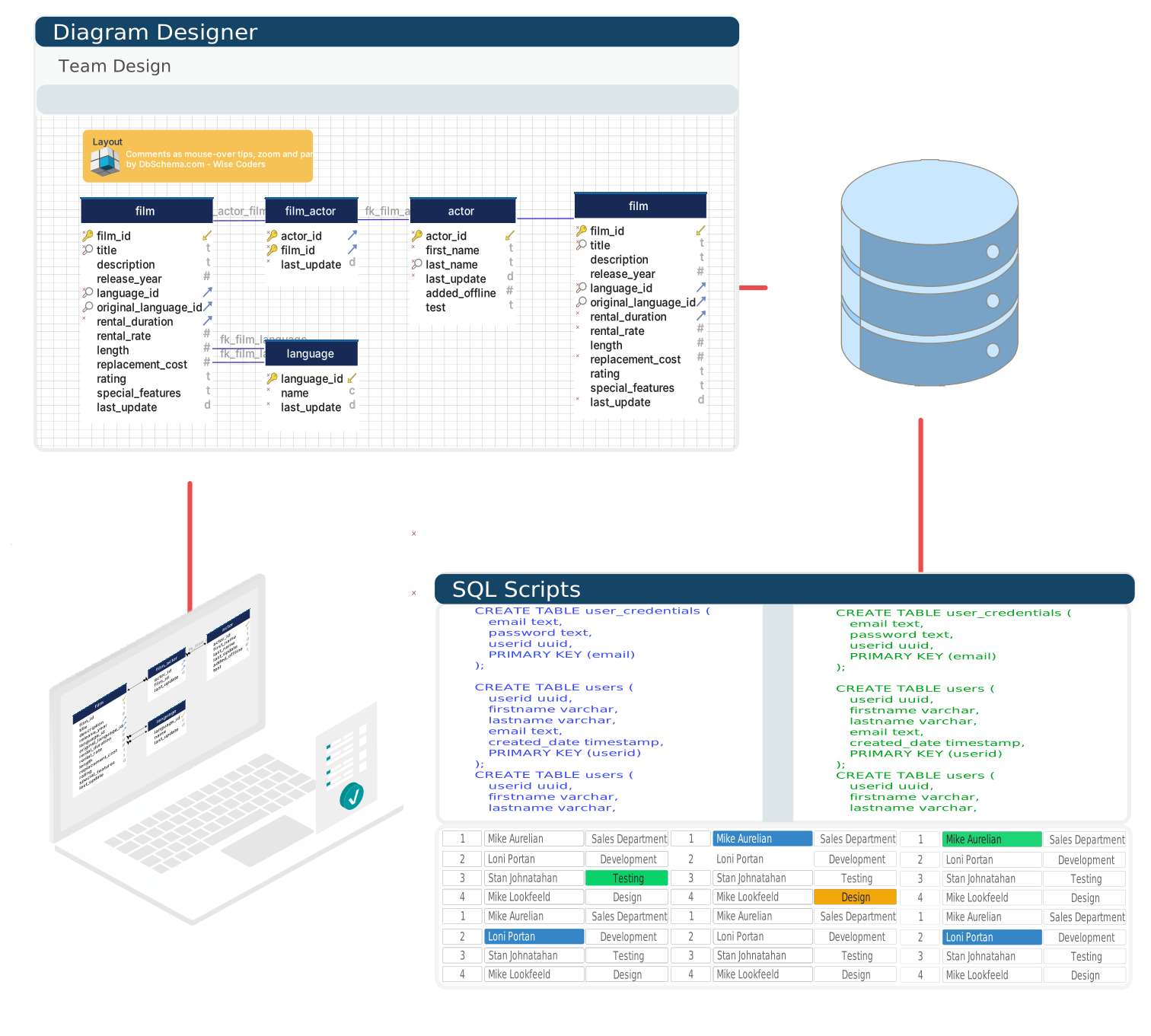
DbSchema lets you design, manage, and document MemSQL databases. Create ER diagrams, define tables and columns, and generate SQL scripts - with or without a live database connection.

Use Git to share the design, compare it with the MemSQL database, and deploy changes. DbSchema also includes a data editor, query builder, and HTML5 documentation - everything you need in one tool.

DbSchema Database Designer

Download DbSchema Download MemSQL JDBC Driver

MemSQL (rebranded as SingleStore) pioneered the concept of in-memory distributed SQL by combining a lock-free skip-list rowstore for low-latency transactions with a compressed columnar store for analytical aggregations. Its architecture separates aggregator nodes — which handle query planning and distribution — from leaf nodes that own partitions of the data. DbSchema connects to MemSQL via its MySQL-compatible JDBC interface, introspects the schema from the aggregator, and renders the dual-storage table model visually.

SQL Editor for MemSQL In-Memory Queries

DbSchema's SQL editor connects to a MemSQL aggregator and supports the MemSQL SQL dialect, including USING CLUSTERED COLUMNSTORE, SHARD KEY, and stored procedure syntax. The editor provides syntax highlighting, result set pagination, and the ability to save frequently used queries as named snippets.

Running MemSQL SQL queries in DbSchema's SQL editor

Data Explorer for MemSQL Rowstore and Columnstore Tables

The data explorer lets you browse MemSQL table contents without writing SQL. You can filter rows by column value, inspect columnstore tables that hold aggregated analytical data, and paginate through results — all from a graphical interface that does not require knowing the table's shard topology.

Browsing MemSQL table data in DbSchema's data explorer

Schema Documentation for MemSQL Deployments

DbSchema generates HTML schema documentation from the MemSQL information schema, including ER diagrams that distinguish columnstore and rowstore tables, column definitions, and index structures. For teams transitioning from MemSQL to its successor SingleStore, this documentation provides a baseline record of the original schema before migration.

Auto-generated schema documentation for a MemSQL database in DbSchema

Connecting DbSchema to MemSQL

MemSQL is MySQL-compatible and listens on port 3306. DbSchema uses the MySQL Connector/J driver, which it downloads automatically. The JDBC URL format is jdbc:mysql://host:3306/dbname. Always connect to an aggregator node rather than a leaf node — DDL statements executed on a leaf node will not propagate to the rest of the cluster. The aggregator address is displayed in the MemSQL management console under the cluster topology view. If your MemSQL deployment uses custom ports, check the memsql.cnf configuration for the port setting.

Why Teams Use DbSchema with MemSQL

  • Dual-storage visibility — visualize rowstore and columnstore tables in the same ER diagram with explicit type context.
  • Aggregator-aware connection — DbSchema connects to the aggregator node for correct DDL propagation across the cluster.
  • Migration baseline — document the existing MemSQL schema in full before migrating to SingleStore or another platform.
  • Schema diffing — compare MemSQL schemas across environments and generate MySQL-compatible migration scripts.
  • Data inspection — browse in-memory table contents from the data explorer without direct shell access.