Design and Manage InfluxDB Databases Visually with DbSchema

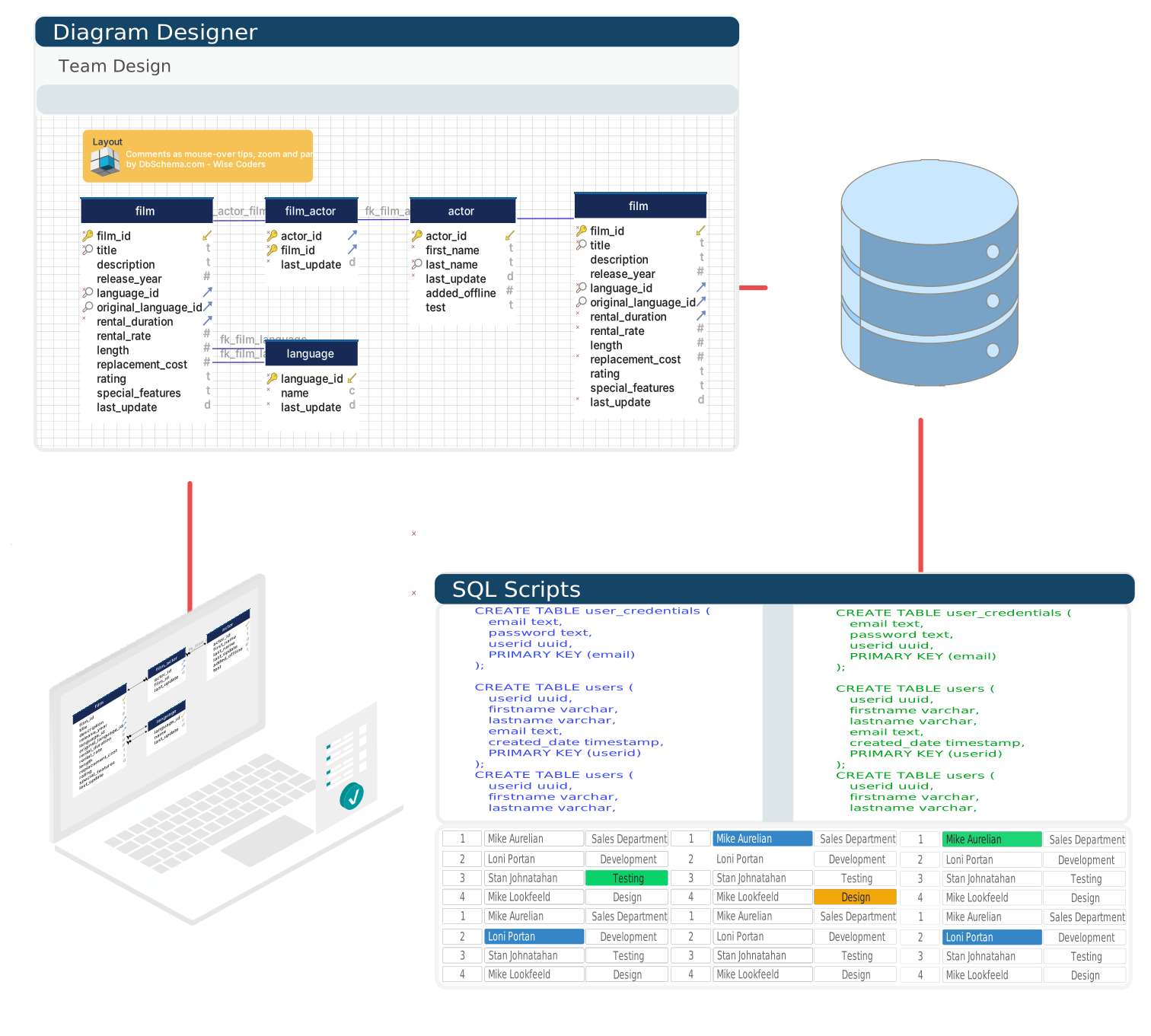
DbSchema lets you design, manage, and document InfluxDB databases. Create ER diagrams, define tables and columns, and generate SQL scripts - with or without a live database connection.

Use Git to share the design, compare it with the InfluxDB database, and deploy changes. DbSchema also includes a data editor, query builder, and HTML5 documentation - everything you need in one tool.

DbSchema Database Designer

Download DbSchema Download InfluxDB JDBC Driver


InfluxDB organizes time-series data into measurements, each containing tag keys (indexed metadata strings), field keys (the measured numeric or string values), and a timestamp. This model differs fundamentally from relational schemas — there is no DDL defining columns, and the tag-and-field set is inferred from the data as it is written. DbSchema maps each measurement as a table, exposes tag keys and field types in the diagram view, and supports SQL-compatible queries for InfluxDB 3.x as well as connections to InfluxDB 2.x instances.

Write and Execute SQL Queries Against Time-Series Measurements

InfluxDB 3.x exposes a SQL interface via Arrow Flight SQL, and DbSchema's SQL editor connects to it directly. Write time-bounded SELECT statements, aggregate by tag keys, and apply InfluxDB SQL functions such as date_bin — all without switching to a separate client or the InfluxDB web UI.

SQL editor running a time-series SQL query against InfluxDB measurements

Browse Time-Series Data Row by Row

The data explorer renders measurement query results in a paginated grid. Filter by time range and tag values to narrow down the result set and inspect individual data points — useful for validating ingestion pipelines or tracing unexpected values back to their source.

Data explorer showing paginated time-series rows from an InfluxDB measurement

Document Measurement Schemas for Downstream Consumers

DbSchema auto-generates HTML schema documentation from the inferred measurement structure, covering tag keys, field types, and any manually defined relationships between measurements. Share this documentation with teams consuming your time-series data via Grafana, Telegraf, or custom clients so they know exactly which fields to expect.

Auto-generated schema documentation for InfluxDB measurements and field types

Connecting to InfluxDB

InfluxDB 3.x (InfluxDB Cloud Serverless and InfluxDB 3 Core) supports SQL via Arrow Flight SQL on port 443. Use the InfluxDB JDBC driver or an Arrow Flight JDBC driver and authenticate with an InfluxDB API token supplied as the password field — leave the username blank or use token. For self-hosted InfluxDB 2.x, the HTTP API runs on port 8086; use an InfluxDB 2.x-compatible JDBC driver or the Flux HTTP interface. Generate API tokens in the InfluxDB UI under Load Data → API Tokens before configuring the DbSchema connection.

DbSchema provides an open-source InfluxDB JDBC driver. The source code is available on GitHub.

Why Use DbSchema with InfluxDB

  • Map measurements, tag keys, and field types into a visual schema diagram
  • Run SQL queries against InfluxDB 3.x measurements with time-range predicates
  • Page through raw data points without writing a dedicated query client
  • Auto-document measurement schemas for consumers of your time-series platform
  • Compare measurement structures across InfluxDB buckets to find naming inconsistencies