Warehouse sprawl, made navigable

One Diagram for Every BigQuery Project and Dataset


DbSchema connects to BigQuery through the Simba JDBC driver — with a service account or your gcloud credentials — and renders the project, dataset, and table hierarchy as an interactive ER diagram, with visual queries and documentation on top.

  • Lay out datasets from multiple GCP projects on one canvas
  • Give analysts a visual builder that writes BigQuery SQL
  • Spot-check ingestion and dbt outputs in the data explorer
  • Document the warehouse for governance and onboarding

Free Community Edition No signup required 15-day Architect trial included
Free Download

Trusted by teams at
Datasets Multiply by the Sprint
The Console Shows One Table at a Time

BigQuery makes storage effortless, so every domain gets a dataset and every team gets a project — until schema-coverage audits and new-hire onboarding mean clicking through tables one by one. How the tables relate exists only in SQL files and in memory.

DbSchema introspects the metadata over JDBC and assembles the map: projects, datasets, and tables on one navigable diagram.

Map, Query & Share
the BigQuery Warehouse

For the data team — and for everyone who keeps asking it questions.

Reverse engineer BigQuery datasets into an ER diagram
The Warehouse, Assembled Into a Map

DbSchema introspects BigQuery metadata and lays out datasets and tables as one navigable view across projects — ready for onboarding sessions and audits.

Build BigQuery SQL visually in the DbSchema query builder
Multi-Table Answers, No SQL Required

Analysts pick tables, joins, and filters visually; DbSchema writes the BigQuery SQL, runs it on the serverless engine, and shows the results in the grid.

Write BigQuery SQL with autocompletion in DbSchema
Write BigQuery SQL With Context

For queries too specific for the builder: an editor with dataset and table autocompletion, script execution, and exportable results.

The Data Model, Published
Beyond the Console

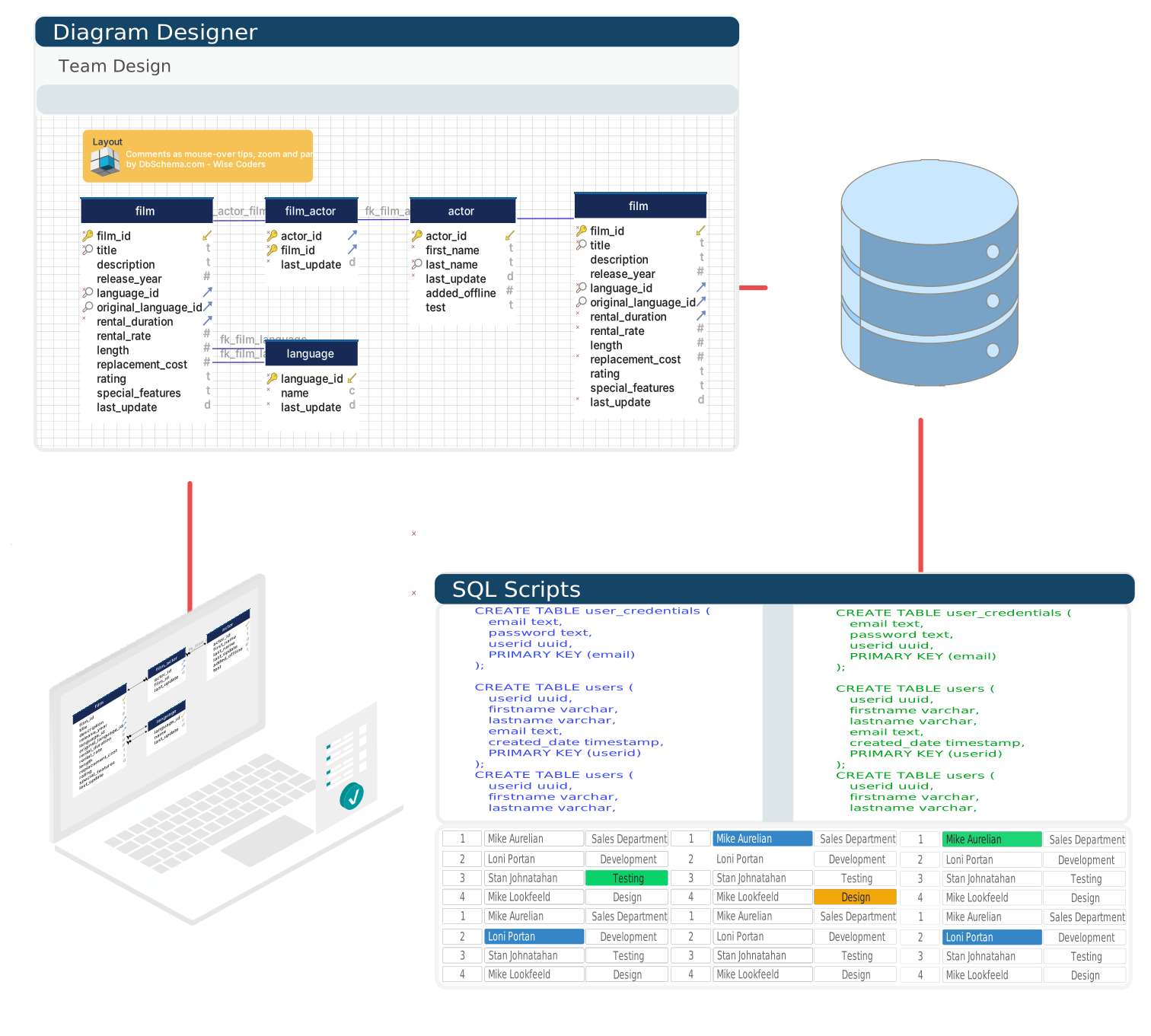
Export interactive HTML5 documentation with ER diagrams and table definitions — an offline-capable reference for analysts and stakeholders who never open the BigQuery console. Governance material that is generated, not maintained by hand.

Explore the Documentation Tool

HTML5 documentation generated from BigQuery metadata by DbSchema

BigQuery Auth and Connection Facts

Add the Simba BigQuery JDBC driver — from Google's official driver download page — in DbSchema's driver manager, and point the connection at jdbc:bigquery://https://www.googleapis.com/bigquery/v2:443. Data is organized as projects containing datasets containing tables, and DbSchema renders exactly that hierarchy as the diagram.

For service account authentication, set OAuthType=0, the account email in OAuthServiceAcctEmail, and the private key file path in OAuthPvtKeyPath. Alternatively, Application Default Credentials work when the machine running DbSchema is already authenticated with the gcloud CLI — no key file to manage. Setup details are on the BigQuery JDBC driver page.

Chart Every Dataset Across Your Projects

Free Community Edition in every download, with a 15-day Architect trial alongside.

Frequently asked questions

Yes. DbSchema connects via the Simba BigQuery JDBC driver and renders the project, dataset, and table hierarchy as an interactive ER diagram.

Yes — DbSchema introspects your existing projects and datasets over JDBC and automatically builds a navigable diagram of the table relationships.

Service account authentication using OAuthServiceAcctEmail and a private key file, or Application Default Credentials when DbSchema runs on a machine already authenticated with the gcloud CLI.

Teams working with Google BigQuery often use these engines too. Explore dedicated guides and JDBC setup for each.

Browse all 100+ supported databases