Design and Manage SnappyData Databases Visually with DbSchema

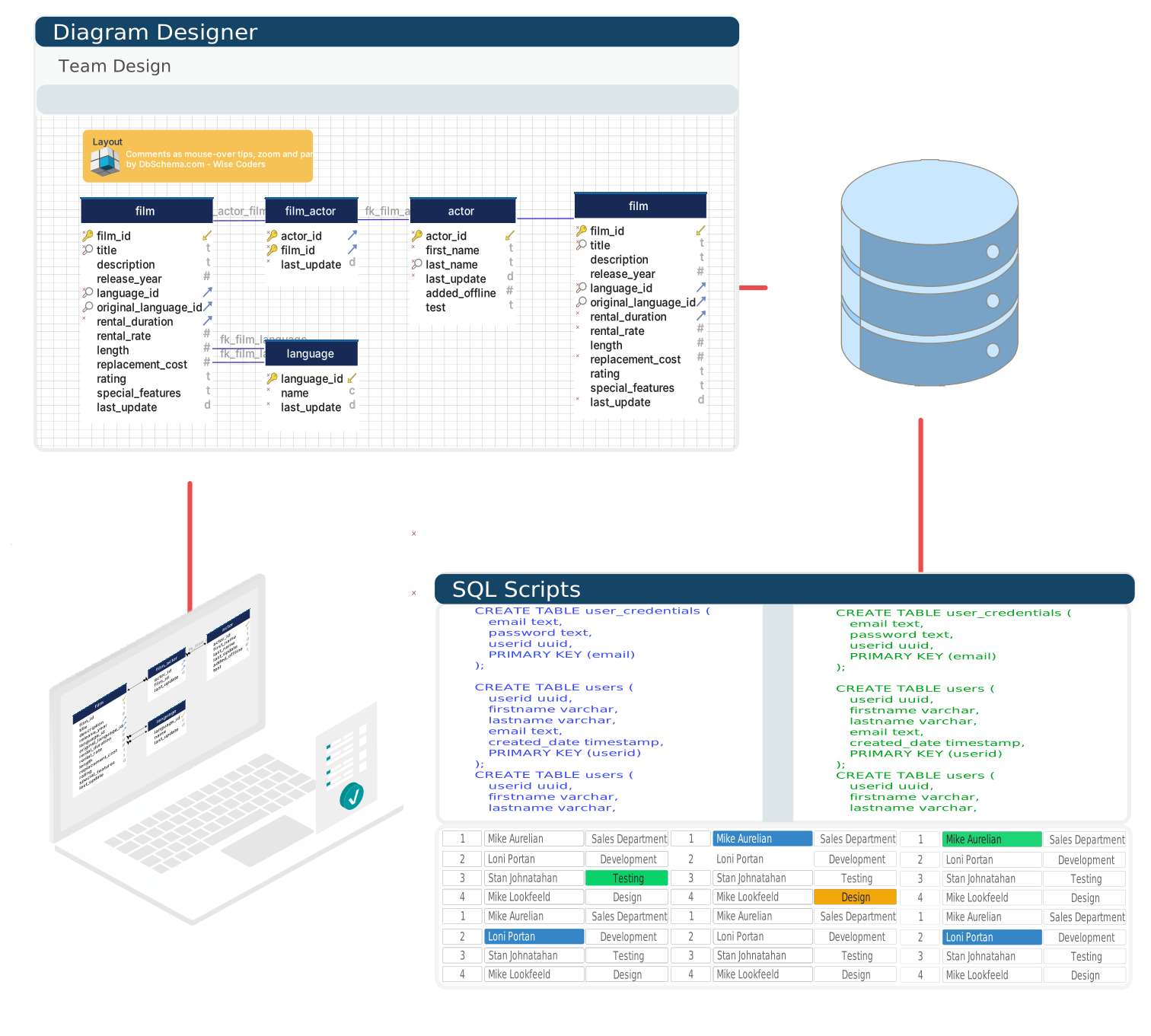
DbSchema lets you design, manage, and document SnappyData databases. Create ER diagrams, define tables and columns, and generate SQL scripts - with or without a live database connection.

Use Git to share the design, compare it with the SnappyData database, and deploy changes. DbSchema also includes a data editor, query builder, and HTML5 documentation - everything you need in one tool.

DbSchema Database Designer

Download DbSchema Download SnappyData JDBC Driver

Visual Schema Tools for Apache Spark-Integrated In-Memory Databases

SnappyData extends Apache Spark with an integrated column store, enabling mixed OLTP and OLAP workloads on the same cluster without moving data between systems. It supports row tables for transactional updates and column tables optimized for analytical scans. DbSchema connects to SnappyData via JDBC, displays both table types in the diagram canvas, and provides an SQL editor for running Spark SQL queries without requiring a notebook environment or a dedicated Spark application to be deployed.

Connect to SnappyData and Explore Table Schemas

After connecting, DbSchema reads the SnappyData catalog and displays row-store and column-store table definitions in the diagram canvas. The visual layout gives a clear view of the cluster's data architecture before writing queries or planning schema changes.

Connecting to a SnappyData cluster and loading the schema in DbSchema

Run Spark SQL Queries from a Desktop Client

SnappyData's JDBC interface accepts Spark SQL — including window functions, aggregations, and joins across row and column tables. DbSchema's SQL editor executes these queries against the cluster and presents results inline, providing an interactive alternative to Spark notebooks for ad-hoc analysis and query development.

SQL editor running a Spark SQL query against a SnappyData cluster in DbSchema

Document the SnappyData Cluster Schema

SnappyData cluster schemas often evolve rapidly as data engineering teams add tables for different workload types. DbSchema's documentation generator produces a point-in-time HTML report of all tables, column definitions, and storage types — a snapshot that can be reviewed and shared outside the cluster environment.

HTML schema documentation generated from a SnappyData cluster schema in DbSchema

Connecting DbSchema to SnappyData

SnappyData's JDBC server listens on port 1527 by default. The JDBC URL format is jdbc:snappydata://host:1527/. Download the SnappyData JDBC driver JAR from the SnappyData GitHub release page matching the server version you are running, and register it in DbSchema's driver manager. The driver class is io.snappydata.jdbc.ClientDriver. Ensure the SnappyData cluster lead node is running and the JDBC server component has been started before attempting to connect.

Why DbSchema for SnappyData

  • Visualize row and column store table schemas together in a single diagram canvas.
  • Run Spark SQL queries interactively without deploying a notebook or Spark application.
  • Document SnappyData cluster schemas as point-in-time HTML reports for team reviews.
  • Track schema evolution across cluster versions using DbSchema's Git integration.
  • Design new tables and preview DDL before executing against the live cluster.