Design and Manage NuoDB Databases with DbSchema

Build a clearer workflow for NuoDB: reverse engineer existing schemas into interactive ER diagrams, model changes visually, and generate reviewed SQL scripts before deployment.

DbSchema is built for visual modeling, schema documentation, and deployment. Keep an offline model in Git, collaborate across teams, and publish documentation that developers, analysts, and stakeholders can navigate in minutes.

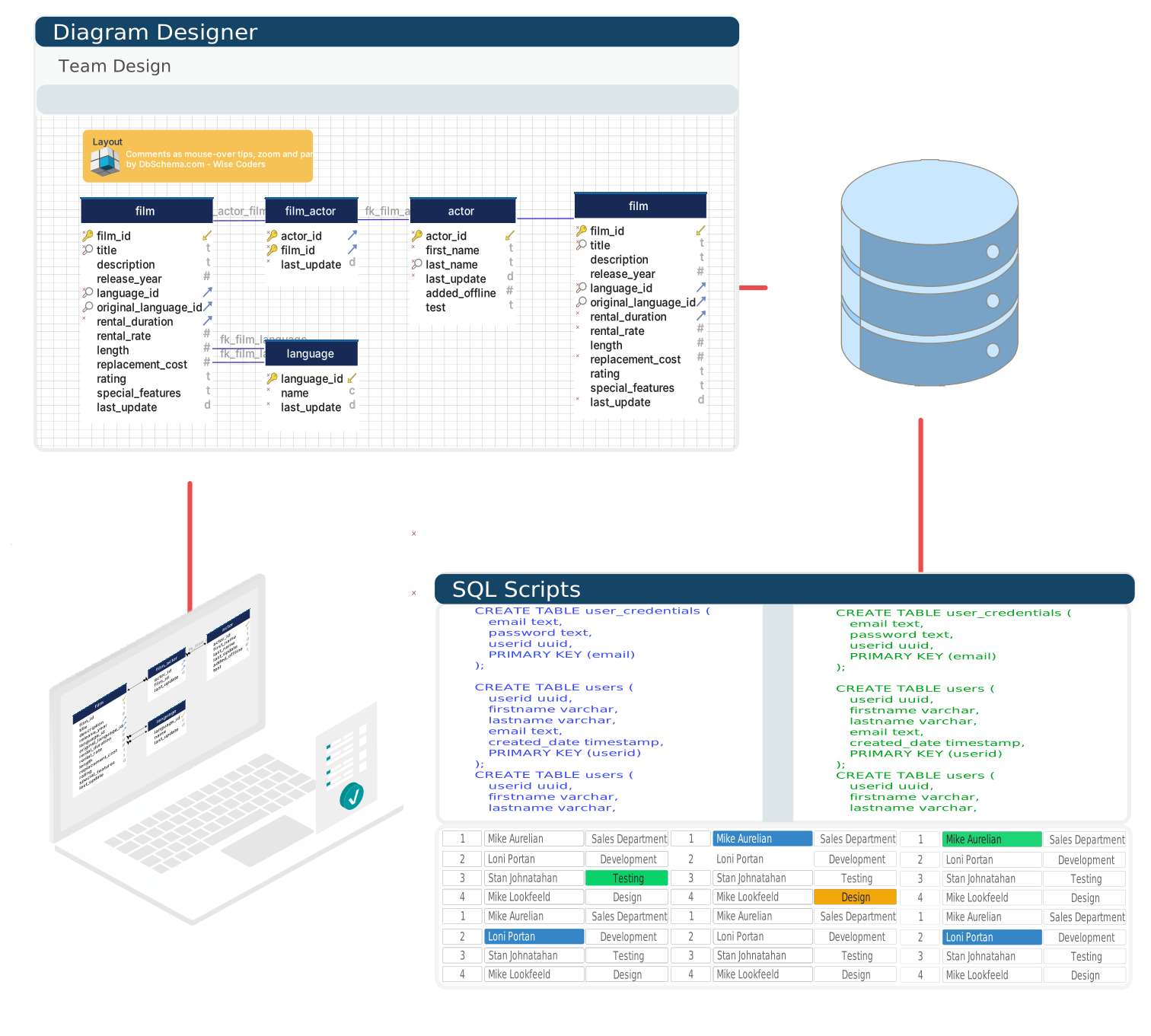
DbSchema Database Designer

Download DbSchema See NuoDB Features Download NuoDB JDBC Driver

What happens after you download?

Get to your first NuoDB schema diagram in minutes. No account, no credit card.

1
Install in minutes

Download the installer for Windows, macOS, or Linux and launch DbSchema. No signup required.

2
Connect to NuoDB or open a sample

Reverse engineer an existing NuoDB database or open a sample model to explore tables, relationships, and indexes.

3
Design, document, and deploy

Edit schema visually, generate documentation, and prepare reviewed migration scripts for safer releases.

NuoDB is a durable distributed SQL database built on a peer-to-peer transaction engine architecture. Its runtime consists of transaction engines (TEs) that handle query processing and storage managers (SMs) that persist data to disk. Unlike shared-disk databases, NuoDB has no single point of coordination — transaction engines communicate directly. DbSchema connects via the NuoDB JDBC driver, reads the schema from the broker, and provides visual schema design, SQL editing, and data exploration tools for NuoDB environments.

SQL Editor with NuoDB Dialect Support

DbSchema's SQL editor connects to a NuoDB broker and supports NuoDB SQL syntax, including STORE IN clauses for directing table storage to specific storage managers and NuoDB-specific system catalog queries. Query results are displayed in a paginated table with column-level filtering.

Download DbSchema Free See NuoDB Features

Running NuoDB SQL queries in DbSchema's SQL editor

Browsing Data Across NuoDB Storage Managers

NuoDB's data explorer lets you browse table contents stored across multiple storage managers without needing to know the physical data distribution. You can filter rows, inspect column values, and paginate through result sets from any table in the schema — the broker routes the query to the appropriate transaction and storage engines transparently.

Exploring NuoDB table data across storage managers in DbSchema

Schema Synchronization for NuoDB Deployments

NuoDB schema changes applied in a development database need to reach staging and production without manual DDL reconciliation. DbSchema connects to two NuoDB instances, generates a structural diff, and presents the ALTER and CREATE statements required to synchronize them. Changes can be reviewed and selectively applied.

Synchronizing NuoDB schema between environments in DbSchema

Connecting DbSchema to NuoDB

NuoDB uses its own JDBC driver, which must be downloaded from the NuoDB installation package (typically found at $NUODB_HOME/jar/nuodbjdbc.jar) and registered in DbSchema's driver manager via Settings > Drivers. The JDBC URL format is jdbc:com.nuodb://host:48004/dbname, where port 48004 is the default NuoDB broker port. Connect to the broker address — NuoDB automatically routes the connection to an available transaction engine. Specify the database name and the schema as separate parameters in the connection dialog. The NuoDB broker must be running and the database must be in the started state before DbSchema can connect.

Why Teams Use DbSchema with NuoDB

  • Broker-aware connection — DbSchema connects through the NuoDB broker, which handles TE routing automatically.
  • Schema visualization — render NuoDB tables, relationships, and indexes as navigable ER diagrams.
  • Cross-environment sync — diff NuoDB development and production schemas and generate precise migration DDL.
  • Offline design — model schema changes locally in DbSchema without impacting a running NuoDB cluster.
  • SQL development — write and test NuoDB SQL in the editor before embedding queries in application code.