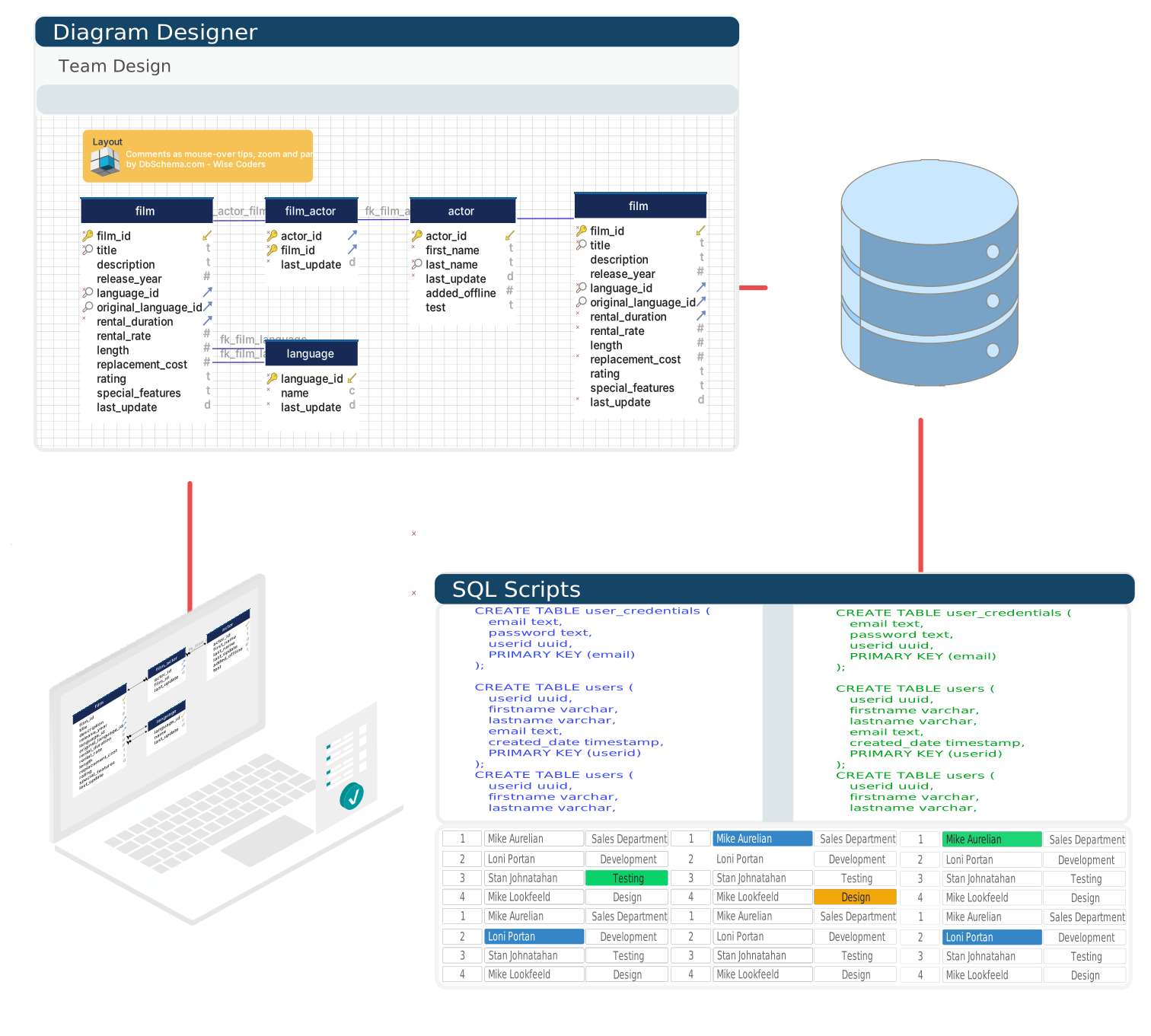

DbSchema lets you design, manage, and document EnterpriseDB (EDB) databases. Create ER diagrams, define tables and columns, and generate SQL scripts - with or without a live database connection.
Use Git to share the design, compare it with the EnterpriseDB (EDB) database, and deploy changes. DbSchema also includes a data editor, query builder, and HTML5 documentation - everything you need in one tool.
Download DbSchema Download EnterpriseDB (EDB) JDBC Driver
EDB Postgres Advanced Server (EPAS) is an enterprise-grade PostgreSQL-compatible database developed by
EnterpriseDB, designed to ease migrations from Oracle while providing the reliability and ecosystem of
PostgreSQL. Beyond standard PostgreSQL features, EPAS adds an Oracle compatibility layer that includes
Oracle-style packages, procedures with OUT parameters, autonomous transactions, triggers
with Oracle syntax, and a subset of Oracle built-in functions. Security enhancements such as
Transparent Data Encryption (TDE), the edb_audit extension for compliance logging, and
the EDB Failover Manager (EFM) for automatic HA round out the enterprise feature set. DbSchema
connects using the standard PostgreSQL JDBC driver and renders EPAS schemas — including schemas that
contain packages, synonyms, and Oracle-compatible objects — as visual diagrams.
EPAS supports both standard PL/pgSQL and Oracle's PL/SQL dialect for stored procedures and functions,
and both are accessible through the PostgreSQL JDBC driver. DbSchema's SQL editor connects over the
standard PostgreSQL protocol on port 5444 (EPAS's default) and provides auto-completion
for tables, views, functions, and packages. You can write and execute Oracle-compatible CONNECT
BY hierarchical queries, use ROWNUM pagination, and call EPAS packages directly
from SQL statements. The editor displays results in a paginated grid and supports multi-statement
execution, making it practical to test stored procedure calls alongside their dependent queries.
The DbSchema data explorer lets you browse EDB table contents interactively, with filter and sort
controls that work across all EPAS data types including Oracle-compatible VARCHAR2,
NUMBER, and DATE type aliases. From the schema diagram you can navigate
directly to any table's data, or drill into package definitions to review procedure signatures and
default values. This is particularly valuable during Oracle-to-EPAS migrations: you can validate that
migrated table rows match the expected format and that package procedures compile and execute
correctly in the EPAS environment.
DbSchema connects to EnterpriseDB Postgres Advanced Server using the standard PostgreSQL JDBC driver
(org.postgresql.Driver). The JDBC URL format is
jdbc:postgresql://localhost:5444/mydb, where port 5444 is EPAS's default
listener port (distinguishing it from community PostgreSQL's default 5432). Supply an
EDB username and password with the required schema privileges in the connection dialog. For TDE-enabled
clusters, ensure the JDBC connection uses SSL by appending ?ssl=true to the URL. The
EDB Failover Manager operates independently of the JDBC connection; for HA deployments, point DbSchema
at the EFM virtual IP or a PgBouncer connection pool that handles failover transparently.