Design and Manage CUBRID Databases Visually with DbSchema

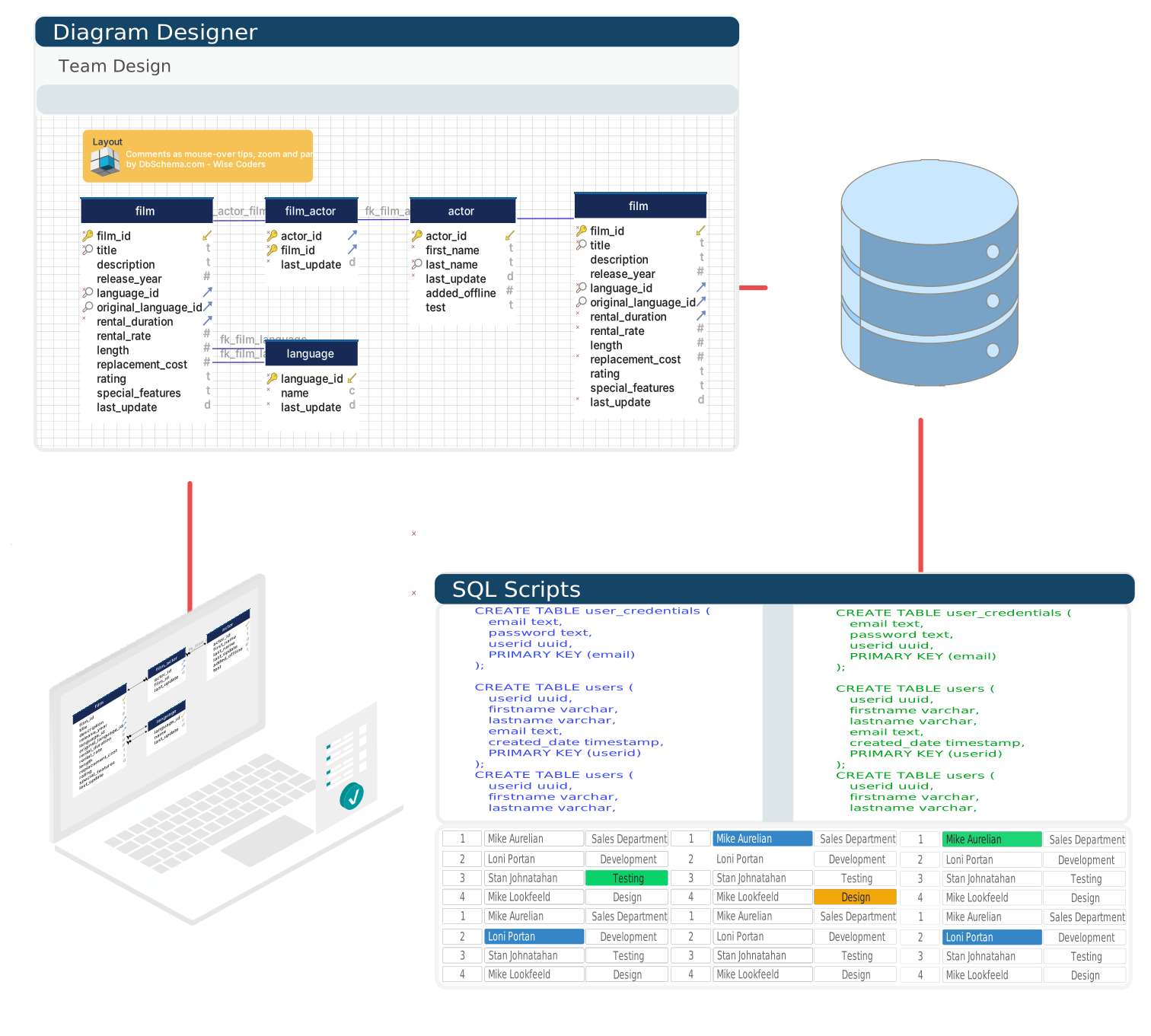
DbSchema lets you design, manage, and document CUBRID databases. Create ER diagrams, define tables and columns, and generate SQL scripts - with or without a live database connection.

Use Git to share the design, compare it with the CUBRID database, and deploy changes. DbSchema also includes a data editor, query builder, and HTML5 documentation - everything you need in one tool.

DbSchema Database Designer

Download DbSchema Download CUBRID JDBC Driver

Object-Relational Model and Schema Visualization

CUBRID is a Korean open-source relational database management system that extends standard relational concepts with object-oriented features, making it an object-relational database. In CUBRID, tables are referred to as classes, rows as instances, and stored procedures can be attached directly to classes as methods — a distinction that gives CUBRID strong object-oriented database (OODBMS) characteristics. DbSchema connects via the CUBRID JDBC driver and introspects classes, their attributes (columns), inheritance hierarchies, and method signatures, rendering the full object-relational model as an interactive schema diagram. This is especially helpful for understanding legacy CUBRID schemas that make heavy use of class inheritance and method delegation.

Writing SQL with Collection Types in the SQL Editor

CUBRID supports three collection data types — SET, MULTISET, and SEQUENCE — that allow a single column to store multiple values of a declared element type, a feature rarely found in mainstream relational databases. DbSchema's SQL editor connects over the CUBRID JDBC driver and provides auto-completion for class and attribute names, supporting queries that use CUBRID's collection operators such as CONTAINS, SUBSET, and element subscript access. The results grid handles collection-type column values by rendering them as comma-separated lists, making the contents of SET and SEQUENCE attributes readable without additional post-processing.

DbSchema SQL editor writing CUBRID SQL with SET and SEQUENCE collection types

Browsing CUBRID Tables and Rows with the Data Explorer

The DbSchema data explorer lets you navigate CUBRID class contents row by row with filter and sort controls that work across all standard attribute types including CUBRID's collection columns. For databases that use class inheritance, the explorer lists both the direct class instances and optionally instances of subclasses, giving a complete view of the inheritance hierarchy in a single result set. You can inspect collection-type attribute values inline, copy individual rows to the clipboard, and export page contents to CSV for use in spreadsheet analysis or migration validation.

Browsing CUBRID class instances and collection column values in DbSchema data explorer

Connection Setup and JDBC URL

To connect DbSchema to CUBRID, download the CUBRID JDBC driver JAR (cubrid.jdbc.driver.CUBRIDDriver) from the CUBRID downloads page and register it in DbSchema's driver manager. The JDBC URL format is jdbc:cubrid:localhost:33000:mydb:::, where localhost is the CUBRID server hostname, 33000 is the default CUBRID broker port, and mydb is the target database name. The three colons at the end are placeholders for the optional username, password, and charset parameters when not supplied in the URL. For HA-enabled CUBRID clusters, use the HA URL format that lists multiple host:port pairs separated by commas. Supply a username and password with the required class-level privileges in the DbSchema connection dialog.

CUBRID object-relational schema diagram with class inheritance shown in DbSchema

Why Teams Use DbSchema with CUBRID

  • Visualize CUBRID's class hierarchy and method associations as a schema diagram, making the object-relational model easy to communicate to new team members.
  • Write and test SQL that uses CUBRID collection types (SET, MULTISET, SEQUENCE) in the SQL editor with column name auto-completion.
  • Browse class instances including collection column values in the data explorer without writing manual pagination queries.
  • Generate schema documentation for CUBRID databases to serve as a reference during migration or refactoring projects.
  • Design new CUBRID schemas with class relationships and collection attributes in DbSchema's offline model before deploying changes.
  • Connect to CUBRID HA clusters with automatic failover support through the CUBRID JDBC driver's multi-host URL format.