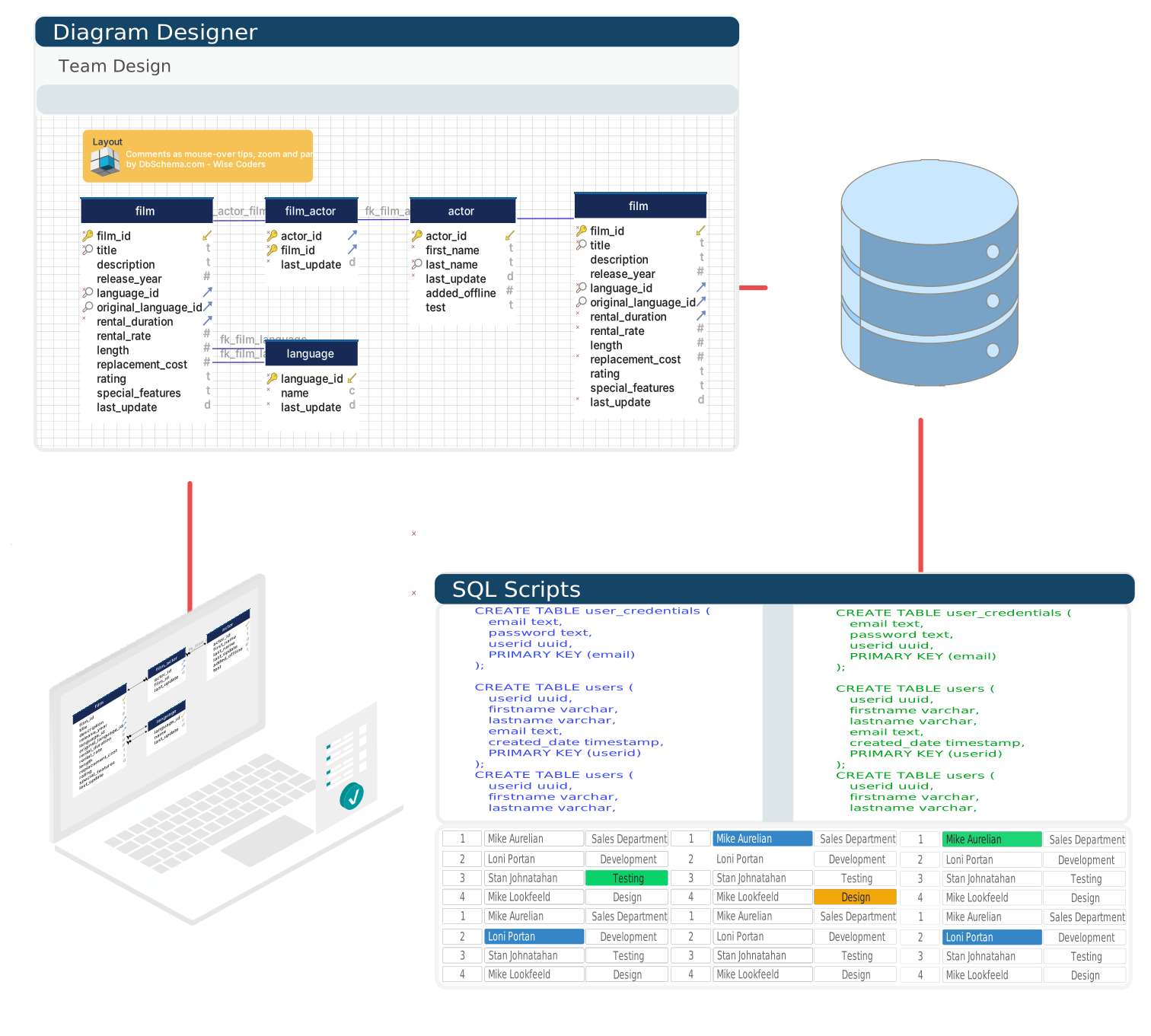
DbSchema lets you design, manage, and document Teradata databases. Create ER diagrams, define tables and columns, and generate SQL scripts - with or without a live database connection.
Use Git to share the design, compare it with the Teradata database, and deploy changes. DbSchema also includes a data editor, query builder, and HTML5 documentation - everything you need in one tool.
Download DbSchema Download Teradata JDBC Driver
Teradata is an enterprise data warehouse platform that organizes data using user-based schema ownership, primary index (PI) and unique primary index (UPI) distribution strategies, and multi-value compression. In large Teradata deployments, hundreds of user schemas and thousands of tables make manual navigation through system views impractical. DbSchema connects to Teradata via JDBC, reads the data dictionary, and renders cross-database relationships as interactive ER diagrams that DBA teams can explore and share.
DbSchema lets you pull tables from multiple Teradata databases and user schemas onto a single diagram canvas, making it straightforward to document data mart structures, staging layers, and cross-schema dependencies common in Teradata warehouse architectures.
The DbSchema SQL editor connects directly to your Teradata system and supports Teradata SQL syntax, including BTEQ-compatible statements, SET/MULTISET table semantics, and analytic functions. Execute queries, browse result sets, and export data without maintaining a separate Teradata client tool alongside your schema designer.
DbSchema generates complete HTML schema documentation from your Teradata data dictionary, covering table definitions, column types, primary indexes, partitioning expressions, and referential constraints. Exporting this documentation helps DBA teams maintain data catalog standards and satisfy data governance requirements without building custom documentation tooling.
Teradata's default connection port is 1025. The JDBC URL format is:
jdbc:teradata://host/DATABASE=dbname,DBS_PORT=1025.
Download the Teradata JDBC driver from the Teradata Downloads portal (developer.teradata.com)
and add it to DbSchema using Connections > Manage Drivers.
When connecting to Teradata on AWS or Azure, use the VPC endpoint hostname rather than a public IP.
Teradata supports multiple authentication mechanisms; LDAP and Kerberos can be passed as additional
parameters appended to the JDBC URL.