Design and Manage Kafka with DbSchema

Build a clearer workflow for Kafka: reverse engineer existing schemas into interactive ER diagrams, model changes visually, and generate reviewed SQL scripts before deployment.

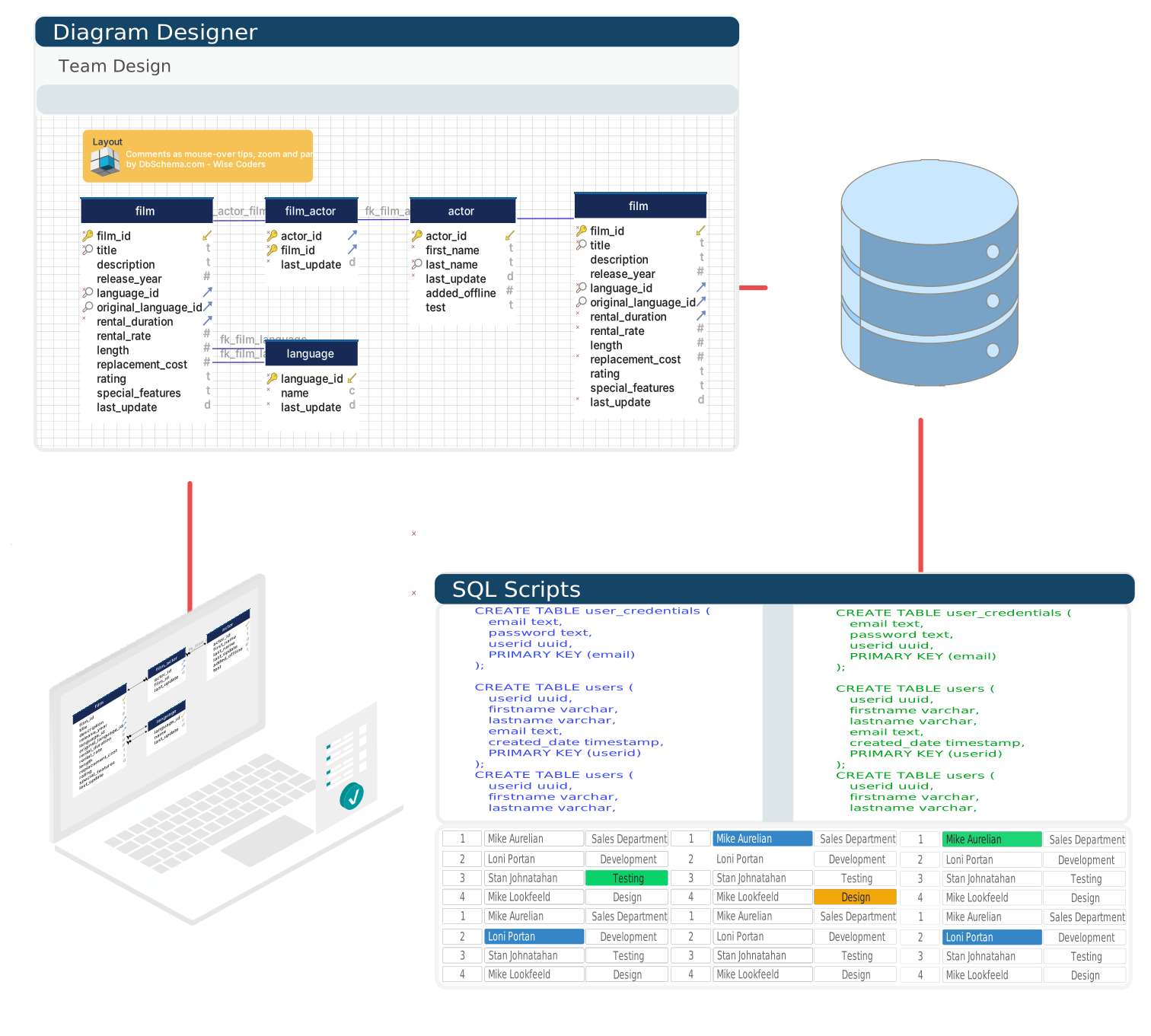
DbSchema is built for document and NoSQL structure exploration with visual relationships and team docs. Keep an offline model in Git, collaborate across teams, and publish documentation that developers, analysts, and stakeholders can navigate in minutes.

DbSchema Database Designer

Download DbSchema See Kafka Features Download Kafka JDBC Driver · All drivers

What happens after you download?

Get to your first Kafka schema diagram in minutes. No account, no credit card.

1
Install in minutes

Download the installer for Windows, macOS, or Linux and launch DbSchema. No signup required.

2
Connect to Kafka or open a sample

Reverse engineer an existing Kafka database or open a sample model to explore tables, relationships, and indexes.

3
Design, document, and deploy

Edit schema visually, generate documentation, and prepare reviewed migration scripts for safer releases.

Visualize Kafka Topics and Message Structure

Apache Kafka stores event streams in topics rather than relational tables, but teams still need a clear picture of which topics exist, what fields appear in message payloads, and how schemas evolve over time. DbSchema connects to Kafka through its open-source JDBC driver, lists topics from the cluster metadata, and builds a schema view for each topic — either from Confluent Schema Registry subjects or by sampling recent messages and inferring JSON field types, similar to the approach used for MongoDB collections.

Download DbSchema Free See Kafka Features

Query Topic Data with SQL-Style Statements

DbSchema's SQL editor connects to Kafka through the JDBC driver and supports statements such as LIST TOPICS and SELECT * FROM orders LIMIT 100. Message values can be returned as JSON documents or flattened into columns when expand=true is set on the connection URL. This is useful for inspecting production traffic, validating serializers, or exploring topics during development without writing a custom consumer application.

Running SQL queries against Kafka topics in DbSchema

Browse Messages in the Data Explorer

The data explorer displays rows sampled from a Kafka topic in a paginated grid. Filter and inspect individual messages to verify payload shape, key formats, and header metadata — helpful when debugging stream processors, CDC pipelines, or new producers before they reach downstream consumers.

Browsing Kafka topic messages in DbSchema data explorer

Connecting DbSchema to Kafka

Kafka brokers listen on port 9092 by default. Use the JDBC URL jdbc:kafka://host:9092, or add a catalog segment and query parameters such as jdbc:kafka://localhost:9092?scan=fast&schemaRegistry=http://localhost:8081&groupId=dbschema-jdbc. The scan parameter controls how many messages are read when inferring structure (fast, medium, or full). When Confluent Schema Registry is configured, the driver uses registered Avro or JSON schemas for stable column definitions. The open-source Kafka JDBC driver source code is available on GitHub.

Why Teams Use DbSchema with Kafka

  • List cluster topics and document inferred or registry-backed message schemas in one visual workspace.
  • Sample topic payloads to understand JSON structure before building consumers or stream joins.
  • Run SELECT and LIST TOPICS from DbSchema's SQL editor without a separate CLI tool.
  • Integrate Kafka exploration into the same tool used for relational and NoSQL database design.
  • Share schema documentation with teams that consume your event streams.

Teams working with Kafka often use these engines too. Explore dedicated guides and JDBC setup for each.

Browse all 100+ supported databases