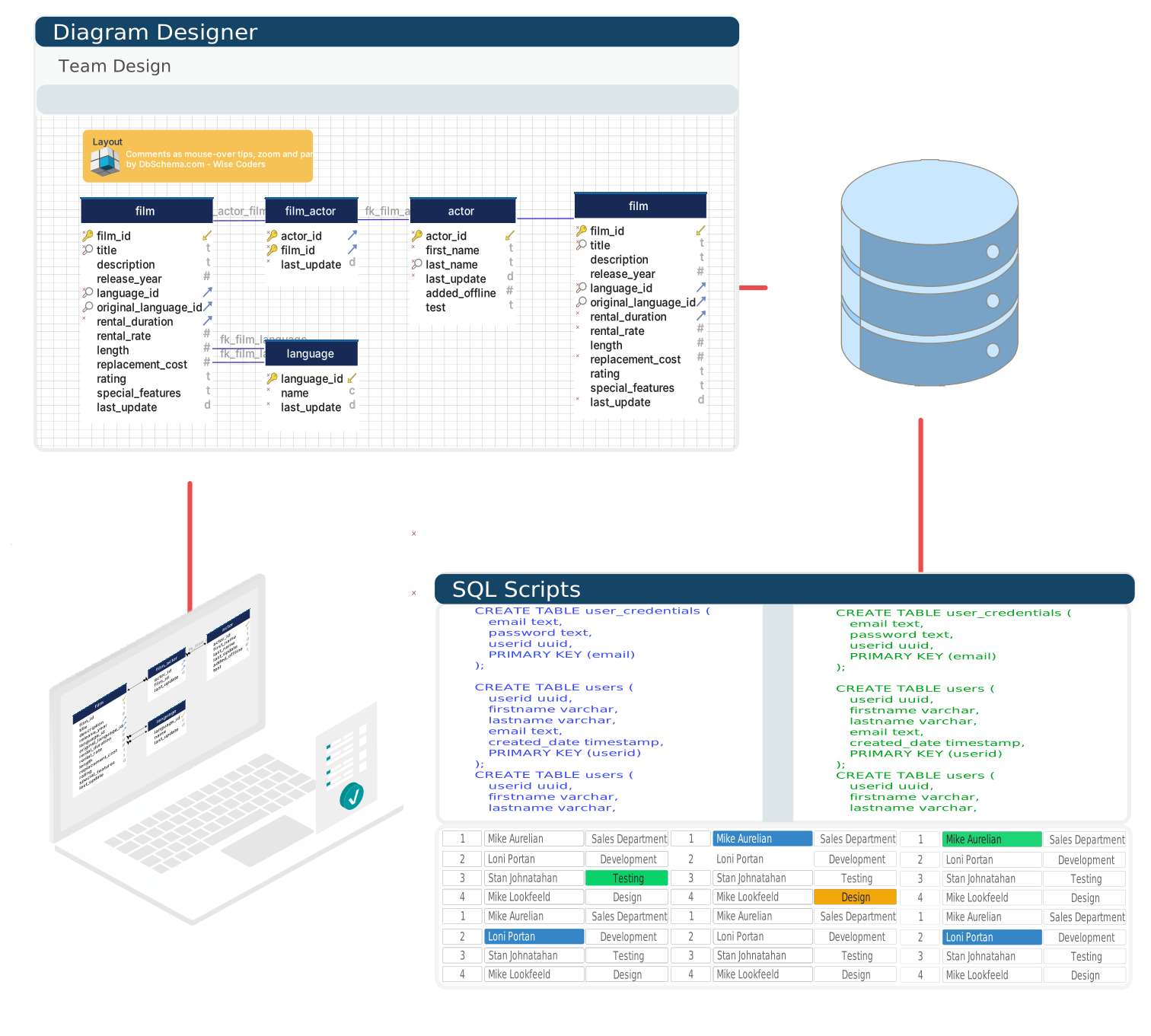
DbSchema lets you design, manage, and document CrateDB databases. Create ER diagrams, define tables and columns, and generate SQL scripts - with or without a live database connection.
Use Git to share the design, compare it with the CrateDB database, and deploy changes. DbSchema also includes a data editor, query builder, and HTML5 documentation - everything you need in one tool.
Download DbSchema Download CrateDB JDBC Driver
CrateDB is a distributed SQL database engineered for machine data and IoT workloads, offering
PostgreSQL-compatible syntax alongside columnar storage and horizontal scaling through shards and
replicas. Each table in CrateDB is physically split into a configurable number of shards distributed
across cluster nodes, and each shard can be replicated for fault tolerance. DbSchema connects to
CrateDB using its PostgreSQL-compatible wire protocol and the CrateDB JDBC driver, introspecting tables,
columns, data types, and partition configurations. The resulting schema diagram captures the full table
structure including ARRAY and OBJECT column types, which are particularly
common in machine-data schemas where nested metadata accompanies sensor readings.
CrateDB's SQL dialect includes full-text search predicates, array subscript expressions, and
object-column path access that go beyond standard relational SQL. DbSchema's SQL editor understands
the PostgreSQL-compatible connection and provides column auto-completion, syntax highlighting, and a
results grid that handles CrateDB's nested OBJECT values by flattening them into readable
columns. Queries involving time-bucket aggregations over large event tables benefit from CrateDB's
columnar storage engine, and the SQL editor displays execution time so you can evaluate the impact of
shard count and routing columns on query performance.
The DbSchema data explorer lets you navigate CrateDB tables row by row with filter and sort controls.
For time-series event tables with hundreds of millions of rows, the explorer applies LIMIT
and offset-based pagination automatically, ensuring that browsing remains responsive regardless of
table size. You can filter by timestamp ranges or specific device identifiers, inspect
ARRAY column contents inline, and copy rows to the clipboard for further analysis. The
explorer also surfaces CrateDB's blob tables for object storage scenarios, letting you see blob
metadata alongside relational data in the same session.
To connect DbSchema to CrateDB, download the CrateDB JDBC driver JAR
(io.crate.client.jdbc.CrateDriver) from the CrateDB releases page and register it in
DbSchema's driver manager. The JDBC URL format is jdbc:crate://localhost:5432/, where
port 5432 is CrateDB's default PostgreSQL-compatible port. Provide the CrateDB username
and password in the connection dialog; newly installed clusters default to the crate
superuser with no password. For production deployments, replace localhost with the
hostname of a CrateDB node and enable TLS by appending SSL parameters to the JDBC URL. CrateDB
clusters expose a single SQL endpoint regardless of the number of nodes, so no special load-balancer
configuration is needed for DbSchema.
ARRAY and OBJECT column types that are otherwise hard to document.