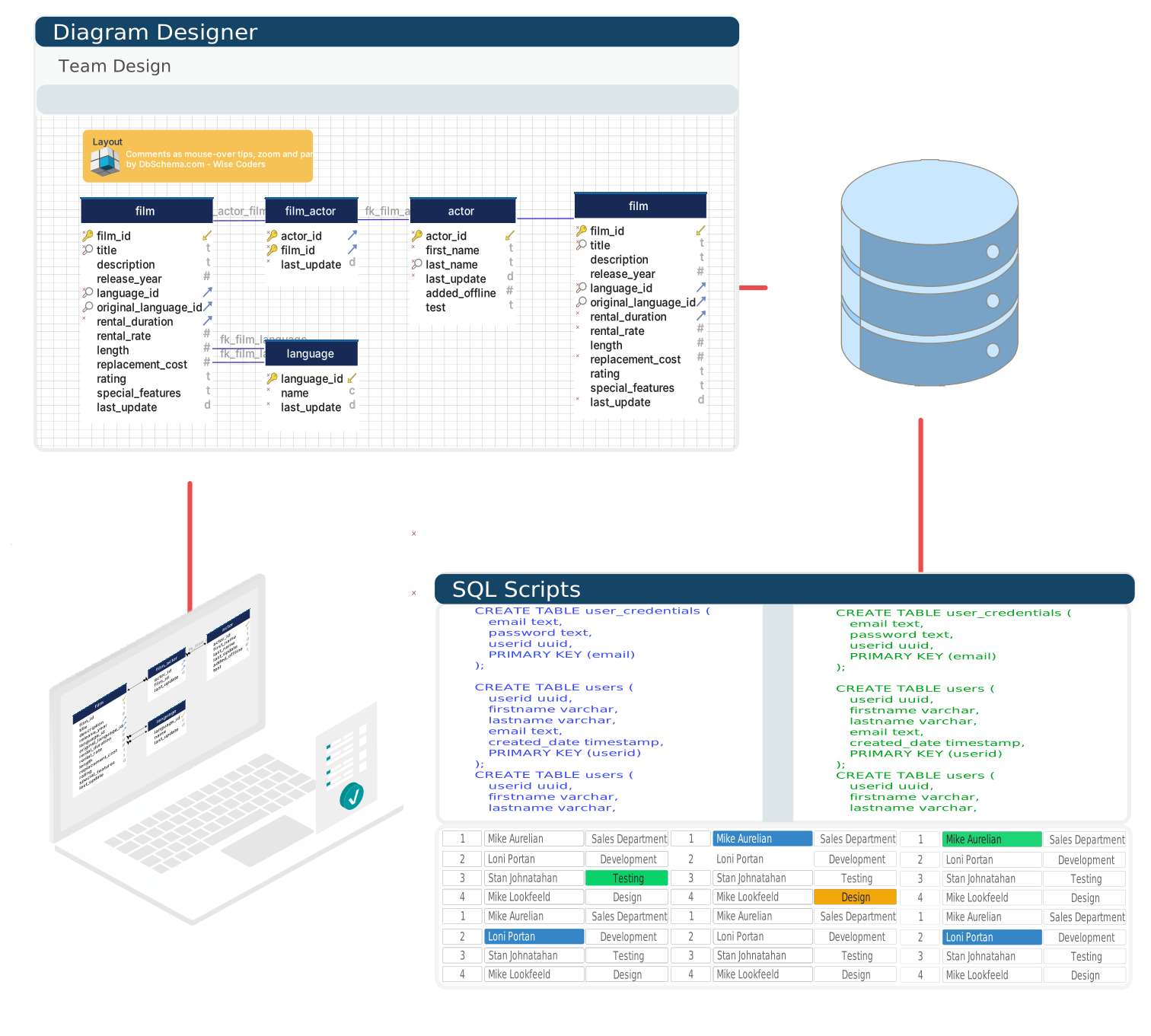

DbSchema lets you design, manage, and document Redis databases. Create ER diagrams, define tables and columns, and generate SQL scripts - with or without a live database connection.
Use Git to share the design, compare it with the Redis database, and deploy changes. DbSchema also includes a data editor, query builder, and HTML5 documentation - everything you need in one tool.
Download DbSchema Download Redis JDBC Driver
Redis is an in-memory data structure store that organizes data as keys with typed values — strings, hashes, lists, sets, sorted sets, streams, and more. Unlike relational databases, Redis has no enforced schema, but production deployments develop implicit naming conventions and key patterns that represent a de-facto data model. DbSchema connects to Redis via its custom open-source JDBC driver and renders the detected key namespaces as a visual diagram, helping teams document and communicate the Redis data architecture in a structured way.
DbSchema's data explorer connects to Redis and lets you browse hash fields, list contents, set members, and sorted set scores without writing raw Redis commands. This is practical for developers inspecting session data, cache contents, or message queue state during debugging, without needing a dedicated Redis GUI tool or redis-cli access.
DbSchema's SQL editor connects to Redis through the JDBC layer, which translates SQL-style SELECT queries into Redis commands. This allows developers familiar with SQL to query Redis key patterns, filter hash fields, and retrieve structured data without learning the full Redis command set — useful when Redis stores structured application data like user profiles or product catalogs.
DbSchema generates schema documentation from the detected Redis key patterns, capturing the naming conventions, data types, and field structures that form the implicit Redis schema. For teams maintaining large Redis deployments, this documentation provides a reference for understanding cache structure, session layout, and real-time data organization without relying on tribal knowledge or hand-written notes.
DbSchema connects to Redis using its own open-source JDBC driver. The default Redis port is
6379. The JDBC URL format is jdbc:redis://host:6379/0, where the
trailing number is the database index (Redis supports databases 0–15 by default). For Redis
Cluster, connect to any cluster node and the driver handles slot routing. For Redis deployments
with authentication, append ?password=yourpassword to the URL. TLS connections use
jdbc:redis+ssl://host:6380/0. Redis Sentinel and Redis Enterprise are also supported
through appropriate connection configuration.