Design and Manage dBASE / DBF Files Databases Visually with DbSchema

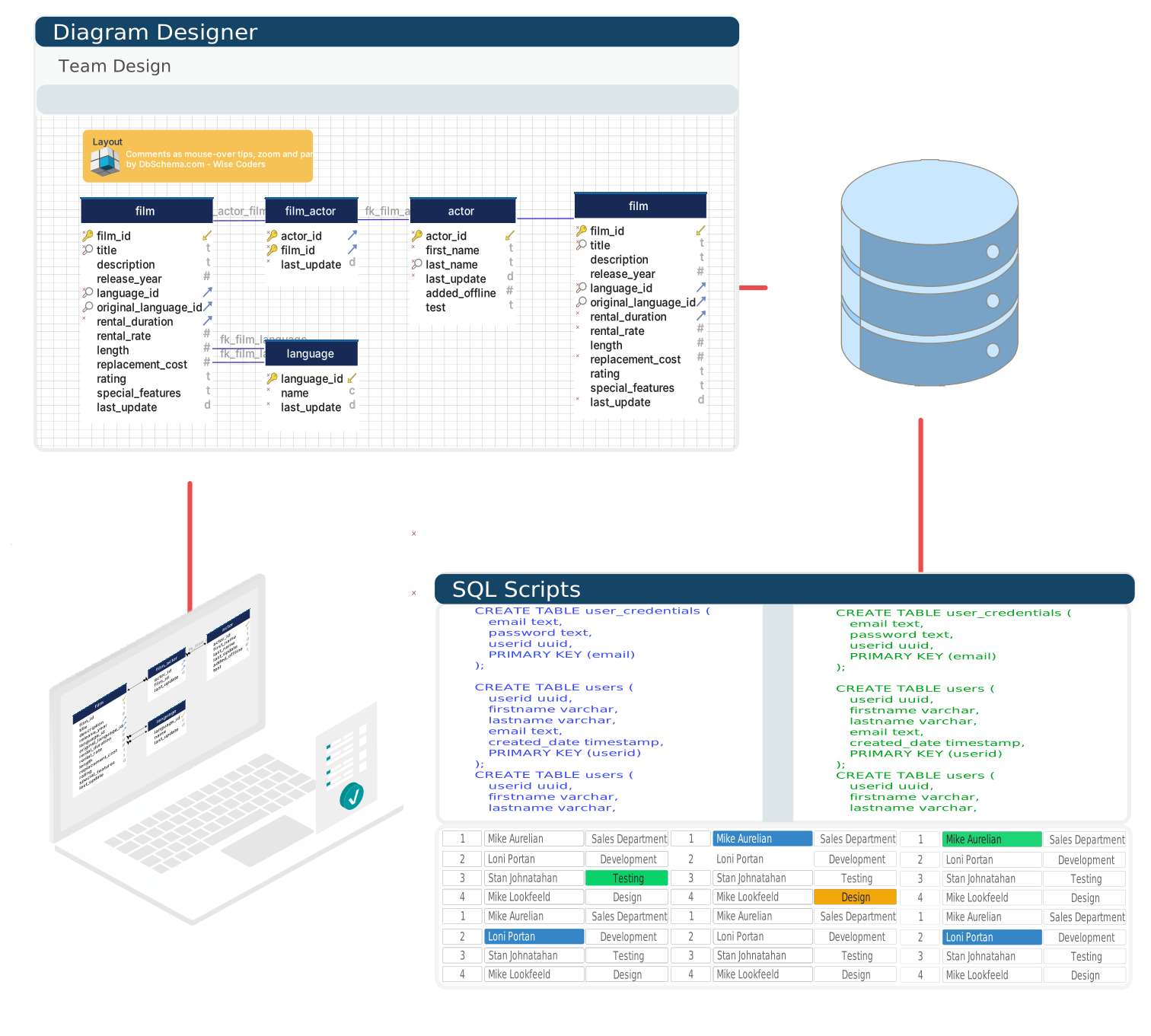

DbSchema lets you design, manage, and document dBASE / DBF Files databases. Create ER diagrams, define tables and columns, and generate SQL scripts - with or without a live database connection.

Use Git to share the design, compare it with the dBASE / DBF Files database, and deploy changes. DbSchema also includes a data editor, query builder, and HTML5 documentation - everything you need in one tool.

DbSchema Database Designer

Download DbSchema Download dBASE / DBF Files JDBC Driver

Inspect and Query Legacy DBF Data Files

The DBF format originated with dBASE in the 1980s and was later adopted by FoxPro, Clipper, and Visual FoxPro. Point-of-sale systems, government agencies, and industrial applications still produce or consume DBF files today. DbSchema connects to a directory of DBF files via a JDBC driver, reads field definitions directly from the file headers, and presents the schema in the diagram canvas — giving teams a structured view of legacy data without the original dBASE or FoxPro tooling.

Open DBF Files Without Legacy Software

DbSchema connects to a directory of DBF files through a JDBC driver that understands the standard dBASE file format. Field names, types, and widths defined in each file header are loaded into the schema diagram, allowing developers to understand the data model of a legacy application without access to the original development environment.

DbSchema opening a directory of DBF files and displaying their field schemas

Browse DBF Table Contents

The data explorer provides row-level access to DBF file contents with column filtering to locate specific records. Use it to verify data integrity before migrating DBF data to a modern relational database, or to answer ad-hoc queries about a legacy dataset using SQL rather than DBF's proprietary query syntax.

Data explorer displaying records from a dBASE DBF file in DbSchema

Review and Map Field Definitions

DBF field types — Character, Numeric, Date, Logical, and Memo — map to SQL types when accessed through the JDBC layer. DbSchema's table editor lets you review each field's definition and plan the type mapping for a migration to PostgreSQL, MySQL, or another target database.

Table editor showing DBF field definitions as SQL columns in DbSchema

Connecting DbSchema to DBF Files

Use the xBaseJ or JDBF JDBC driver with the URL jdbc:xbase:/path/to/directory, where the path points to the directory containing the .dbf files — each file becomes a table. Download the driver JAR and register it in DbSchema's driver manager. For FoxPro DBF files that include CDX compound indexes, verify that the driver version supports compound index files, as some drivers silently skip indexed records when the CDX file is present but unsupported. Memo fields stored in associated .dbt or .fpt files require a driver version that handles external memo storage.

Why DbSchema for DBF Migration Projects

  • Read dBASE, FoxPro, and Clipper DBF files without installing any legacy software.
  • Run SQL queries across multiple DBF files joined on shared key fields.
  • Map DBF field types to SQL target types as part of a structured migration workflow.
  • Export schema documentation for compliance reviews and project handovers.
  • Browse and validate record-level data before committing migration scripts to production.