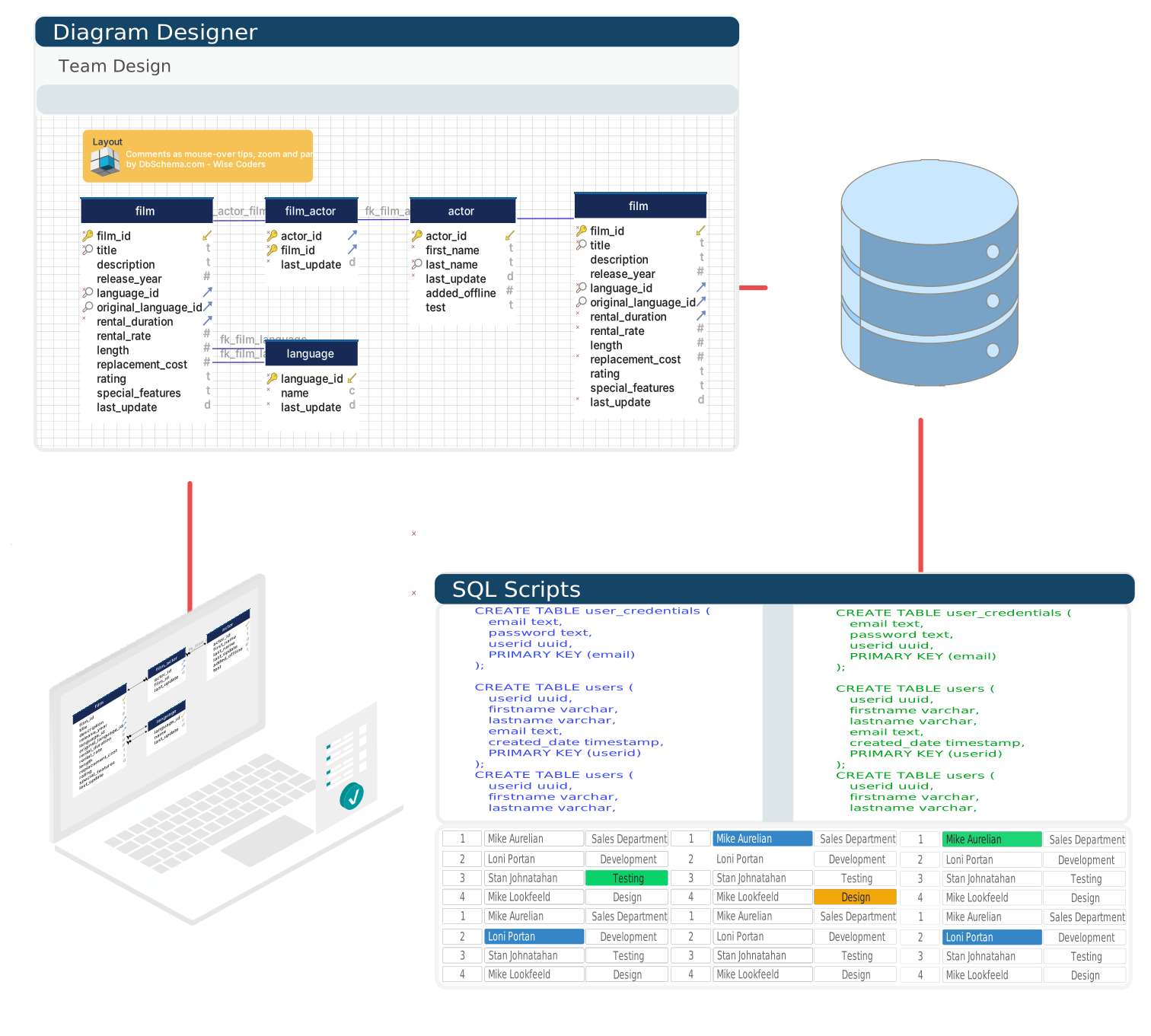
DbSchema lets you design, manage, and document Salesforce databases. Create ER diagrams, define tables and columns, and generate SQL scripts - with or without a live database connection.
Use Git to share the design, compare it with the Salesforce database, and deploy changes. DbSchema also includes a data editor, query builder, and HTML5 documentation - everything you need in one tool.
Download DbSchema Download Salesforce JDBC Driver
Salesforce's object model spans standard objects (Account, Contact, Opportunity), custom objects, and junction objects — often totaling hundreds of tables in a mature org. Understanding the full data model and how custom relationships connect these objects requires either the Schema Builder in Salesforce Setup or developer-level API access. DbSchema connects via the Simba or CData Salesforce JDBC driver, reads the object metadata, and renders the schema as an entity-relationship diagram that consultants and admins can explore and document offline.
DbSchema reads object metadata through the Salesforce JDBC driver and maps standard objects, custom objects, and their lookup and master-detail relationships onto an interactive diagram canvas. This is particularly useful for Salesforce architects documenting org-level data models for integration projects or system reviews.
DbSchema's query builder lets you construct SOQL-compatible queries against Salesforce objects without writing raw SQL. Select objects, choose fields, and apply filters from a graphical interface — the query builder generates the corresponding SQL that the JDBC driver translates to SOQL internally.
DbSchema generates HTML documentation from the Salesforce object schema, capturing object names, field types, picklist values, and relationship definitions. This documentation is invaluable for Salesforce implementation teams handing off a customized org to a client, or for admins preparing change control documents for regulated environments.
Use the CData Salesforce JDBC driver or the Simba Salesforce JDBC driver
to connect DbSchema. For the Simba driver, the JDBC URL format is:
jdbc:salesforce:[email protected];Password=password;SecurityToken=token.
The Security Token is generated from your Salesforce profile settings under "Reset My Security Token."
For Connected App authentication, replace the username/password combination with OAuth parameters
(Consumer Key and Consumer Secret). Add the JDBC driver JAR via DbSchema's driver manager under
Connections > Manage Drivers.
DbSchema also provides its own open-source Salesforce JDBC driver — source code available on
GitHub.