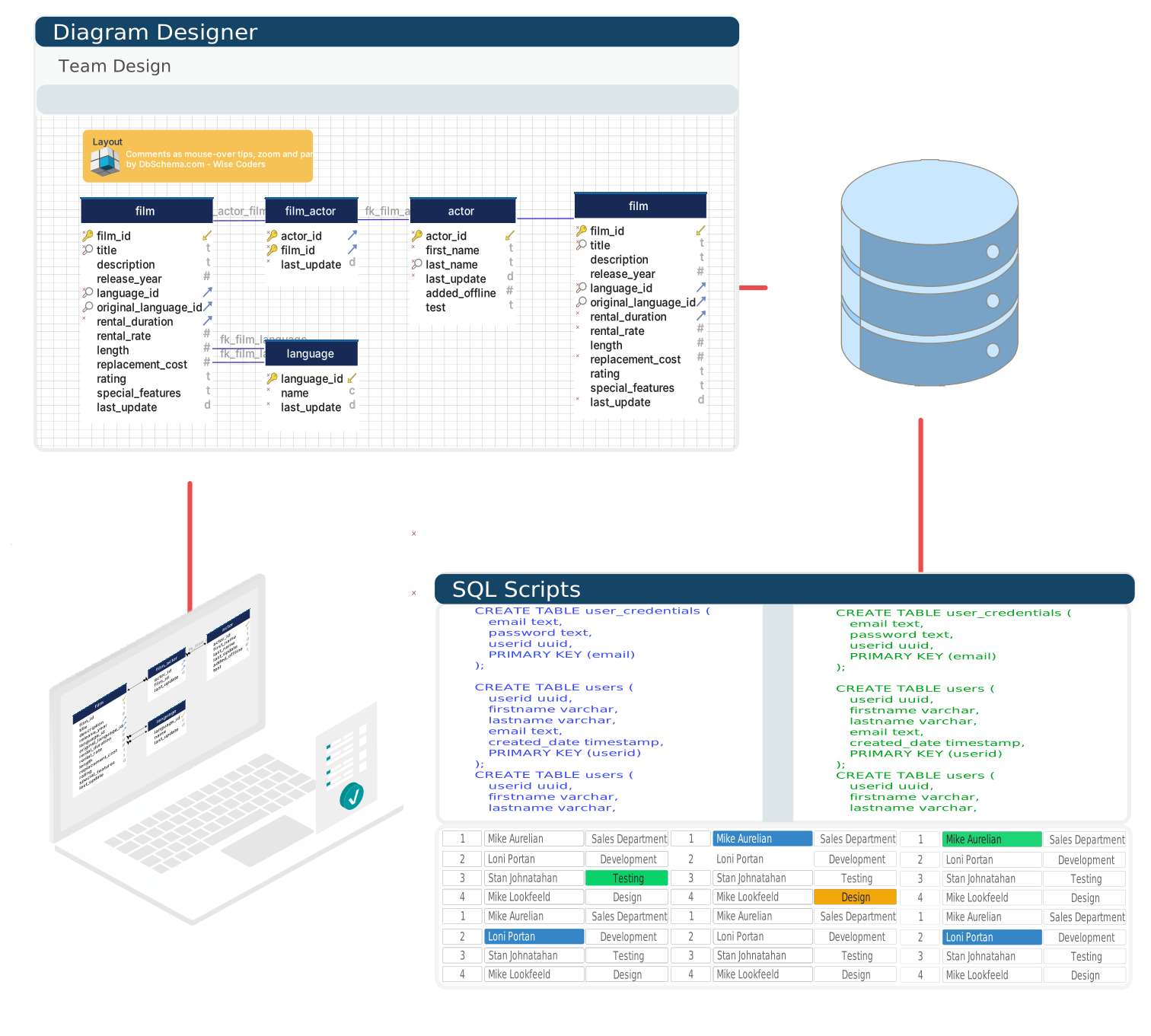

DbSchema lets you design, manage, and document Microsoft Fabric Lakehouse databases. Create ER diagrams, define tables and columns, and generate SQL scripts - with or without a live database connection.
Use Git to share the design, compare it with the Microsoft Fabric Lakehouse database, and deploy changes. DbSchema also includes a data editor, query builder, and HTML5 documentation - everything you need in one tool.
Download DbSchema Download Microsoft Fabric Lakehouse JDBC Driver
Microsoft Fabric Lakehouse stores data as Delta Parquet files and exposes them for SQL queries through a SQL Analytics Endpoint — a read-oriented T-SQL interface backed by automatic metadata registration. DbSchema connects to this endpoint, introspects the available tables and views, and renders the lakehouse schema as an ER diagram. This gives data engineers and architects a structured, navigable view of the lakehouse data model that the Fabric portal's table list does not provide, and makes it straightforward to understand table relationships across a large lakehouse.
DbSchema renders Fabric Lakehouse tables as entities on a diagram canvas, showing columns, data types, and relationships. Engineers can use this view to draft schema designs and document the intended structure before implementing changes through the Fabric portal.
The visual query builder generates T-SQL compatible with the SQL Analytics Endpoint, letting analysts join lakehouse tables, apply column filters, and retrieve results from Delta Parquet data without writing SQL. Queries execute against the endpoint and results display in the integrated data grid.
DbSchema produces HTML schema documentation from the Fabric Lakehouse metadata — including table definitions, column types, and ER diagrams — suitable for sharing with stakeholders and for maintaining data governance records without requiring live Fabric workspace access.
DbSchema connects to the Fabric Lakehouse SQL Analytics Endpoint using the SQL Server JDBC driver, which it downloads automatically. The JDBC URL format is jdbc:sqlserver://workspace-id.datawarehouse.pbidedicated.windows.net:1433;database=LakehouseName. Authentication requires Azure Active Directory credentials; append ;authentication=ActiveDirectoryPassword to the URL and provide your AAD username and password. Because the SQL Analytics Endpoint is primarily read-oriented, schema modifications such as creating or altering tables must be performed through the Fabric portal rather than through DbSchema's synchronization tool.